Building your dream home is one of life's biggest financial commitments. In 2026, construction costs in India range dramatically, from ₹1,200 to ₹5,000+ per square foot, depending on quality, location, and design choices. This guide breaks down everything you need to know to plan your budget effectively.
1. How Much Does It Cost to Construct a House in India?
The cost of building a house varies significantly based on the quality of construction and your location. Here's what you can expect in 2026:
Construction Cost by Quality
Your choice of materials and finishes determines the baseline cost:
Basic Finish: ₹1,200–₹1,800 per sq ft
- Standard cement and locally sourced materials
- Simple architectural design
- Basic fixtures and fittings
- Ideal for budget-conscious homeowners
Standard Finish: ₹1,800–₹2,800 per sq ft
- Branded materials with better quality
- Moderate architectural detailing
- Good quality fixtures and finishes
- The sweet spot for most Indian homeowners
Premium Finish: ₹2,800–₹5,000+ per sq ft
- High-grade materials from reputed brands
- Sophisticated architectural design
- Premium fixtures, imported tiles, designer fittings
- Enhanced aesthetics with modern finishes
City-Wise Construction Costs
Location plays a crucial role in determining your final budget:
| City | Cost Range (₹/sq ft) | Characteristics |
|---|
| Mumbai | ₹2,000–₹3,200 | Highest costs due to labor and logistics |
| Bangalore | ₹1,800–₹2,800 | Tech hub with skilled labor availability |
| Delhi NCR | ₹1,700–₹2,400 | High demand, regulatory costs |
| Pune | ₹1,600–₹2,600 | Growing market, balanced costs |
| Chennai | ₹1,600–₹2,500 | Efficient processes, good labor pool |
| Hyderabad | ₹1,500–₹2,400 | Infrastructure growth, competitive pricing |
| Kolkata | ₹1,300–₹2,000 | Most affordable metro city |
Important: Construction costs are projected to increase by 5-7% through 2026 due to inflation and rising labor expenses.
Real-World Cost Examples
Here's what you'll actually spend for different house sizes:
1,000 sq ft House
- Basic: ₹12–18 lakhs
- Standard: ₹18–28 lakhs
- Premium: ₹28–50 lakhs
1,500 sq ft House
- Basic: ₹18–27 lakhs
- Standard: ₹27–42 lakhs
- Premium: ₹42–75 lakhs
2,000 sq ft House
- Basic: ₹24–36 lakhs
- Standard: ₹36–56 lakhs
- Premium: ₹56–100 lakhs
Note: These costs exclude land purchase, which can range from ₹3,000 to ₹25,000+ per sq ft in metro cities.
2. Factors Affecting House Construction Costs in India
Understanding what drives construction costs helps you make smarter decisions and identify potential savings.
Material Costs (50-60% of Total Budget)
Raw materials form the largest expense. Current 2026 market rates:
Key Material Prices:
- Cement: ₹456–₹540 per 50kg bag (OPC: ₹375–₹440, PPC: ₹350–₹380)
- TMT Steel: ₹72,000–₹86,400 per metric ton (₹66–₹85 per kg)
- Ready-Mix Concrete: ₹5,200–₹5,500 per cubic meter (grade dependent)
- AAC Blocks: ₹50–₹95 per unit (size dependent)
- Sand: ₹54–₹96 per cubic foot
Material Cost Breakdown:
- Cement and concrete: ₹620–₹1,050 per sq ft
- Steel reinforcement: ₹760–₹1,320 per sq ft
- Bricks/blocks: ₹350–₹650 per sq ft
- Sand and aggregates: ₹420–₹790 per sq ft
2026 Trend: Cement prices remain firm due to rising demand from residential and infrastructure projects. Steel shows stability influenced by infrastructure growth.
Labor Costs (30-40% of Total Budget)
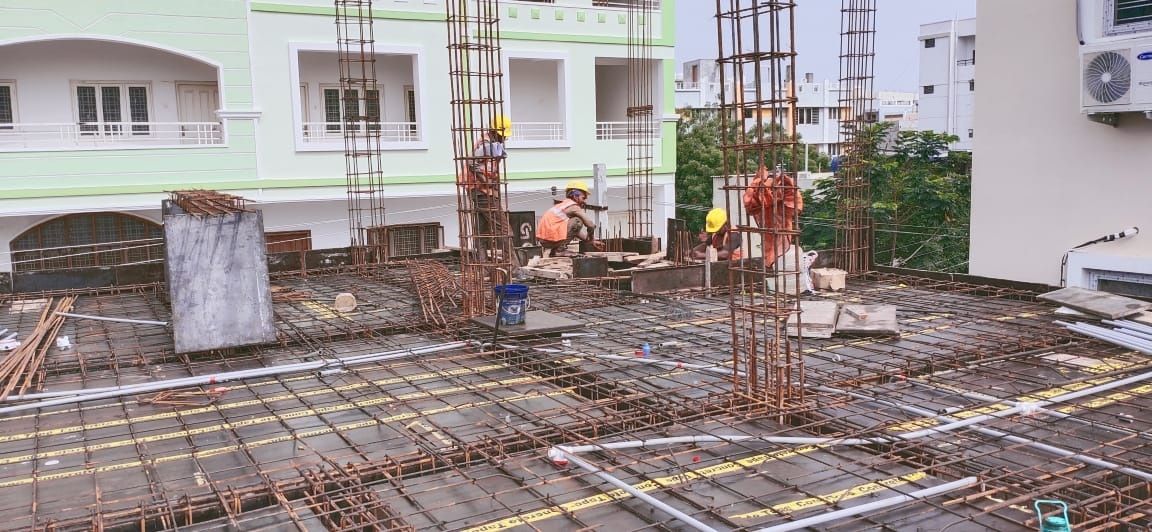
Labor has become the primary cost driver in 2026:
- Current scenario: Shortage of specialized labor pushing wages higher
- Labor share: Now represents 34% of total construction expenses
- Regional variation: Urban areas command 15-25% premium over rural locations
- Skill premium: Experienced masons, carpenters, and electricians cost more but deliver better quality and efficiency
Key insight: Despite higher wages, skilled workers reduce overall costs by 12-18% through efficiency and fewer mistakes.
Professional Fees
Quality professional services ensure structural integrity and design excellence:
- Architectural design: 4-8% of construction cost
- Structural engineering: 2-4% of construction cost
- Interior design: 8-15% of interior budget
- Project management: 5-10% of total project cost
- Soil testing: ₹5,000–₹15,000
Government Regulations and Permits
Regulatory compliance adds both time and cost:
- Building plan approval: ₹10,000–₹50,000
- Environmental clearances: ₹20,000–₹1,00,000 (if applicable)
- Fire safety approvals: ₹15,000–₹40,000 (multi-story)
- Occupancy certificate: ₹5,000–₹20,000
- Utility connections: ₹15,000–₹50,000
Good news: GST reforms reduced cement tax from 28% to 18% and bricks from 12% to 5%, lowering overall costs by 3-5%.
Location-Specific Factors
Micro-location creates significant cost variations:
Site Accessibility:
- Remote locations: 10-20% increase in material transportation
- Poor road access: 15-25% higher costs
- Urban sites with restrictions: 5-10% premium
Soil and Terrain:
- Rocky terrain: ₹200–₹500 per sq ft additional
- Soft soil needing deeper foundations: ₹150–₹400 per sq ft extra
- High water table: ₹100–₹300 per sq ft for waterproofing
Climate Considerations:
- Coastal areas: 10-15% premium for corrosion-resistant materials
- Earthquake zones: 8-12% additional for seismic design
- High rainfall areas: 6-10% more for waterproofing
Design Complexity
Architectural ambition directly impacts your budget:
Cost-Increasing Elements:
- Basements: +30-50% for that area
- Curved walls: +15-25%
- Cantilevers: +20-35%
- Each additional floor: +10-15%
- Custom features: +25-40%
Cost-Efficient Choices:
- Simple rectangular layouts
- Standard room sizes
- Conventional roofing
- Minimal structural complexity
Technology Adoption (2026 Advantage)
Modern construction technologies are reshaping costs:
Digital Technologies:
- BIM (Building Information Modeling): Reduces rework by 15-20%
- Virtual construction: Saves 10-15% on error corrections
- Drones for surveying: Cuts survey costs by 20-30%
Modern Methods:
- Prefabrication: Reduces timeline by 30-40%, labor by 20-25%
- Pre-engineered buildings: 15-20% cost savings
- 3D printing: Emerging tech with 25-35% potential savings
3. How to Calculate Construction Cost in India?
Accurate estimation prevents budget overruns. Here's the systematic approach:
Understanding Area Measurements
Carpet Area: Actual usable floor space (excludes walls, balconies)
Built-up Area: Carpet area + walls + balconies (typically 10-15% larger)
- This is what you use for construction cost calculation
Super Built-up Area: Built-up area + common areas (20-30% larger than carpet)
- Used for apartment sales, not construction costing
Simple Calculation Formula
Total Construction Cost = Built-up Area × Rate per sq ft
Example:
- Built-up area: 1,680 sq ft
- Quality: Standard finish at ₹2,200/sq ft
- Total: 1,680 × ₹2,200 = ₹36.96 lakhs
Component-Wise Breakdown
For accurate budgeting, break down by major components:
| Component | % of Total Cost | Example (₹37 lakhs) |
|---|
| Walls & Structure | 25–30% | ₹9.24–₹11.09 lakhs |
| Foundation | 10–15% | ₹3.70–₹5.54 lakhs |
| Roofing | 10–15% | ₹3.70–₹5.54 lakhs |
| Flooring & Finishing | 15–20% | ₹5.54–₹7.39 lakhs |
| Electrical & Plumbing | 10–15% | ₹3.70–₹5.54 lakhs |
| Doors & Windows | 10–15% | ₹3.70–₹5.54 lakhs |
| Painting & Misc. | 15–20% | ₹5.54–₹7.39 lakhs |
Don't Forget Additional Costs
| Additional Expense | Typical % | Example Amount |
|---|
| Architect Fees | 5% | ₹1.85 lakhs |
| Structural Engineer | 3% | ₹1.11 lakhs |
| Approvals & Permits | Lump sum | ₹50,000 |
| Soil Testing | Lump sum | ₹10,000 |
| Contingency Buffer | 10% | ₹3.70 lakhs |
| Total Additional | ~20% | ₹7.26 lakhs |
Final Realistic Budget: ₹37 lakhs + ₹7.26 lakhs = ₹44.26 lakhs
Professional Estimation
For projects above ₹30 lakhs, consider hiring:
- Quantity Surveyor: ₹5,000–₹25,000 (90-95% accuracy)
- Architect's Detailed Estimate: Included in fees (85-92% accuracy)
4. How Much Do Building Materials Cost for a House?
Understanding individual material costs helps you budget accurately and identify savings opportunities.
Structural Materials
Cement:
- OPC (Ordinary Portland Cement): ₹375–₹440 per 50kg bag
- PPC (Portland Pozzolana Cement): ₹350–₹380 per bag
- Consumption: 200-250 bags for 1,000 sq ft
- Total cost: ₹70,000–₹1,10,000
Steel:
- FE 500: ₹72–₹82 per kg
- FE 500D (earthquake-resistant): ₹75–₹85 per kg
- Consumption: 3.5-4.5 metric tons for 1,000 sq ft
- Total cost: ₹2,52,000–₹3,82,500
Ready-Mix Concrete:
- M20 (residential standard): ₹5,200–₹5,300 per cubic meter
- M25 (columns, heavy slabs): ₹5,350–₹5,400 per cubic meter
- Consumption: 25-35 cubic meters for 1,000 sq ft
- Total cost: ₹1,30,000–₹1,92,500
Walling Materials
AAC Blocks:
- 4" blocks: ₹50 per unit (partition walls)
- 6" blocks: ₹70 per unit (standard walls)
- 8" blocks: ₹95 per unit (load-bearing walls)
- Consumption: 1,800-2,200 blocks for 1,000 sq ft
- Total cost: ₹1,26,000–₹1,54,000
Traditional Bricks:
- Red clay bricks: ₹4,500–₹6,500 per 1,000 bricks
- Fly ash bricks: ₹3,500–₹5,000 per 1,000 (eco-friendly, cheaper)
- Consumption: 8,000-10,000 bricks for 1,000 sq ft
- Total cost: ₹36,000–₹85,000
Finishing Materials
Flooring (per sq ft):
- Ceramic tiles: ₹25–₹80
- Vitrified tiles: ₹40–₹150
- Granite: ₹100–₹350
- Marble: ₹150–₹500
- Wooden flooring: ₹200–₹800
Paint (per liter):
- Interior emulsion: ₹150–₹400 (covers 120-140 sq ft)
- Exterior paint: ₹180–₹450 (covers 100-120 sq ft)
- Premium emulsion: ₹400–₹800 (washable, durable)
Doors:
- Flush doors: ₹3,500–₹8,000
- Solid wood: ₹12,000–₹35,000
- UPVC: ₹8,000–₹18,000
- Main door (teak): ₹25,000–₹80,000
Windows (per sq ft):
- Aluminum: ₹350–₹600
- UPVC: ₹450–₹800 (energy-efficient)
- Wooden: ₹500–₹1,200
Electrical & Plumbing
Electrical (for 1,000 sq ft):
- Copper wiring: ₹6,000–₹22,500
- Switches & sockets: ₹1,250–₹10,500
- Distribution board: ₹2,500–₹8,000
- Lights & fans: ₹9,000–₹70,000
- Total: ₹26,750–₹1,26,000
Plumbing (for 1,000 sq ft):
- CPVC/PVC pipes: ₹7,250–₹28,000
- Sanitary ware: ₹16,000–₹1,20,000
- Kitchen sink: ₹2,500–₹15,000
- Taps & faucets: ₹3,000–₹40,000
- Water tank: ₹8,000–₹36,000
- Total: ₹36,750–₹2,39,000
Material Cost Summary (1,000 sq ft)
| Quality Level | Material Cost Range |
|---|
| Basic | ₹5.7–9.9 lakhs |
| Standard | ₹7.7–13.3 lakhs |
| Premium | ₹11.7–21.8 lakhs |
Add 30-40% for labor to get total construction cost.
5. How to Reduce Construction Costs?
Smart strategies can cut your construction budget by 20-35% without compromising quality.
Design Smart
Simplify Your Architecture
- Rectangular layouts cost 15-25% less than complex designs
- Avoid unnecessary curves, cantilevers, and complex roofing
- Multi-functional spaces eliminate redundant rooms
- Savings: ₹2-5 lakhs on a ₹30 lakh project
Design for Standard Sizes
- Use standard door/window sizes
- Plan rooms in multiples of tile dimensions
- Minimize material cutting waste
- Savings: 8-12% on materials
Create a Detailed Budget
- Track every expense to prevent budget creep
- Set aside 10-12% contingency
- Prioritize must-haves vs. nice-to-haves
- Benefit: Prevents 20-30% overruns
Choose Materials Wisely
Buy Local
- Reduces transportation costs by 15-25%
- Faster delivery, supports local economy
- Savings: ₹1.5-3 lakhs on ₹30 lakh project
Order in Bulk
- Negotiate 10-20% discounts
- Coordinate with neighbors for combined purchases
- Savings: ₹1-2.5 lakhs on materials
Use Alternatives
- Fly ash bricks instead of clay: 20-30% cheaper
- M-sand instead of river sand: 25-35% savings
- Vitrified tiles instead of marble: 60-70% savings
- UPVC doors instead of solid wood: 40-50% savings
- Total savings: ₹3-6 lakhs on finishing
Optimize Labor
Hire Skilled Workers
- Higher wages (10-15% more) but better efficiency
- Fewer mistakes, less rework
- Net savings: 12-18% despite higher wages
Choose Experienced Contractors
- Better resource optimization
- Transparent pricing, no hidden costs
- Savings: 15-20% through efficiency
Leverage Technology
Prefabrication & Modular Construction
- Reduces on-site labor by 20-25%
- Minimizes waste by 30-40%
- Faster construction (30-40% time savings)
- Total savings: 15-25% on project cost
Building Information Modeling (BIM)
- Identifies errors before construction
- Reduces rework by 15-20%
- Savings: ₹1.5-3 lakhs on medium projects
Time It Right
Build Off-Season
- Monsoon period: 10-15% lower labor rates
- Material suppliers offer discounts
- Savings: ₹1.5-3 lakhs on labor
- Note: Factor in potential delays
Long-Term Savings
Energy Efficiency Investments
- Solar water heater: ₹15,000-₹40,000 upfront, saves ₹6,000-₹18,000/year
- UPVC double-glazed windows: Reduces AC costs by 25-35%
- Proper insulation: Cuts cooling/heating by 30-40%
Savings Potential Summary
| Strategy | Difficulty | Savings | Best For |
|---|
| Simplified Design | Easy | 15–25% | All budgets |
| Bulk Purchase | Medium | 10–15% | Medium-large projects |
| Alternative Materials | Easy | 20–30% | Budget-conscious |
| Skilled Labor | Easy | 12–18% | Quality-focused |
| Prefabrication | Medium | 15–25% | Fast-track projects |
| Off-season Build | Easy | 10–15% | Flexible timelines |
Realistic total savings: 20-35% by combining multiple strategies
Frequently Asked Questions
How much time does it take to build a house?
Typically 12-24 months depending on size and complexity. Single-story homes (1,000-1,500 sq ft) take 12-15 months, while two-story homes need 15-20 months. Add 3-6 months for pre-construction approvals. Monsoon season can add 2-4 months delay—October to March is the ideal construction period. Always plan for a 15-20% time buffer.
Can I avail a home loan for constructing a house?
Yes. Banks offer construction loans if you own the plot and have approved building plans. You need a credit score of 750+ for best rates (8.50-8.80% p.a.). Loans go up to ₹15 crores with 75-90% LTV and 30-year tenure. Disbursement happens in stages: 20-30% after plan approval, then at foundation, roof, brickwork, and completion. Required documents include land ownership proof, approved plans, income proof, and encumbrance certificate.
How to construct a house step by step in India?
Planning (3-6 months): Verify land, soil testing, hire architect/engineer, get approvals. Foundation (1.5-3 months): Excavation, laying foundation, plinth work. Superstructure (3-6 months): Columns, walls, beams, roof slab. Roofing (2-4 months): Waterproofing, terrace work. Services (1.5-3 months): Electrical wiring, plumbing. Finishing (3-6 months): Plastering, flooring, doors, windows, painting. Completion (1 month): Inspection, occupancy certificate, utility connections. Total: 12-24 months.
Is it cheaper to build or buy a house in India?
Build if you own land: Construction costs ₹18-75 lakhs for 1,000 sq ft vs. buying at ₹50-120 lakhs. You save 20-40% plus avoid monthly maintenance charges (₹2,000-₹10,000). Buy in metro cities without land: Land costs ₹15,000-₹50,000/sq ft in Mumbai, making ready flats cheaper. Building takes 12-24 months vs. immediate possession. Bottom line: Building is cheaper with owned land in Tier-2 cities; buying is better in metros without land.