The Delhi Metro Phase 4 project transforms public transportation across the National Capital Region with 112 kilometers of new metro lines spanning six corridors. The Rs 24,948.65 crore project adds 44 stations and provides last-mile connectivity to emerging housing hubs in NCR.
Latest Updates: March 2026
Prime Minister Narendra Modi inaugurated two major corridors on March 8, 2026, marking a milestone in Delhi Metro's expansion:
Newly Operational Lines:
- Majlis Park to Maujpur Babarpur: 12.3 km extension on Pink Line
- Deepali Chowk to Majlis Park: 9.9 km section on Magenta Line
The PM also launched three corridors totaling 16.1 km under Delhi Metro Phase 5A during the same ceremony.
Previously Opened:
- Janakpuri West to Krishna Park Extension: 2.5 km section operational since January 2025 (originally opened September 2024)
Under Construction:
- Janakpuri West to RK Ashram corridor
- Aerocity to Tughlaqabad corridor
- Rithala to Kundli corridor construction has begun
Station Renaming: February 2026 Updates
Delhi Chief Minister Rekha Gupta, heading the State Naming Authority, announced revisions to 21 metro station names after reviewing the Detailed Project Report.
Names Retained (12 stations):
Majlis Park, Bhalswa, Haiderpur Badli Mor, Deepali Chowk, Yamuna Vihar, Bhajanpura, Khajuri Khas, Surghat, Jharoda Majra, Burari, Pushpanjali, Maujpur-Babarpur
Modified Names (7 stations):
- Uttari Pitampura-Prashant Vihar (previously Prashant Vihar)
- Jagatpur-Wazirabad (previously Jagatpur)
- Nanak Pyau-Derawal Nagar (previously Derawal Nagar)
- Khanpur-Vayusainabad (previously Khanpur)
- Nanaksar-Sonia Vihar (previously Sonia Vihar)
- Shri Ram Mandir Mayur Vihar (previously Mayur Vihar Pocket-1)
- Mangolpur Kalan-West Enclave (previously West Enclave)
Completely Renamed (2 stations):
- Haiderpur Village (previously North Pitampura)
- Madhuban Chowk (previously Pitampura)
Project Overview: Quick Facts
| Specification | Details |
|---|
| Total Length | 103.93 km (originally planned 112 km) |
| Number of Lines | Six corridors |
| New Stations | 45 stations (priority corridors) |
| Total Budget | Rs 45,000 crore (Rs 24,948.65 crore for priority corridors) |
| Underground Sections | 28 km across three corridors |
| Elevated Sections | 65 km of new elevated lines |
| Completion Timeline | Priority corridors by March 2026, full project by 2028 |
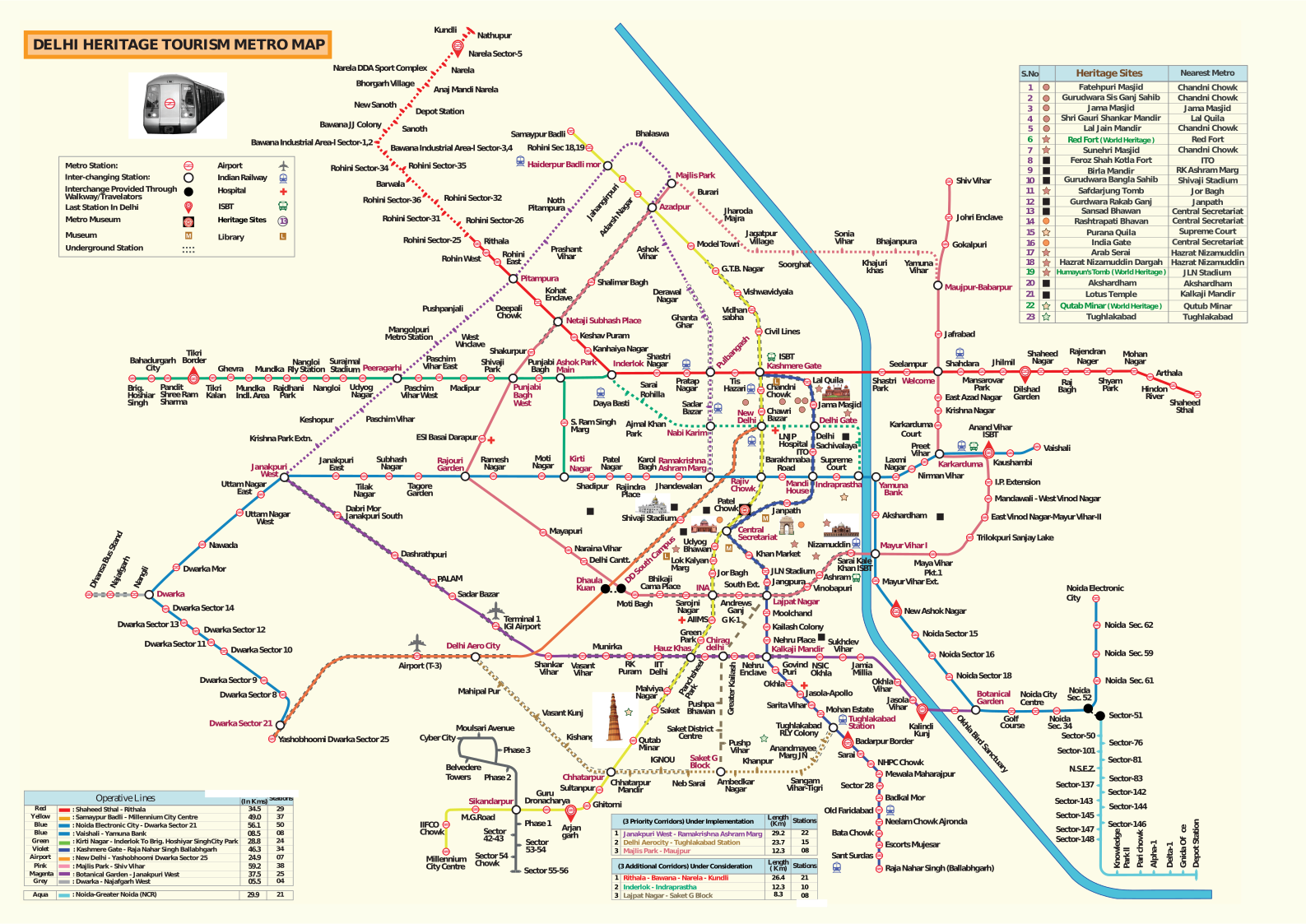
Approved Lines: Detailed Breakdown
Line 10: Aerocity to Tughlaqabad (Golden Line)
Technical Specifications:
- Length: 23.622 km
- Structure: 4.2 km elevated + 19.343 km underground
- Stations: 15
- Depot: Sarita Vihar (connected with Violet Line)
- Depth: 23 meters below railway level
- Railway Crossings: Passes below 17 active railway tracks spanning 110 meters
Engineering Marvel:
The line uses a 91-meter Tunnel Boring Machine and represents a major portion of the 40 km underground network under Phase 4. A breakthrough at Vasant Kunj Metro Station signals rapid construction progress.
Station List with Interchanges:
- Aerocity (interchange with Airport Express Line)
- Mahipalpur
- Vasant Kunj
- Kishangarh
- Chattarpur (interchange with Yellow Line via underground connection)
- Chattarpur Mandir
- IGNOU
- Neb Sarai
- Saket G-Block (interchange with Brown Line)
- Ambedkar Nagar
- Khanpur-Vayusainabad
- Sangam Vihar
- Maa Anandmayee Marg
- Tughlakabad Railway Colony
- Tughlaqabad (interchange with Violet Line)
Special Features:
- Four-level underground structure at Tughlaqabad with 23-meter-deep parking
- 100-meter subway linking existing and new Tughlaqabad stations
- Direct connectivity to IGI Airport terminals via Airport Express Line
- Reduces travel time to airport terminals to 90 minutes from far-flung Faridabad areas
Line 7: Mukundpur to Maujpur (Pink Line Extension)
Technical Specifications:
- Length: 12.558 km
- Structure: Fully elevated
- Stations: 8
- Status: Operational since March 8, 2026
Historic Achievement:
This extension creates the longest metro corridor in Delhi at 71.6 km and makes the Pink Line India's first fully operational ring metro with 12 interchange stations and 46 total stations.
Station List:
- Burari - Serves affordable housing area in northeast Delhi
- Jharoda - Connected via 580m eco-friendly bridge over Yamuna
- Jagatpur Village
- Soorghat - Northern end of Yamuna bridge
- Nanaksar-Sonia Vihar
- Khajuri Khas
- Bhajanpura
- Yamuna Vihar
- Maujpur-Babarpur (terminal station)
Wazirabad Bridge Project:
The 580-meter bridge connecting Soorghat and Sonia Vihar becomes the fifth metro bridge over Yamuna River, constructed with eco-friendly design principles.
Line 8: Janakpuri West to RK Ashram (Blue Line Extension)
Technical Specifications:
- Length: 28.92 km
- Structure: 21.18 km elevated + 7.74 km underground
- Stations: 22
- Completion Target: March 2026
Connectivity Impact:
Provides direct access to west, northwest, and north Delhi regions with multiple interchange opportunities.
Complete Station List:
- RK Ashram Marg (interchange with Magenta Line via new underground station)
- Nabi Karim
- Sadar Bazaar
- Pul Bangash (interchange with Red Line)
- Ghanta Ghar/Subji Mandi
- Nanak Pyau-Derawal Nagar
- Ashok Vihar
- Azadpur (triple interchange: Yellow, Pink, Magenta Lines)
- Bhalaswa
- Badli Mor (interchange with Yellow Line)
- Haiderpur Village
- Uttari Pitampura-Prashant Vihar (interchange with Red Line)
- Madhuban Chowk
- Deepali Chowk
- Pushpanjali
- Mangolpur Kalan-West Enclave
- Mangolpuri
- Peeragarhi Chowk (interchange with Green Line)
- Paschim Vihar
- Meerabagh
- Keshopur
- Krishna Park Extension (operational since January 2025)
Interchange Strategy:
Every fourth station becomes an interchange point, enabling quick transfers and shorter routes across the network.
Lajpat Nagar to Saket G-Block (Brown Line/Golden Line Extension)
Technical Specifications:
- Length: 8.3 km (7.96 km in some reports)
- Structure: Fully elevated
- Stations: 8
- Purpose: Shortest Phase 4 corridor linking Pink, Violet, and Magenta Lines
Station List with Connections:
- Lajpat Nagar (interchange with Violet Line, Pink Line, future Golden Line)
- Andrews Ganj
- Greater Kailash-1
- Chirag Dilli (interchange with Magenta Line)
- Pushpa Bhawan
- Saket District Centre
- Pushp Vihar
- Saket G Block (interchange with Golden Line)
Inderlok to Indraprastha (Green Line Extension)
Technical Specifications:
- Length: 12.37 km (12.3 km in some reports)
- Structure: Mixed elevated and underground
- Stations: 10
- Strategic Value: Connects six metro lines (Red, Yellow, Magenta, Violet, Blue, Airport Express)
Station List:
- Inderlok (interchange with Red Line, future Magenta Line)
- Dayabasti
- Sarai Rohilla
- Ahmal Khan Park
- Nabi Karim
- New Delhi Railway Station (interchange with Yellow Line, Airport Express)
- LNJP Hospital
- Delhi Gate
- IG Stadium
- Indraprastha (terminal station)
Lines Awaiting Government Approval
Line 1: Rithala to Narela (Red Line Extension)
Technical Specifications:
- Length: 21.73 km
- Structure: Fully elevated
- Stations: 15
- Historic Significance: First Delhi Metro connection to Haryana and Uttar Pradesh
Complete Station List:
- Rohini Sector 25
- Rohini Sector 26
- Rohini Sector 31
- Rohini Sector 32
- Rohini Sector 36
- Rohini Sector 37
- Barwala
- Put Khurd
- Bawana Industrial Area-1
- Bawana Industrial Area-2
- Bawana
- Bawana JJ Colony
- Sanpath
- New Sanath Colony
- Depot Station
- Bhorgarh Village
- Anaj Mandi Narela
- Narela DDA Sports Complex
- Narela
Line 1: Narela to Kundli (Red Line Extension to Haryana)
Technical Specifications:
- Length: 4.86 km
- Structure: Fully elevated
- Stations: 3
Station List:
- Narela Sector 5
- Kundli
- Nathupur
Extended Rithala to Nathupur Project
Comprehensive Details:
- Total Length: 26.5 km spanning Delhi and Sonipat
- Total Stations: 21
- Project Cost: Rs 6,230 crore
- Delhi Section Cost: Rs 5,685.22 crore
- Sonipat Section Cost: Rs 544.78 crore
- Funding Structure: 80% Haryana Government, 20% Central Government
- Expected Completion: 2028
Complete Station List (Rithala to Nathupur):
- Rithala
- Rohini Sector 25
- Rohini Sector 26
- Rohini Sector 31
- Rohini Sector 32
- Rohini Sector 36
- Barwala
- Rohini Sector 35
- Rohini Sector 34
- Bawana Industrial Area 1 Sector 3
- Bawana Industrial Area 1 Sector 1 & 2
- Bawana JJ Colony
- Sanoth
- New Sanoth
- Depot Sanoth
- Bhorgarh Village
- Annaj Mandi Narela
- Narela DDA Sports Complex
- Narela
- Narela Sector 5
- Kundli
- Nathupur
Line 3: Noida Sector 62 to Sahibabad (Blue Line Extension)
Technical Specifications:
- Length: 5.1 km
- Structure: Fully elevated
- Stations: 5
- Development Authority: Ghaziabad Development Authority revival
- Funding Request: Rs 2,441 crore (Rs 1,873 crore for metro project)
Station List:
- Vaibhav Khand
- Indirapuram
- Shakti Khand
- Vasundhra Sector 5
- Sahibabad (interchange station)
Line 4: Vaishali to Mohan Nagar (Blue Line Extension)
Technical Specifications:
- Length: 5.06 km
- Structure: Fully elevated
- Stations: 4
Station List:
- Prahlad Garhi
- Vasundhara Sector 14
- Sahibabad (interchange)
- Mohan Nagar (new building connecting with Red Line's Mohan Nagar)
Special Infrastructure Projects
Ridge Management Board Approval
The Tughlaqabad-Aerocity line received crucial approval from the Ridge Management Board for construction through Delhi Ridge, requiring removal of 1,000 trees from the "Lungs of Delhi."
Ridge Section Breakdown:
- Total Ridge Length: 5.2 km
- Southern Ridge: 1.739 km
- South Central Ridge: 1.182 km
- Morphological Ridge: 2.373 km
Airport Integration Projects
Terminal Connectivity Enhancement:
A new integrated metro station will connect Terminal 1 and Terminal 3 at IGI Airport. Currently, Airport Express Line (Orange Line) serves Terminal 3, while Magenta Line connects Terminal 1, but no direct connectivity exists between terminals.
Passenger Convenience Features:
- Check-in facilities planned at Botanical Garden Metro Station
- Direct Aerocity to Terminal 1 connectivity via new Golden Line station
- Seamless inter-terminal commute for passengers
Advanced Interchange Network
Phase 4 creates 14 new interchange points, bringing the total from 29 to 43 stations. Every fourth Phase 4 station becomes an interchange.
Major Triple Interchange Stations
Azadpur Metro Station:
- Lines Connected: Yellow Line, Pink Line, Magenta Line
- Strategic Location: Major commercial and residential hub
- Passenger Benefit: Direct connectivity across north, west, and central Delhi
Future Triple Interchanges (Phase 5):
- Central Secretariat: Yellow, Violet, Magenta Lines
- New Delhi: Yellow, Airport Express, Magenta Lines
- Lajpat Nagar: Violet, Pink, Golden Lines
- Inderlok: Red, Green, Magenta Lines
Underground Interchange Innovations
Chhatarpur Metro Station:
- Current: Elevated station on Yellow Line
- New Addition: Underground station for Golden Line
- Connection: Subway linking both levels
- Engineering: Complex multi-level interchange design
RK Ashram Marg Transformation:
- Current: Magenta Line station
- Addition: New underground station for Blue Line extension
- Purpose: Decongests busy Blue Line route
- Benefit: Shorter routes from Central to New Delhi
RRTS and Multi-Modal Integration
Delhi-Ghaziabad-Meerut RRTS Connection
Anand Vihar Integration Hub:
- RRTS Station: Delhi-Ghaziabad-Meerut corridor
- Metro Lines: Blue Line and Pink Line interchange
- Bus Terminal: Anand Vihar ISBT
- Railway: Anand Vihar railway station
- Concept: Complete multi-modal transportation hub
Feeder Services Network
Bus Connectivity:
- Dedicated feeder bus services at metro stations
- Integration with Delhi Transport Corporation routes
- Last-mile connectivity to residential areas
Technology Integration:
- DMRC Sarthi-Momentum 2.0 app
- Integrated booking for bikes, taxis, autorickshaws
- Real-time tracking and route planning
Noida Metro Integration Projects
Botanical Garden to Sector 142 Link
Project Status:
- Length: 11.56 km
- Operator: Noida Metro Rail Corporation (NMRC)
- Approval: Awaiting final central government clearance
- Construction: Ready to begin within months
Strategic Importance:
- Current Connectivity: Blue Line (Mayur Vihar to Sector 62 Electronic City)
- New Connectivity: Direct Greater Noida to Delhi Metro Magenta Line
- Airport Access: Links Greater Noida directly to IGI Airport
Proposed Station List:
- Botanical Garden (interchange with Blue and Magenta Lines)
- Sector 44
- Noida Sector 96 (new building)
- Sector 97
- Sector 105
- Sector 108
- Sector 93
- Panchsheel Balak Inter College (Sector 91)
Gurgaon Connectivity Enhancement
Yellow Line Integration Benefits
Current Connectivity:
- High ridership on Yellow Line due to Gurgaon link
- Tughlaqabad-Aerocity route enables easier south Delhi and Gurgaon access
Future Expansion Plans:
- Millennium City Centre to Cyber City: New metro line extension
- Enhanced Coverage: Deeper penetration into Gurgaon city
- Phase 4 Impact: Instrumental in boosting overall Gurgaon connectivity
Ghaziabad Expansion Plans
Pink Line Extension to Mandola
Project Details:
- Route: Shiv Vihar to Mandola (Loni town)
- Distance: Nearly 10 km
- Authority: Ghaziabad Development Authority planning
- Beneficiaries: Loni area residents, Tronica City industrial workers
- Demand: Long-standing resident requirement
Delhi Metro Phase 5 Preview
Phase 5A Priority Corridors (16.1 km inaugurated March 2026)
Central Vista Corridor:
- Length: 9.5 km
- Structure: Underground
- Route: Indraprastha to RK Ashram
- Significance: Connects government district
Aerocity to Terminal 1 Corridor:
- Length: 2.3 km
- Structure: Underground
- Purpose: Direct airport terminal connectivity
Tughlaqabad to Kalindi Kunj Corridor:
- Length: 4 km
- Structure: Elevated
- Stations: 3
- Strategic Value: South Delhi connectivity enhancement
Phase 5 Complete Plan
Total Scope:
- Corridors: 18 new metro corridors
- Development Phases: Two-phase implementation
- Integration: Connectivity with Phase 4 links (Aerocity, Tughlaqabad)
Phase 5 Second Phase (14 corridors):
- Mayapuri to Kashmiri Gate
- CGO Complex to Surya Vihar (Faridabad)
- Mayur Vihar Phase-3 to Loni Border
- Najafgarh-Nangloi Metro Corridor
Interstate Cooperation:
- Delhi-Haryana Partnership: 3 corridors
- Delhi-UP Cooperation: 2 corridors
- Within Delhi: 5 corridors
- Uttar Pradesh: 3 corridors
- Haryana: 2 corridors
Comprehensive Funding Structure
Total Project Investment
Phase 4 Complete Budget:
- Total Allocation: Rs 24,948.65 crore
- Priority Corridors: Covered within total budget
- Extended Budget: Rs 45,000 crore for complete network
Funding Sources Breakdown
Japanese International Cooperation Agency (JICA):
- Total Commitment: Rs 6,252.91 crore
- Received Amount: Rs 4,309.53 crore
- Covered Corridors: Lajpat Nagar-Saket G Block, Inderlok-Indraprastha, Rithala-Narela-Nathupur
Government Contributions:
- Central Government: Proportional share of remaining amount
- Delhi Government: State contribution plus recent Rs 3,300 crore release
- External Loans: Balance funding through international sources
Recent Financial Developments:
- Delhi government released Rs 3,300 crore to fast-track Phase 4 corridors
- Cabinet approved Rs 3,386 crore for expansion with 49 new stations
- Government cleared funding for Phase 4 corridors and increased metro funding
Real Estate Market Impact Analysis
Current Property Market Data
| Locality | Average Price (₹/sq ft) | YOY Price Change | Average Monthly Rent (₹) |
|---|
| Janakpuri | 15,000 | +5.34% | 30,000 |
| Pitampura | 17,000 | -3.44% | 33,800 |
| Uttam Nagar | 6,000 | -0.55% | 15,000 |
| Prashant Vihar | 15,600 | -15.49% | 36,000 |
| Paschim Vihar | 18,000 | +4.57% | 28,000 |
| Vasant Kunj | 15,000 | -1.61% | 35,000 |
| Narela | 5,400 | -7.89% | 9,250 |
Market Transformation Expectations
Enhanced Connectivity Impact:
- Smooth connectivity across eastern and southern Delhi
- Direct airport connectivity benefits
- Commercial and residential property growth along corridors
Investment Opportunities:
- DDA Housing Schemes: New launches in Narela and connected areas
- Rental Market Growth: Significant rental landscape changes expected
- Commercial Development: Business hubs along metro corridors
Price Appreciation Forecast:
- Industry Expert Prediction: 5-10% price rise as completion approaches
- Capital Value Growth: Significant increases in property capital values
- Rental Rate Enhancement: Proportional rental increases across corridors
Technical Engineering Specifications
Underground Construction Details
Total Underground Network:
- Phase 4 Underground: 40 km total network
- New Underground Sections: 28 km across three corridors
- Major Underground Portion: 19.3 km in Tughlaqabad-Aerocity corridor
Tunnel Boring Machine Specifications:
- Length: 91 meters
- Recent Achievement: Breakthrough at Vasant Kunj Metro Station
- Technology: Advanced TBM for complex underground construction
Railway Integration Challenges
Golden Line Railway Crossings:
- Active Tracks Crossed: 17 railway lines
- Track Span: 110 meters total length
- Depth Below Rails: 23 meters
- Approval: Indian Railways clearance obtained
- Engineering Complexity: Major underground construction challenge
Structural Engineering Features
Tughlaqabad Station Design:
- Structure: Four-level underground complex
- Parking Depth: 23 meters below ground
- Connectivity: 100-meter subway for inter-line transfers
- Innovation: Advanced underground station architecture
Mobile Technology Integration
DMRC Sarthi-Momentum 2.0 App Features
Core Metro Services:
- Metro route planning with real-time updates
- Fare calculation across all lines
- Station finder with GPS integration
- Service disruption notifications
Integrated Transportation:
- Bike booking and rental services
- Taxi and cab booking integration
- Autorickshaw booking facility
- Multi-modal journey planning
Customer Service Features:
- Helpline number directory
- Complaint registration system
- Feedback submission portal
- Real-time customer support
Accessibility Features:
- Route accessibility information
- Station facility details
- Elevator and escalator status
- Disabled-friendly route planning
Construction Timeline and Milestones
Historical Progress
2019: Construction initiation on Janakpuri West-RK Ashram corridor
December 30, 2019: Civil work began on 10 elevated stations
September 2024: Janakpuri West-Krishna Park Extension opened
January 2025: Section renamed and confirmed operational
February 23, 2026: Station naming authority revisions announced
March 8, 2026: PM Modi inaugurated two major corridors
Upcoming Milestones
March 2026: Target completion for priority corridors
July 2024: Originally planned operational date for elevated stations
Mid-2025: Expected completion for Majlis Park-Maujpur line (achieved early)
2028: Full Phase 4 project completion
2028: Rithala-Nathupur extension completion
Current Construction Status
Fully Operational:
- Majlis Park-Maujpur Babarpur (12.3 km)
- Deepali Chowk-Majlis Park (9.9 km)
- Janakpuri West-Krishna Park Extension (2.5 km)
Under Active Construction:
- Remaining Janakpuri West-RK Ashram sections
- Aerocity-Tughlaqabad corridor
- Rithala-Kundli corridor
Approval Pending:
- Noida Sector 62-Sahibabad extension
- Vaishali-Mohan Nagar extension
- Complete Rithala-Narela-Nathupur project
Environmental and Social Impact
Ridge Area Environmental Considerations
Environmental Clearance:
- Ridge Management Board approval obtained
- 1,000 trees removal authorized
- Eco-friendly construction methods mandated
- Compensatory plantation requirements
Green Belt Impact:
- 5.2 km section through Delhi Ridge
- "Lungs of Delhi" preservation measures
- Environmental monitoring during construction
- Post-construction ecological restoration
Social Benefits and Community Impact
Affordable Housing Connectivity:
- Burari area affordable housing access
- Narela sub-city improved connectivity
- Working-class neighborhood benefits
- Reduced commute times for residents
Employment Generation:
- Construction phase job creation
- Operational phase employment opportunities
- Indirect economic benefits for local businesses
- Skill development for local workforce
Future Expansion and Vision
Long-term Network Planning
Phase 6 Preliminary Concepts:
- Further NCR integration
- Smart city connectivity
- Technology advancement integration
- Sustainable transportation focus
Regional Integration Goals:
- Complete NCR metro network
- Interstate connectivity enhancement
- Multi-modal transportation hubs
- Economic corridor development
Technology Integration Roadmap
Smart Metro Features:
- AI-powered crowd management
- Predictive maintenance systems
- Energy-efficient operations
- Digital passenger experience enhancement
Sustainability Initiatives:
- Solar power integration
- Rainwater harvesting systems
- Waste management optimization
- Carbon footprint reduction
Frequently Asked Questions (FAQs)
Q: When will Delhi Metro Phase 4 be fully operational?
A: Priority corridors are targeted for completion by March 2026, with the complete Phase 4 project expected to finish by 2028. Two major corridors became operational in March 2026.
Q: What is the total cost of Delhi Metro Phase 4?
A: The project costs Rs 24,948.65 crore for priority corridors, with the complete network budget estimated at Rs 45,000 crore. Funding comes from JICA loans, Central Government, Delhi Government, and external sources.
Q: How many new stations will be added in Phase 4?
A: Phase 4 adds 44 new metro stations across six corridors, with 45 stations planned for priority corridors specifically.
Q: Which lines are currently operational under Phase 4?
A: As of March 2026, the Majlis Park-Maujpur Babarpur (12.3 km), Deepali Chowk-Majlis Park (9.9 km), and Janakpuri West-Krishna Park Extension (2.5 km) sections are operational.
Q: What is the Golden Line and when will it open?
A: The Golden Line (formerly Silver Line) runs 23.6 km from Aerocity to Tughlaqabad with 15 stations. It's expected to complete by March 2026 and will connect to the Airport Express Line.
Q: Will the Pink Line become a complete ring after Phase 4?
A: Yes, with the Majlis Park-Maujpur extension operational since March 2026, the Pink Line became India's first fully operational ring metro at 71.6 km with 46 stations.
Q: Which metro line will connect to Haryana first?
A: The Rithala-Narela-Kundli extension of the Red Line will be Delhi Metro's first connection to Haryana, pending approval. The complete Rithala-Nathupur project extends to Sonipat.
Q: How will Phase 4 improve airport connectivity?
A: The Golden Line connects Aerocity to the Airport Express Line, and a new integrated station will link Terminal 1 and Terminal 3 directly. Travel time to airport terminals will reduce to around 90 minutes from distant areas.
Q: Why were some station names changed in February 2026?
A: Delhi's State Naming Authority, led by CM Rekha Gupta, reviewed 21 station names from the Detailed Project Report. They retained 12 names, modified 7, and completely renamed 2 to better reflect local geography and culture.
Q: Which stations will have triple interchange facilities?
A: Currently, only Kashmere Gate offers triple interchange. Phase 4 creates Azadpur as a triple interchange (Yellow, Pink, Magenta Lines). Phase 5 will add Central Secretariat, New Delhi, Lajpat Nagar, and Inderlok as triple interchanges.
Q: How many interchange stations will Phase 4 add?
A: Phase 4 adds 14 interchange points, bringing the total from 29 to 43 stations. Every fourth Phase 4 station becomes an interchange point.
Q: Will Burari get metro connectivity?
A: Yes, Burari station on the Majlis Park-Maujpur extension became operational on March 8, 2026. This significantly benefits residents of this affordable housing area in northeast Delhi.
Q: How deep will the Golden Line run below railway tracks?
A: The Golden Line runs 23 meters below railway level and crosses 17 active railway tracks spanning 110 meters. This required complex engineering and Indian Railways approval.
Q: What is special about the Wazirabad bridge?
A: The 580-meter bridge over Yamuna River connects Soorghat and Sonia Vihar stations. It's the fifth metro bridge over Yamuna and uses eco-friendly construction methods.
Q: How much of Phase 4 will be underground?
A: Phase 4 includes 40 km of underground network, with 28 km of new underground corridors across three different lines. The Tughlaqabad-Aerocity corridor alone has 19.3 km underground.
Q: What technology is used for underground construction?
A: DMRC uses a 91-meter Tunnel Boring Machine for underground construction. Recent breakthrough at Vasant Kunj Metro Station demonstrates the advanced tunneling technology in use.
Q: How will Phase 4 integrate with RRTS?
A: The Delhi-Ghaziabad-Meerut RRTS connects with Delhi Metro at Anand Vihar, which also links to Blue and Pink Lines, Anand Vihar ISBT, and railway station, creating a complete multi-modal hub.
Q: Will Phase 4 connect to Noida Metro?
A: Current connectivity exists between Blue Line and Noida Metro at Sector 62. A new 11.56 km link from Botanical Garden to Sector 142 awaits central approval, which will connect Greater Noida directly to Delhi Metro's Magenta Line.
Q: How will Phase 4 improve Gurgaon connectivity?
A: The Tughlaqabad-Aerocity route integrates with Yellow Line for easier south Delhi and Gurgaon access. Future plans include extending the metro deeper into Gurgaon from Millennium City Centre to Cyber City.