Market Trends
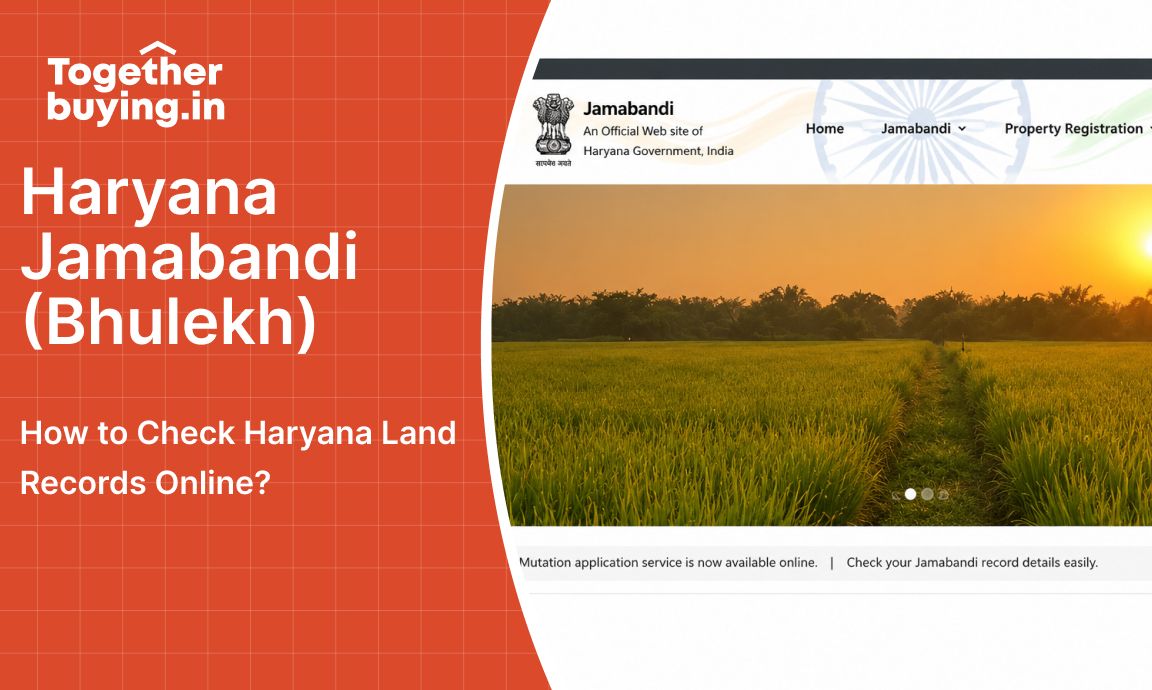
Haryana Jamabandi (Bhulekh): How to Check Haryana Land Records Online?
17 Jul 2026
Market Trends
17 Jul 2026
Content
No Blogs content found
It looks like there haven’t been any blogs yet!
If you own land in Haryana or plan to buy a property there, you can now check your land records online in minutes. Haryana Jamabandi is the official record that shows who owns a piece of land, how big it is, and what rights are attached to it. The state government has put these records online through its official portal, so you no longer need to visit a Patwari or Tehsil office for basic checks.
This guide explains everything you need to know about Haryana Jamabandi (also called Haryana Bhulekh). You will learn what these records mean, how to read them, and how to download your Jamabandi Nakal step by step. You will also find out how to check mutation (Intkal) status, verify land ownership, and avoid the common mistakes people make when searching for records.
By the end, you will be able to check Haryana land records online with confidence, whether you are a farmer, a homebuyer, or someone settling a family land matter.
Haryana Jamabandi is the official land record that lists the owner of a land parcel, the area of the land, the type of land, and the rights linked to it. It is also known as the Record of Rights (RoR) or Bhulekh in Haryana. The record is updated regularly, usually once every five years, by the Revenue Department of Haryana.
In simple words, Jamabandi answers one main question: Who owns this land and what are the details of that ownership?
The record includes:
"Bhulekh" is a common Hindi word made of two parts - bhu (land) and lekh (record). So "Haryana Bhulekh" simply means "land records of Haryana." Many people use Jamabandi and Bhulekh to mean the same thing.
Definition box: Haryana Jamabandi is the official Record of Rights for a land parcel in Haryana. It shows ownership, area, land type, and attached rights, and is maintained by the Revenue Department of Haryana.
These terms often confuse people, but each one means something specific. Jamabandi is the full ownership record, Fard is a copy of it, Mutation records a change in ownership, and Khasra and Khata are numbers used to identify land and accounts. The table below breaks it down in plain English.
| Term | What It Means | Purpose | Simple Example |
|---|---|---|---|
| Jamabandi | The main Record of Rights (RoR) for a land parcel. | Shows the current ownership, cultivation, and other land details. | "This record shows Ram Kumar owns 2 acres in Village X." |
| Bhulekh | A Hindi term meaning "land record." | Used as the general name for digital land records in Haryana. | Used in the same context as Jamabandi records. |
| Fard | A certified copy or extract of the Jamabandi. | Used as documentary proof of land ownership. | You obtain a Fard to submit to a bank while applying for a loan. |
| Mutation (Intkal) | The official record of a change in ownership. | Updates land records after a sale, inheritance, gift, or other transfer. | After purchasing land, the mutation process transfers ownership to your name. |
| Khasra Number | A unique identification number assigned to each plot of land. | Helps identify a specific land parcel in revenue records. | Plot number "125/2" in a particular village. |
| Khata (Khewat) Number | An account number assigned to an owner or a group of co-owners. | Groups all land parcels held under the same ownership. | All plots owned by one family are recorded under Khewat No. 45. |
The key point: Jamabandi and Bhulekh are the same thing. Fard is a copy you download. Mutation is the process that keeps the record up to date.
The official Haryana Jamabandi portal is jamabandi.nic.in. This is the government website run to help people access land records of Haryana, including Registration, Mutation, and Jamabandi details. Always use this official portal to avoid fraud or wrong information from unofficial websites.
The portal was built to make land records of Haryana easy to access. Before this, you had to visit a Patwari or Tehsil office and often wait days. Now you can check most records from your home or phone.
The portal offers several citizen services in one place:
Note: Website features and menu names can change over time. If a menu looks different, look for similar options on the homepage. The core service (viewing Jamabandi) is always available.
To check Haryana land records online, you do not need any documents. You only need a few basic details about the land. The table below shows what information helps for each type of search.
| Information Needed | Why It Helps | Where to Find It |
|---|---|---|
| District Name | Narrows your search to the correct administrative area. | You likely already know your district of residence or land location. |
| Tehsil Name | Further narrows the search within the selected district. | Check your previous land records or ask the local revenue office. |
| Village Name | Identifies the exact village where the land is located. | Available on your sale deed, Jamabandi copy, or old Fard. |
| Khasra Number | Locates the specific plot of land. | Mentioned on old land documents, Fard, or sale deed. |
| Khewat / Khata Number | Finds the landowner's account and all linked land parcels. | Available on previous Jamabandi copies or other land records. |
| Owner Name | Allows searching land records by the owner's name, where this option is available. | You should already know the registered owner's name. |
| Jamabandi Year | Ensures you access the correct record period. | Jamabandi records are generally updated every five years. |
For a basic online view, you only need the district, tehsil, and village. Adding the Khasra or Khewat number makes the search faster and more exact.
To check Haryana land records online, visit jamabandi.nic.in, open the Jamabandi section, select your district, tehsil, and village, then choose your search method. The portal offers several ways to find your record. Follow the steps below.
The portal lets you search in different ways depending on the details you have. Here is a comparison.
| Search Method | When to Use It | What You Need |
|---|---|---|
| By Owner Name | Use this option when you know the landowner's name but do not have the plot or account details. | Full name of the registered owner. |
| By Khewat Number | Choose this method if you already know the landowner's account number. | Khewat or Khata Number. |
| By Khatauni Number | Use this option when you have the cultivation account number. | Khatauni Number. |
| By Khasra Number | Best when you know the exact plot or survey number. | Khasra Number (Survey Number). |
| By Date of Mutation | Useful for verifying a recent ownership transfer or mutation entry. | Mutation (Intkal) Date. |
Select "By Khasra No." after choosing your village. Enter the Khasra number of the plot. The record for that exact plot will appear. This is the best method when you know the plot number from an old document.
Choose "By Khewat" and enter the Khewat (account) number. This shows all land held under that account. Use it when you want to see everything an owner holds.
Choose "By Owner Name" and type the name. The portal shows matching records. This helps when you do not have any numbers, but common names may return many results, so check carefully.
Selecting the district, tehsil, and village is the first step in every search. You can then browse or narrow down using a number or name.
Records update roughly every five years. Always pick the correct Jamabandi period to see the record that matters for your purpose. For current ownership, choose the latest available year.
Tip: Write down the district, tehsil, and village exactly as they appear on your old papers. Spelling differences are the number one reason people cannot find their record.
To download your Jamabandi Nakal in Haryana, run your search on jamabandi.nic.in, open the record on screen, and use your browser's print or save option to keep a copy. The online copy is meant for viewing and personal reference.
Follow these steps:
Important point about legal copies: The record you view or save online is a copy for information. For a legally certified Fard or Nakal (the kind a bank, court, or registry office accepts) you usually need a stamped copy from the Patwari or Tehsil office, or through an official certified copy service. The online version is perfect for checking details before a deal, but confirm the certified copy rule for your exact need.
To check mutation (Intkal) status in Haryana, go to jamabandi.nic.in, open the Mutation section, and enter your district, tehsil, village, and mutation number to track the application. Mutation is the process that updates the land record after ownership changes.
You need mutation after any of these events:
Until mutation is complete, the revenue records still show the old owner, even if the sale deed is registered. This is why checking mutation status is so important before and after a land deal.
Definition box: Mutation (Intkal) is the process of updating land records to show a new owner after a sale, gift, inheritance, or court order. Registry transfers the title; mutation updates the government's revenue record.
To verify land ownership in Haryana, check the latest Jamabandi record on jamabandi.nic.in and confirm the owner's name, share, Khasra number, and land area match the seller's claim. Cross-check with the registry and mutation records for full safety.
Use this simple checklist:
For a full ownership check, look at three records together: the Jamabandi (current record), the registered sale deed (title), and the mutation record (latest change). When all three agree, ownership is clear.
To find a Khasra number in Haryana, check your old land documents, sale deed, or previous Fard, where the number is usually printed. If you do not have papers, you can search by owner name or Khewat on jamabandi.nic.in to locate the plot.
Ways to find your Khasra number:
Tip: A Khasra number can change after land consolidation (chakbandi). If your old number does not work, ask the Patwari for the updated number.
Land records use special words that come from Urdu and Persian roots. Here is a plain English glossary so you can read your Jamabandi with confidence.
| Term | Plain English Meaning |
|---|---|
| Jamabandi | The main Record of Rights (RoR) showing land ownership, cultivation, and other land details. |
| Fard | A certified copy or extract of the Jamabandi, commonly used as proof of ownership. |
| Khata | An account that groups all land parcels owned by an individual or family. |
| Khatauni | The cultivation account showing who cultivates the land and each person's share. |
| Khasra | A unique number assigned to an individual plot or parcel of land. |
| Khewat | The owner's account number recorded in the Jamabandi. |
| Mutation | The process of updating land records after a sale, inheritance, gift, or other ownership transfer. |
| Intkal | The Urdu term for mutation; both refer to the same ownership update process. |
| RoR (Record of Rights) | The official legal record that documents ownership, tenancy, and rights over land. |
| Patwari | The village-level revenue officer responsible for maintaining land records. |
| Tehsil | An administrative subdivision of a district used for revenue administration. |
| Revenue Record | Any official government document related to land ownership, land use, and revenue or tax. |
| Land Parcel | A single, clearly defined piece of land with its own legal boundaries. |
Knowing these words makes it far easier to read your record and talk to revenue officers.
Haryana's online land records system saves time, cuts costs, and reduces fraud by letting you check ownership from anywhere. The move from paper files to digital records has helped owners, buyers, and banks alike.
| Benefit | What It Means for You |
|---|---|
| Saves Time | Check land records online in minutes instead of making multiple visits to government offices. |
| Available Anytime | Access land records from your home or office 24×7 using an internet connection. |
| Reduces Fraud | Quick verification of ownership makes fake claims and forged documents easier to detect. |
| Lower Cost | Avoid unnecessary travel expenses and middleman charges for basic record verification. |
| Transparency | Publicly accessible records improve transparency in land ownership and transactions. |
| Faster Property Deals | Buyers can verify land ownership quickly before making a purchase or paying an advance. |
| Simplifies Loan Approval | Banks can verify ownership records more easily before approving a home or agricultural loan. |
The biggest win is trust. When records are open and easy to check, buyers and sellers can deal with more confidence.
Most problems while checking Haryana land records come from wrong spellings, old numbers, or website issues, and all of them have simple fixes. The table below lists the common problems and how to solve them.
| Problem | Likely Cause | Solution |
|---|---|---|
| Record Not Found | Incorrect district, tehsil, village name, or spelling. | Verify the details using old land records and try alternate spellings if needed. |
| Khasra Number Not Working | The plot number may have changed after land consolidation or resurvey. | Contact the local Patwari to obtain the updated Khasra Number. |
| Owner Name Search Shows Too Many Results | The owner's name is common. | Refine the search by adding the village name or Khewat/Khata Number. |
| Website Not Loading | Server maintenance or heavy user traffic. | Wait for some time and try again, or access the portal using a different browser or device. |
| Old Owner Still Showing | The mutation (Intkal) process has not been completed. | Check the mutation status and follow up with the Tehsil or revenue office. |
| Wrong Details in the Record | Data entry or record updating error. | Apply for a correction at the concerned revenue office with supporting documents. |
| Cannot Download a Certified Copy | The online copy is intended for viewing or reference only. | Obtain a certified Fard or Jamabandi copy from the Patwari or Tehsil office. |
If a problem continues, the local Patwari or Tehsil office can always help you in person.
If you cannot access records online or need a certified copy, you can get your Haryana land records offline through the Patwari, the Tehsil office, or the Revenue Department. This route is best when you need a stamped, legally accepted Fard.
The Patwari is the village level revenue officer who keeps the local records and maps. Visit the Patwari for your village, give the land details, and ask for a copy of the Jamabandi or Fard. The Patwari can also help you match your land to the right Khasra number.
The Tehsil office, headed by the Tehsildar, handles land matters for a group of villages. Go to the Tehsil, submit a request for a certified Fard or Nakal, pay the fee, and collect your copy. Certified copies from the Tehsil are accepted by banks and courts.
The Revenue Department of Haryana oversees all land records in the state. For record corrections, disputes, or special requests, you may need to approach the department through your Tehsil or the district revenue office.
Check:- Land Measurement Units in India
| Point | Online Method | Offline Method |
|---|---|---|
| Speed | Instant | Takes days |
| Cost | Free to view | Small fee for certified copy |
| Legal validity | For information only | Certified copy is legally accepted |
| Best for | Quick verification | Bank loans, court, registry |
| Where | jamabandi.nic.in | Patwari or Tehsil office |
Viewing Jamabandi records online at jamabandi.nic.in is generally free. Fees usually apply only when you request a certified copy from a Patwari or Tehsil office. Exact charges are set by the Revenue Department and can change, so confirm the current fee at your local office.
| Service | Typical Fee | Notes |
|---|---|---|
| Online Jamabandi view | Free | For personal checking |
| Online copy (save or print) | Free | Copy for information only |
| Certified Fard (Tehsil or Patwari) | Small government fee | Confirm current rate locally |
| Mutation application | Fee as fixed by department | Varies by case |
Note: Fee amounts are set by the Haryana Revenue Department and may be revised. Always confirm the exact, current fee at the Tehsil office before you pay. Avoid paying extra money to any middleman.
Before you buy land in Haryana, verify ownership, check for loans or disputes, and confirm the physical land matches the record. A few careful checks can save you from costly problems later. Follow this expert checklist.
The golden rule: never pay money before the records fully match the seller's claim.
Checking Haryana Jamabandi online is now simple, fast, and free. The official portal at jamabandi.nic.in lets you view land records of Haryana, search by Khasra, Khewat, or owner name, download a Jamabandi Nakal for reference, and track mutation (Intkal) status, all from your home or phone.
Remember the key points: the online copy is great for quick checks, but a certified Fard for legal use comes from the Patwari or Tehsil office. Before you buy land, always match the Jamabandi, the registry, and the mutation record, and confirm the physical land matches the plot map. When these records agree, you can move ahead with confidence. With this guide, you now know how to check Haryana land records online, read the terms correctly, and avoid the common mistakes that trip up first time users. Keep your details handy, use the official portal, and verify everything before any land deal.
Haryana Jamabandi is the official Record of Rights for a land parcel in Haryana. It shows the owner's name, land area, land type, Khasra number, and any rights attached to the land. The Revenue Department of Haryana maintains it and updates it about once every five years.
Yes. Haryana Bhulekh and Haryana Jamabandi refer to the same land record. "Bhulekh" is a Hindi word meaning "land record," while "Jamabandi" is the official term for the Record of Rights. People use both words to mean the ownership record of a land parcel in Haryana.
Visit jamabandi.nic.in, open the Jamabandi section, and select your district, tehsil, and village. Then choose a search method such as owner name, Khasra number, or Khewat number. The record appears on screen, where you can view all ownership and land details.
Run your search on jamabandi.nic.in until the record appears. Then press Ctrl + P to open the print menu and choose "Save as PDF." This saves a copy for your reference. For a legally certified Fard, get a stamped copy from the Patwari or Tehsil office.
Go to jamabandi.nic.in and open the Mutation section. Select your district, tehsil, and village, then enter the mutation number. The portal shows whether the mutation is pending, approved, or rejected. Checking this confirms if ownership has been updated after a sale or inheritance.
Check the latest Jamabandi on jamabandi.nic.in and confirm the owner's name, share, area, and Khasra number match the seller's claim. For full safety, compare the Jamabandi with the registered sale deed and the mutation record. When all three agree, ownership is clear.
After selecting your district, tehsil, and village on the portal, choose the "By Khasra No." option. Enter the Khasra number of the plot, and the record for that exact land parcel will appear. This is the fastest method when you know the plot number.
Yes. The portal offers an owner name search. Select your village, choose "By Owner Name," and type the name. Matching records appear. Since common names can return many results, add the village or Khewat number to narrow your search and find the right record.
Yes, viewing land records on jamabandi.nic.in is free. You can check and save a copy for personal use at no cost. Fees usually apply only when you request a certified Fard or Nakal from a Patwari or Tehsil office.
The Revenue Department of Haryana maintains all land records. At the village level, the Patwari keeps the records and maps. The Tehsildar handles land matters for a group of villages. Together, they update the Jamabandi and process mutations.
If you find a wrong detail in your Jamabandi, apply for a correction at your local Tehsil or revenue office. Bring your supporting documents, such as the sale deed or old records. The Patwari and Tehsildar will verify and update the record after checking your proof.
Registry transfers the legal title of the land through a registered sale deed. Mutation updates the government's revenue record to show the new owner. A registry alone does not change the Jamabandi. You must complete mutation for the record to reflect your ownership.
A Fard is a copy or extract of the Jamabandi. It serves as proof of land ownership and is often needed for bank loans, court cases, or property deals. You can view a copy online, but a certified Fard comes from the Patwari or Tehsil office.
A Khasra number identifies a single plot of land. A Khewat (Khata) number is the owner's account number that groups all land held under one ownership. In short, Khasra points to the plot, while Khewat points to the owner's account.
The Jamabandi is generally updated once every five years by the Revenue Department. Mutations, however, are recorded as and when ownership changes happen. So while the full record refreshes every five years, individual changes are added throughout that period.
The record you view or save online is a copy for information only. For a legally certified Fard accepted by banks, courts, and registry offices, you need a stamped copy from the Patwari or Tehsil office. Use the online copy to check details before a deal.
First, recheck the district, tehsil, and village spellings against your old papers. Try alternate spellings. If the Khasra number does not work, it may have changed after consolidation. Visit your local Patwari, who can help you find the correct, updated details.
No documents are needed to view records online. You only need basic details like the district, tehsil, and village. Adding a Khasra or Khewat number makes the search faster and more exact, but even without them you can browse by owner name.
A Khatauni is the cultivation account in the land record. It shows who cultivates the land and their share in it. While the Khewat shows ownership, the Khatauni focuses on cultivation, which matters mostly for agricultural land in Haryana.
Yes. The jamabandi.nic.in portal works on mobile browsers. Open the site, select your district, tehsil, and village, and search as you would on a computer. To save a copy, use your phone browser's print option and choose "Save as PDF."
The portal offers cadastral maps, which show the layout and boundaries of land parcels in a village. These maps help you match a Khasra number to its physical plot. They are useful before buying land, so you can confirm the plot's location and shape.
This usually means the mutation is not complete. A registered sale deed transfers the title, but the Jamabandi only updates after mutation. Check your mutation status on the portal and follow up at the Tehsil office to complete the process and get your name on record.
Contact Us
Fill out this form
& we'll get back
to you
Recommended for you