House number 2 holds a specific place in numerology, a belief system that assigns meaning to numbers and their influence on human life. According to numerology practitioners, the number on your home can shape the energy within your living space and affect the people who reside there.
This article examines house number 2 from multiple angles: what numerology claims about this number, how to calculate if your home qualifies as a number 2 residence, the purported benefits and drawbacks, who might find this number suitable, and practical décor recommendations based on numerological principles.
How to Calculate Your House Number in Numerology
Before exploring house number 2 specifically, you need to determine your home's numerological value.
Basic Calculation Method:
Step 1: Identify Your Number
Use your house number, apartment number, or unit designation. Ignore street names, the words "Apartment" or "Unit," and postal codes.
Examples:
- House 245
- Apartment D-42
- Unit 33C
- 2205 Apt E
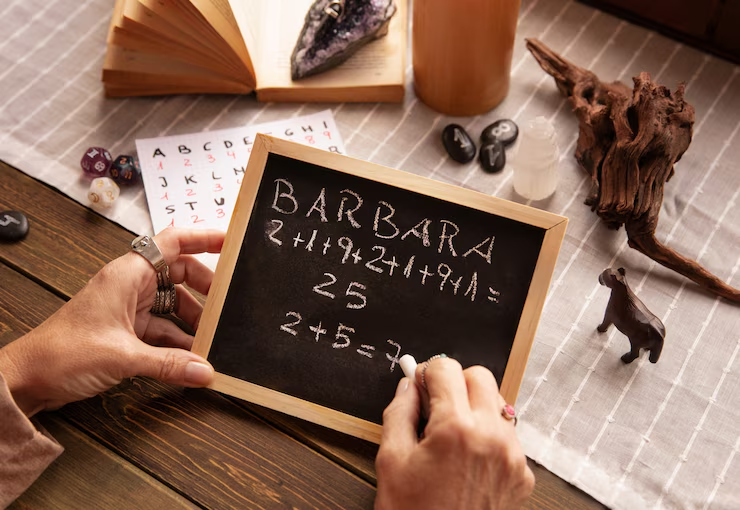
Step 2: Convert Letters to Numbers
If your address contains letters, convert them using the Pythagorean chart:
A=1, B=2, C=3, D=4, E=5, F=6, G=7, H=8, I=9 J=1, K=2, L=3, M=4, N=5, O=6, P=7, Q=8, R=9 S=1, T=2, U=3, V=4, W=5, X=6, Y=7, Z=8
Step 3: Add All Digits
Sum all the numbers together, including converted letter values.
Step 4: Reduce to Single Digit
If the sum is 10 or higher (and not 11, 22, or 33, which are considered "master numbers"), add the digits together again until you get a single digit.
The Meaning of House Number 2 in Numerology
According to numerological tradition, house number 2 is governed by the Moon and carries specific energetic qualities.
Core Attributes
Ruling Planet: Moon
Primary Themes:
- Harmony and balance
- Partnership and cooperation
- Emotional sensitivity
- Nurturing relationships
- Intuition and creativity
- Diplomacy and gentleness
Energy Type: Yin (receptive, passive, feminine)
Symbolic Associations
The number 2 represents duality, pairs, and balance. In numerology, this translates to a home environment that emphasizes:
- Relationships over individual achievement
- Emotional connection over material success
- Cooperation over competition
- Peace over conflict
- Receptivity over assertion
The Moon's influence adds layers of emotional depth, intuition, and fluctuation to these base qualities.
Benefits of Living in a House Number 2
Numerology practitioners claim several advantages for residents of house number 2. These are presented as beliefs within the numerological framework, not scientifically verified facts.
1. Relationship Enhancement
House number 2 is considered ideal for couples and families. The energy purportedly supports:
- Deepening emotional bonds between partners
- Fostering commitment in romantic relationships
- Creating closeness among family members
- Encouraging open communication
- Building trust and mutual understanding
Who benefits: Newlyweds, couples planning to start families, multi-generational households, friends living together.
2. Peaceful Atmosphere
The number 2 energy is described as calm and harmonious. Practitioners claim this creates:
- Reduced conflict and arguments
- Lower stress levels
- Tranquil living environment
- Emotional stability
- Sense of belonging and safety
Who benefits: People seeking refuge from stressful work environments, those recovering from trauma, individuals prioritizing mental health.
3. Enhanced Creativity and Intuition
The Moon's rulership over house number 2 is said to stimulate:
- Artistic expression
- Creative problem-solving
- Intuitive insights
- Imaginative thinking
- Spiritual awareness
Who benefits: Writers, musicians, painters, designers, artists, spiritual practitioners, therapists, counselors.
4. Emotional Growth
The nurturing quality of house number 2 purportedly fosters:
- Development of empathy
- Increased compassion
- Emotional intelligence
- Sensitivity to others' needs
- Capacity for caregiving
Who benefits: Social workers, teachers, nurses, caregivers, parents, anyone in helping professions.
5. Supportive Environment for Caring Professions
People in service-oriented careers reportedly find house number 2 restorative because:
- The home provides emotional replenishment
- The peaceful energy balances demanding work
- The nurturing atmosphere supports giving to others
- The intuitive quality enhances professional skills
Who benefits: Healthcare workers, educators, humanitarian workers, therapists, counselors, social service professionals.
6. Work-Life Balance
The gentle energy of house number 2 is said to encourage:
- Separation between work and personal life
- Prioritization of relationships over career
- Time for rest and reflection
- Reduced workaholic tendencies
- Focus on quality of life
Who benefits: Retired individuals, people transitioning careers, those seeking to slow down, individuals recovering from burnout.
Drawbacks of Living in a House Number 2
Numerology also identifies potential challenges for certain personality types in house number 2 homes.
1. Not Suitable for Independent Personalities
The emphasis on partnership and cooperation may conflict with:
- Highly independent individuals
- Self-centered personalities
- People who prefer solitude
- Those who resist collaboration
- Individuals focused on personal achievement
Why it matters: The house energy reportedly pulls toward togetherness and compromise, which can feel restrictive to people who value autonomy.
2. Limited for Financial Ambition
The gentle, nurturing quality of house number 2 is considered incompatible with:
- Aggressive financial goals
- Rapid wealth accumulation
- Competitive business ventures
- Material ambition
- Career-focused lifestyles
Why it matters: The energy prioritizes emotional fulfillment over material success, which may not support those seeking financial advancement.
3. Potential for Over-Sensitivity
The Moon's influence can amplify:
- Emotional reactivity
- Mood fluctuations
- Sensitivity to criticism
- Tendency toward worry
- Difficulty with boundaries
Who might struggle: People already prone to anxiety, those with emotional regulation challenges, individuals in high-stress careers requiring thick skin.
4. Risk of Passivity
The receptive, yin nature of house number 2 may encourage:
- Avoidance of conflict
- Difficulty asserting needs
- Tendency to accommodate others excessively
- Lack of initiative
- Dependence on others
Who might struggle: People who need to develop assertiveness, those in leadership positions, individuals working on setting boundaries.
5. Not Ideal for High-Energy Individuals
The calm, peaceful quality may feel:
- Too quiet or boring
- Lacking in stimulation
- Restrictive of activity
- Dampening to enthusiasm
- Limiting to ambition
Who might struggle: Entrepreneurs, athletes, high-energy personalities, people who thrive on excitement and challenge.
6. Challenges for Single Individuals
The partnership-oriented energy may:
- Emphasize what's missing (a partner)
- Feel lonely or incomplete
- Create pressure to couple up
- Not support solo living
- Highlight isolation
Who might struggle: Single people content with their status, individuals focused on personal development, those not seeking romantic relationships.
Also Read:- House number 1 in numerology: Benefits, Drawbacks and Decor Tips
Who Should Live in House Number 2
Based on numerological principles, certain people are considered well-suited to house number 2.

1. Couples
Newlyweds building a life together
Long-term partners deepening commitment
Couples planning to start families
Partners working on relationship issues
2. Families
- Parents with young children
- Multi-generational households
- Blended families
- Families prioritizing togetherness
3. Cancer Zodiac Signs
- Particularly those born on the 2nd, 11th, 20th, or 29th of any month
- Cancer sun, moon, or rising signs
- People with strong Cancer placements
4. People with Birth Number 2
- Those born on the 2nd, 11th, 20th, or 29th
- Individuals whose birth date reduces to 2
- People with life path number 2
5. Creative Professionals
- Writers and authors
- Musicians and composers
- Painters and visual artists
- Designers and decorators
- Performers and actors
6. Caregivers and Helpers
- Social workers
- Teachers and educators
- Nurses and healthcare workers
- Therapists and counselors
- Humanitarian workers
7. Empathetic Personalities
- Highly sensitive people
- Empaths
- Intuitive individuals
- Emotionally intelligent people
- Those who prioritize relationships
8. Retired Individuals
- People seeking peaceful retirement
- Those transitioning from career focus
- Individuals prioritizing quality of life
- People wanting to focus on family
Who Should Avoid House Number 2
Certain personality types may find house number 2 incompatible with their nature or goals.
- Highly Independent Individuals
- Aggressive or Assertive Types
- Financially Ambitious People
- High-Energy Personalities
- Self-Centered Individuals
- Leadership-Focused People
Décor Tips for House Number 2
Numerology practitioners offer specific design recommendations to enhance the positive qualities of house number 2 and mitigate potential drawbacks.
Color Palette
Primary Colors:
- White (purity, peace, lunar energy)
- Silver (Moon association, reflection, intuition)
- Light blue (calm, communication, serenity)
- Soft green (growth, harmony, balance)
- Cream (warmth, gentleness, comfort)
Accent Colors:
- Pale pink (love, nurturing, softness)
- Lavender (spirituality, calm, creativity)
- Peach (warmth, emotional connection)
- Soft gray (balance, neutrality, sophistication)
Colors to Avoid:
- Bright red (too aggressive, conflicts with gentle energy)
- Bold orange (too stimulating, disrupts peace)
- Harsh black (too heavy, dampens lunar lightness)
- Intense yellow (too active, overstimulates)
Application:
- Use soft colors on walls for calming base
- Add pastel accents through textiles and accessories
- Choose white or cream for larger furniture pieces
- Incorporate silver through mirrors, frames, and hardware
Furniture and Layout
Shapes:
- Rounded edges over sharp corners
- Curved sofas and chairs
- Oval or round dining tables
- Circular mirrors
- Flowing, organic forms
Materials:
- Natural wood (connection to nature)
- Soft fabrics (cotton, linen, velvet)
- Comfortable cushioning
- Smooth textures
- Gentle, tactile surfaces
Arrangement:
- Create conversation areas with facing seating
- Arrange furniture in pairs when possible
- Ensure smooth traffic flow
- Avoid blocking pathways
- Design spaces that encourage gathering
What to Avoid:
- Sharp, angular furniture
- Hard, cold materials (excessive metal or glass)
- Cluttered arrangements
- Isolated seating
- Harsh, industrial designs
- Decorative Elements
Decorative Elements
Pairs and Doubles:
- Two matching lamps
- Paired artwork or photographs
- Sets of candles
- Matching cushions or throws
- Symmetrical arrangements
Natural Elements:
- Indoor plants (peace lily, pothos, ferns)
- Water features (small fountains, aquariums)
- Natural fiber textiles
- Wooden accents
- Stone or crystal elements
Moon-Inspired Items:
- Crescent moon artwork or sculptures
- Lunar phase calendars
- Moon-shaped mirrors
- Celestial patterns in textiles
- Soft, diffused lighting (mimicking moonlight)
Personal and Sentimental Items:
- Family photographs
- Heirlooms and keepsakes
- Handmade items
- Gifts from loved ones
- Memory collections
What to Avoid:
- Single, isolated objects
- Aggressive or violent imagery
- Overly masculine décor
- Harsh, bright lighting
- Clutter and excess
Lighting
Types:
- Soft, diffused overhead lighting
- Dimmable fixtures
- Table and floor lamps with fabric shades
- Candles (white or cream)
- Warm-toned LED bulbs (2700-3000K)
Placement:
- Multiple light sources at different levels
- Lighting in pairs (matching lamps)
- Gentle illumination in gathering spaces
- Soft nightlights in bedrooms and hallways
- Natural light maximization through sheer curtains
What to Avoid:
- Harsh, bright overhead lights
- Cool-toned fluorescent lighting
- Single, stark light sources
- Overly dramatic lighting
- Dark, shadowy corners
Room-Specific Recommendations
Living Room:
- Comfortable seating arranged for conversation
- Soft color palette with pastel accents
- Family photographs and personal items
- Paired decorative elements
- Cozy textiles (throws, cushions)
- Gentle lighting with multiple sources
Bedroom:
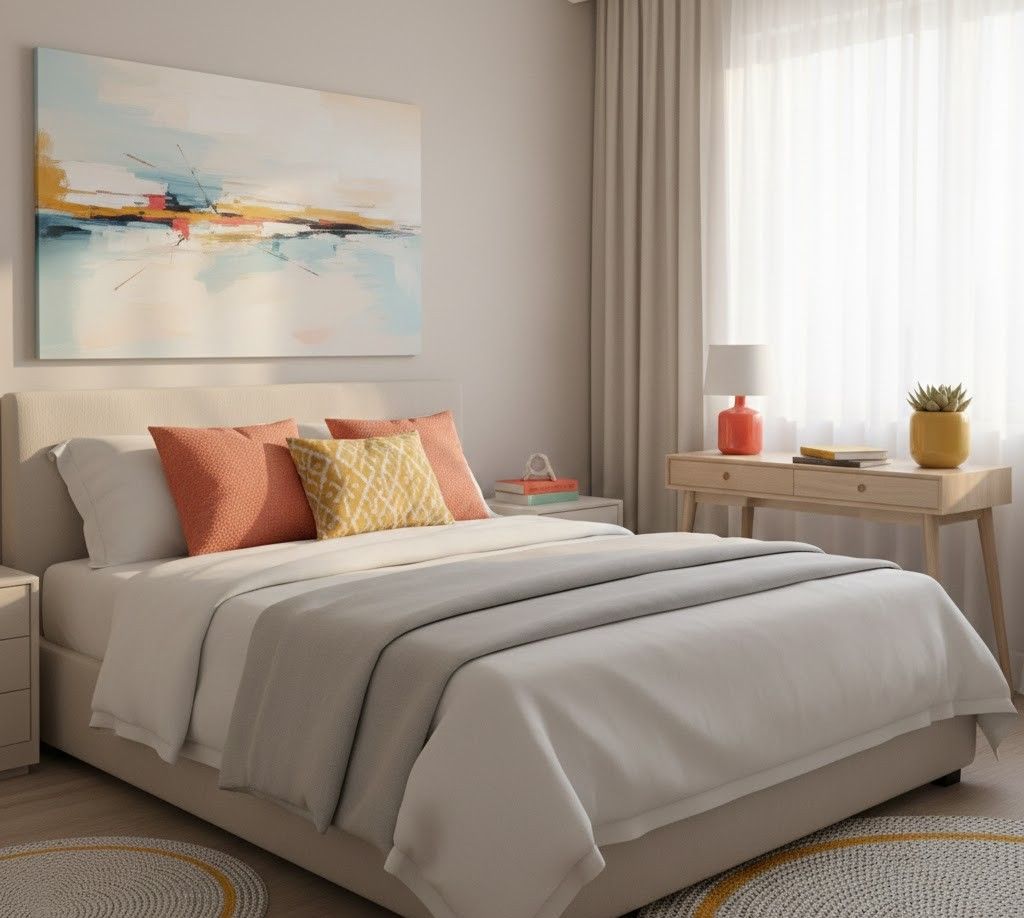
- Soft, calming colors (light blue, lavender, cream)
- Comfortable, inviting bedding
- Paired nightstands and lamps
- Minimal electronics
- Blackout curtains for quality sleep
- Personal, romantic touches
Kitchen:
- Clean, uncluttered counters
- Soft lighting over dining area
- Family gathering space
- Paired items (salt and pepper, matching canisters)
- Natural materials (wood cutting boards, ceramic dishes)
- Plants or herbs on windowsill
Bathroom:
- Spa-like atmosphere
- Soft towels in white or pastels
- Candles for relaxation
- Natural bath products
- Clean, minimal design
- Gentle lighting
Home Office (if needed):
- Separate work area from living spaces
- Soft colors to reduce stress
- Comfortable, ergonomic furniture
- Natural light when possible
- Plants for air quality and calm
- Minimal, organized setup
Feng Shui Integration
Many numerology practitioners combine their recommendations with Feng Shui principles for house number 2.
Entrance Placement:
- Northeast or east-facing entrance (optimal for lunar energy)
- Clear, welcoming entryway
- Paired plants or decorations flanking door
- Good lighting at entrance
- Clean, uncluttered threshold
Energy Flow:
- Remove obstacles from pathways
- Ensure doors open fully
- Create smooth transitions between rooms
- Avoid dead-end spaces
- Maintain balance between yin and yang
Relationship Areas:
- Southwest corner for partnership energy
- Paired items in bedroom
- Romantic artwork or symbols
- Fresh flowers in relationship areas
- Remove single or lonely imagery
Water Elements:
- Small fountain in north area (career)
- Aquarium in southeast (wealth) or east (health)
- Images of calm water
- Avoid water in bedroom (Feng Shui principle)
- Keep water features clean and flowing
Remedies and Solutions for Challenges of House Number 2
Numerology practitioners suggest specific remedies to address potential drawbacks of house number 2.
For Over-Sensitivity and Emotional Imbalance
Gemstone Remedies:
- Place moonstone near entrance (Moon's stone)
- Wear pearl jewelry (Moon's gem)
- Keep rose quartz in bedroom (emotional balance)
Mantra Practice:
- Chant "Om Chandraya Namah" (Moon mantra) on Mondays
- Practice during morning or evening
- Repeat 108 times for traditional practice
Practical Actions:
- Establish emotional boundaries
- Create personal space within home
- Practice grounding techniques
- Limit exposure to emotional triggers
- Develop self-care routines
For Lack of Energy or Motivation
Color Adjustments:
- Add small touches of energizing colors (coral, warm yellow)
- Use these in home office or exercise areas
- Keep bedroom and living areas calm
Activity Spaces:
- Designate area for physical activity
- Create inspiring workspace
- Add motivational artwork or quotes
- Ensure good natural light in active areas
Routine Building:
- Establish morning routines
- Set goals and track progress
- Create accountability systems
- Schedule regular activities outside home
For Isolation or Loneliness (Single Residents)
Social Connection:
- Display photos of friends and family
- Create welcoming guest spaces
- Host regular gatherings
- Join community groups
- Maintain active social calendar
Symbolic Adjustments:
- Add paired items even when single
- Include artwork depicting connection
- Avoid overly solitary imagery
- Create spaces for potential partnership
- Maintain hopeful, open energy
For Financial Stagnation
Wealth Area Enhancement:
- Activate southeast corner (Feng Shui wealth area)
- Add healthy plants in this area
- Use purple or green accents
- Keep area clean and clutter-free
- Add symbols of abundance
Mindset Shifts:
- Set financial goals
- Create dedicated workspace for money management
- Display vision boards for financial success
- Practice abundance affirmations
- Balance emotional focus with practical planning
General Enhancement Practices
Regular Maintenance:
- Keep home clean and organized
- Repair broken items promptly
- Maintain good air quality
- Ensure proper lighting
- Create fresh, inviting atmosphere
Seasonal Adjustments:
- Refresh décor seasonally
- Rotate artwork and accessories
- Update textiles (cushions, throws)
- Bring in seasonal flowers or plants
- Adjust lighting for seasonal changes
Energy Clearing:
- Open windows regularly for fresh air
- Use sage or incense (if desired)
- Play calming music
- Remove clutter consistently
- Create positive, intentional atmosphere
Compatibility with Life Path Numbers
Numerology practitioners often consider compatibility between house numbers and residents' life path numbers (calculated from birth date).
Most Compatible Life Path Numbers
Life Path 2:
- Perfect match with house energy
- Amplifies natural tendencies
- Supports core personality traits
- Creates harmonious resonance
Life Path 6:
- Both focused on relationships and nurturing
- Complementary energies
- Supports family and caregiving
- Enhances domestic harmony
Life Path 9:
- Both humanitarian and compassionate
- Supports service-oriented goals
- Enhances empathy and understanding
- Creates peaceful environment
Life Path 11 (Master Number):
- Spiritual and intuitive alignment
- Supports higher consciousness
- Enhances creative and psychic abilities
- Creates inspirational atmosphere
Moderately Compatible Life Path Numbers
Life Path 4:
- Can provide grounding to emotional energy
- May feel restrictive at times
- Benefits from stability focus
- Needs to balance practicality with emotion
Life Path 7:
- Both introspective and intuitive
- May amplify isolation tendencies
- Supports spiritual pursuits
- Needs to balance solitude with connection
Less Compatible Life Path Numbers
Life Path 1:
- Independent energy conflicts with partnership focus
- May feel restricted
- Needs personal space and autonomy
- Can work with conscious effort
Life Path 3:
- Social, expressive energy may feel dampened
- Needs more stimulation
- May find environment too quiet
- Can work if balanced with outside activities
Life Path 5:
- Freedom-loving nature conflicts with domestic focus
- May feel confined
- Needs variety and change
- Requires outside outlets for energy
Life Path 8:
- Material ambition conflicts with emotional focus
- May not support financial goals
- Can feel limiting to career drive
- Needs separate workspace and boundaries
Cultural Perspectives on House Number 2
Numerology practices vary across cultures, offering different interpretations of house number 2.
Vedic (Indian) Numerology
In Vedic numerology, which has ancient roots in southern India:
- Number 2 is ruled by the Moon (Chandra)
- Associated with Monday (Moon's day)
- Connected to Cancer zodiac sign
- Represents mother, emotions, and mind
- Considered auspicious for family life
- Linked to water element
- Supports spiritual and artistic pursuits
Cultural practices:
- Chanting Moon mantras on Mondays
- Wearing white or light colors on Moon's day
- Fasting on Mondays for Moon's blessings
- Offering white flowers and rice
- Wearing pearl or moonstone
Chinese Numerology and Feng Shui
In Chinese tradition:
- Number 2 represents balance and harmony
- Associated with yin energy (feminine, receptive)
- Symbolizes "good things come in pairs"
- Considered lucky for relationships
- Represents earth element in some systems
- Supports partnership and cooperation
Cultural practices:
- Placing items in pairs throughout home
- Using even numbers for gifts and decorations
- Emphasizing balance in design
- Incorporating earth element colors (yellow, brown)
- Creating symmetrical arrangements
Western (Pythagorean) Numerology
In Western numerology tradition:
- Number 2 represents duality and choice
- Associated with partnership and diplomacy
- Symbolizes balance between opposites
- Represents cooperation and mediation
- Connected to intuition and sensitivity
- Supports relationships and teamwork
Cultural practices:
- Focusing on relationship development
- Creating peaceful, harmonious environments
- Emphasizing cooperation over competition
- Developing intuitive abilities
- Balancing masculine and feminine energies
Practical Considerations Beyond Numerology
When choosing or decorating a home, factors beyond numerology matter significantly.
Location:
- Proximity to work, schools, amenities
- Neighborhood safety and quality
- Access to transportation
- Future development plans
- Property value trends
Physical Condition:
- Structural integrity
- Age and maintenance needs
- Energy efficiency
- Layout and functionality
- Natural light and ventilation
Financial Considerations:
- Purchase price or rent
- Property taxes
- Maintenance costs
- Insurance rates
- Resale potential
Lifestyle Fit:
- Size appropriate for household
- Layout suits daily routines
- Outdoor space needs
- Storage capacity
- Accessibility requirements
- Evidence-Based Design Principles
Color Psychology (scientifically studied):
- Blue reduces blood pressure and heart rate
- Green improves concentration and calm
- Warm colors increase energy and appetite
- Cool colors promote relaxation
- Personal preference matters most
Lighting Effects (well-documented):
- Natural light improves mood and sleep
- Bright light increases alertness
- Dim light promotes relaxation
- Color temperature affects circadian rhythm
- Task lighting improves functionality
Spatial Design (research-supported):
- Clutter increases stress and anxiety
- Open layouts facilitate social interaction
- Personal space reduces conflict
- Natural elements improve well-being
- Comfortable furniture supports health
Relationship Factors (psychology research):
- Communication quality matters more than environment
- Shared activities strengthen bonds
- Personal space within relationships is healthy
- Conflict resolution skills are learnable
- Relationship satisfaction depends on multiple factors
Conclusion
House number 2 in numerology is associated with harmony, partnership, emotional sensitivity, and nurturing relationships. According to numerological tradition, this number creates an environment that supports couples, families, creative individuals, and those in caring professions. The Moon's rulership adds qualities of intuition, gentleness, and emotional depth.
Practitioners claim benefits including relationship enhancement, peaceful atmosphere, creative stimulation, emotional growth, and work-life balance. Potential drawbacks include incompatibility with independent personalities, limited support for financial ambition, risk of over-sensitivity, and challenges for high-energy individuals.
Décor recommendations focus on soft colors (white, silver, light blue, pastels), rounded furniture, paired decorative elements, natural materials, and gentle lighting. These suggestions aim to enhance the purported positive qualities of house number 2 while creating a calm, welcoming environment.
Frequently Asked Questions About House Number 2 Numerology
1. How do I calculate if my house is a number 2 in numerology?
Add all the digits in your house or apartment number together, then reduce to a single digit. For example: House 38 = 3 + 8 = 11, then 1 + 1 = 2. House 245 = 2 + 4 + 5 = 11, then 1 + 1 = 2. House 20 = 2 + 0 = 2. If your address has letters, convert them using A=1, B=2, C=3, etc., then add everything together. Ignore street names and postal codes—only use the house/apartment number.
2. What does house number 2 mean in numerology?
House number 2 is ruled by the Moon and represents harmony, partnership, emotional sensitivity, and nurturing relationships. Numerology practitioners claim this number creates a peaceful, cooperative environment ideal for couples, families, and creative individuals. The energy emphasizes emotional connection over material success, cooperation over competition, and intuition over logic. However, numerology lacks scientific validation—these are cultural beliefs, not proven facts.
3. Who should live in house number 2?
According to numerology, house number 2 suits couples (especially newlyweds), families with children, creative professionals (writers, artists, musicians), caregivers (teachers, nurses, social workers), empathetic personalities, and people born on the 2nd, 11th, 20th, or 29th of any month. Cancer zodiac signs are considered particularly compatible. The home reportedly supports those who prioritize relationships, emotional growth, and peaceful living over financial ambition or independence.
4. Who should avoid house number 2?
Numerology suggests house number 2 may not suit highly independent individuals, aggressive or competitive personalities, financially ambitious people, entrepreneurs, high-energy individuals who need constant stimulation, and self-centered people who resist emotional connection. The gentle, partnership-focused energy reportedly conflicts with assertive, individualistic temperaments and those pursuing rapid wealth accumulation or career advancement.
5. What are the benefits of living in house number 2?
Numerology practitioners claim house number 2 offers several benefits: strengthens romantic and family relationships, creates a peaceful and harmonious atmosphere, enhances creativity and intuition (beneficial for artists), promotes emotional growth and empathy, supports work-life balance, provides a restorative environment for caregivers, and encourages cooperation and diplomacy. The Moon's influence reportedly stimulates artistic pursuits and spiritual awareness. Note: these are beliefs, not scientifically proven effects.
6. What are the drawbacks of house number 2?
Potential challenges include: not ideal for independent personalities who value autonomy, limited support for aggressive financial goals or business ventures, risk of over-sensitivity and emotional reactivity, tendency toward passivity and difficulty with assertiveness, may feel too quiet for high-energy individuals, can emphasize loneliness for single people, and might dampen ambition or competitive drive. The gentle energy may not suit those needing stimulation or pursuing material success.
7. What colors are best for house number 2 décor?
Numerology recommends soft, calming colors that align with Moon energy: white (purity, peace), silver (lunar association, intuition), light blue (calm, serenity), soft green (harmony, balance), cream (warmth, comfort), pale pink (nurturing), lavender (spirituality), and peach (emotional connection). Avoid aggressive colors like bright red, bold orange, harsh black, or intense yellow. Use pastels on walls, white/cream for furniture, and silver accents in mirrors and hardware.
8. How should I decorate house number 2?
Focus on creating peaceful, nurturing spaces: use rounded furniture with soft fabrics instead of sharp edges, arrange items in pairs (matching lamps, paired artwork, two candles), incorporate natural elements (plants, water features, wood), choose gentle lighting with dimmers and fabric shades, display family photos and sentimental items, create conversation areas with facing seating, and keep spaces uncluttered. Add moon-inspired décor like crescent shapes or celestial patterns. Emphasize comfort and emotional connection.
9. Is there scientific evidence that house numbers affect your life?
No. A peer-reviewed study in the Journal of the Society for Scientific Exploration found "no support for the claims of numerology" when testing whether birth numbers predict success. No controlled scientific experiments have validated that house numbers influence residents' relationships, emotions, or life outcomes. Numerology is classified as pseudoscience because its claims are unfalsifiable and don't meet scientific method standards. Any perceived effects likely result from confirmation bias, placebo effect, or self-fulfilling prophecy.
10. What remedies can enhance positive energy in house number 2?
Numerology practitioners suggest several remedies: place moonstone or pearl (Moon's gemstones) near the entrance for emotional balance, chant "Om Chandraya Namah" (Moon mantra) on Mondays, use paired decorative items throughout the home, position the main entrance in northeast or east direction (Vastu principle), keep spaces clean and clutter-free for smooth energy flow, add water features or moon symbols to enhance intuition, display family photos to strengthen relationships, and light white candles weekly. These practices draw from numerology, Vastu, and Feng Shui traditions, not scientific principles.