Market Trends
Noida Sports City Registry Approved: 8,000 Homebuyers Get Relief in Sector 150
13 Jan 2026
Market Trends
13 Jan 2026
Content
No Blogs content found
It looks like there haven’t been any blogs yet!
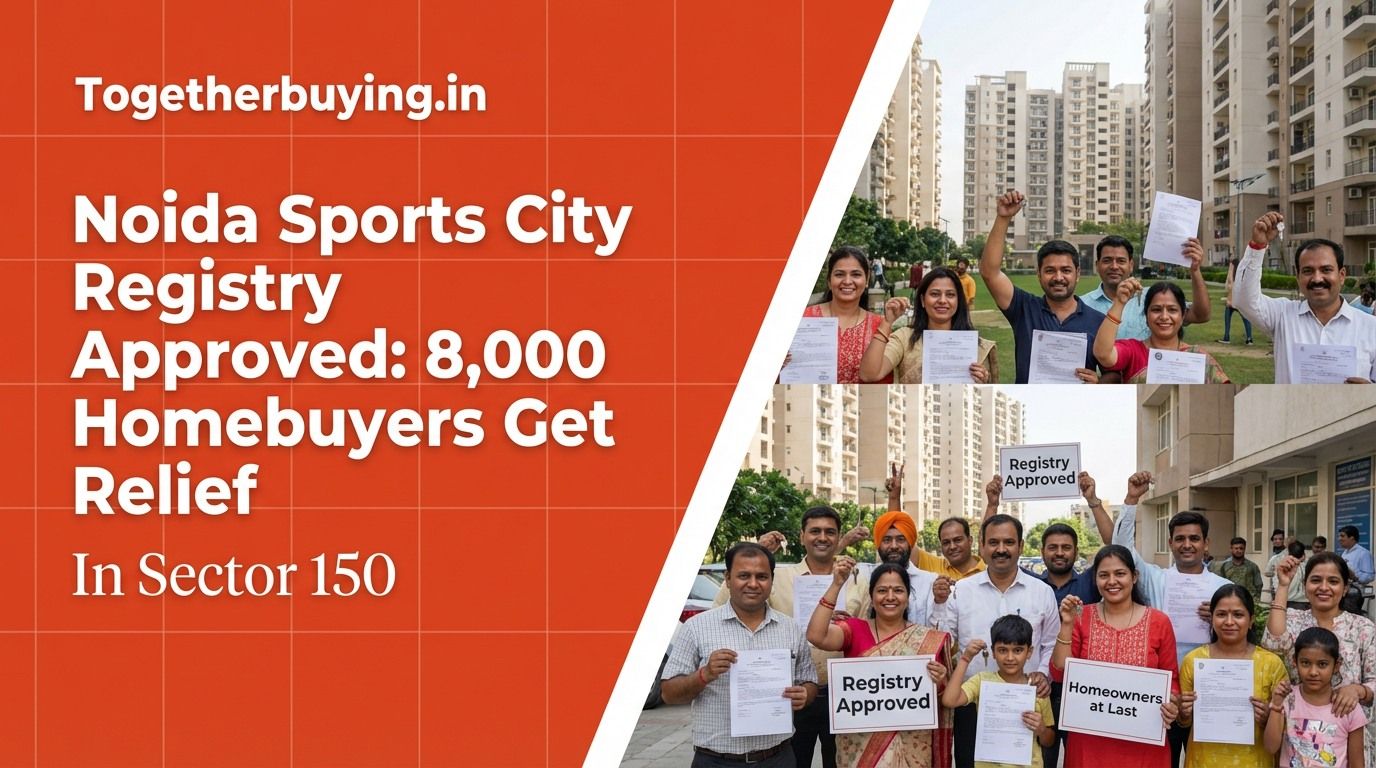
After waiting for five years, homebuyers in Noida's Sports City project in Sector 150 finally have something to celebrate. The Noida Authority has lifted the ban on occupancy certificates and property registries, bringing relief to around 8,000 families who bought flats in this premium residential zone.
The decision came in early January 2026 during a Noida Authority board meeting, following a Supreme Court order from November 24, 2025. This ends a frustrating period where buyers had paid for their homes, moved in, but couldn't get legal ownership documents.
Sports City in Sector 150 was supposed to be Noida's answer to world-class sports infrastructure combined with luxury housing. The Noida Authority allotted land to developers between 2011 and 2014 with a clear condition: build proper sports facilities alongside residential projects.
The reality turned out different. Developers focused on constructing high-rise apartments and selling flats, but the promised sports infrastructure never came up. By 2021, a CAG (Comptroller and Auditor General) audit exposed serious irregularities in how the project was handled.
The audit found that developers had failed to build the mandated 70% sports and recreational facilities. What was meant to be a sports hub with stadiums, training centers, and world-class facilities became just another residential area with luxury apartments. (Source: CAG Audit Report 2021)
The Noida Authority responded by imposing a ban in 2021. No occupancy certificates would be issued. No registries would be processed. No approvals for anything until developers fulfilled their commitments.
This left thousands of homebuyers stuck. They had paid crores for their flats. Many had taken possession and were living in their homes. But legally, they didn't own the properties. Banks wouldn't give them loans against these flats. They couldn't sell if they wanted to. The properties existed in a legal limbo.
The matter reached the Supreme Court when Lotus Green Constructions Pvt Ltd (LGCPL), one of the developers, filed a petition seeking relief. The company proposed a resolution plan to complete the pending sports infrastructure.
On November 24, 2025, a two-judge bench comprising Justices M.M. Sundresh and Satish Chandra Sharma passed an order accepting the resolution plan. The court directed the Noida Authority to lift the ban, but with strict conditions. (Source: Supreme Court Order, November 24, 2025)
Payment of Dues: Developers must clear at least 20% of their outstanding payments to the Noida Authority before getting any approvals.
Sports Infrastructure Timeline: All mandated sports and recreational facilities must be completed within 3 years from the date the revised master plan gets approved.
Other Infrastructure: Remaining infrastructure work must finish within 5 years.
Revised Building Plans: Developers need to submit revised and sanctioned building plans as per Sports City scheme requirements and Noida regulations within 30 days.
Compliance Monitoring: The Noida Authority will monitor progress and can revoke approvals if developers don't meet deadlines.
The Supreme Court made it clear that this wasn't a free pass for developers. They have to deliver on their commitments, and the Authority has the power to crack down if they don't.
Following the Supreme Court order, the Noida Authority held a board meeting in early January 2026. The board approved several measures to implement the court's directions.
Conditional Occupancy Certificates: Projects that have cleared their dues and meet building norms can now get occupancy certificates. These are conditional, if developers fail to complete sports infrastructure within the timeline, the certificates can be revoked.
Registry Processing: Property registries will now be processed for flats in compliant projects. Homebuyers can finally get legal ownership of their properties.
Revised Master Plan Approval: The board approved a revised master plan for Plot SC-02, one of the key plots in Sports City. This paves the way for broader approvals across the project.
Building Plan Revalidation: Expired building plans will be revalidated for projects that meet the compliance criteria.
One group housing project has already received a conditional occupancy certificate after clearing its dues. This sets the template for other projects to follow. (Source: Hindustan Times, January 2026)
Different sources report different numbers, but the most reliable estimates suggest around 8,000 homebuyers will benefit from this decision. (Source: Times of India, January 2026)
Some reports mention up to 40,000 apartment owners across dozens of projects in the Sports City area, but this likely includes projects in adjacent sectors and not just Sector 150. The confirmed number for immediate relief is approximately 8,000 families.
These homebuyers had invested in luxury projects by well-known developers including:
Most of these are 2 BHK, 3 BHK, and 4 BHK apartments in high-rise towers. Prices ranged from ₹60 lakhs to over ₹2 crores depending on the project and configuration.
The 2021 CAG audit that triggered this entire mess revealed shocking details about how Sports City was mismanaged.
Financial Loss: The audit estimated losses exceeding ₹3,600 crore due to irregularities in land allotment, underpricing, and policy violations. (Source: CAG Audit Report 2021)
No Proper Approvals: The Noida Authority launched Sports City schemes in 2008 without proper approvals from the Uttar Pradesh Government and the National Capital Region Planning Board. The required NOC came only in 2011, three years after allotments started.
Wrong Eligibility Criteria: The Authority prioritized real estate experience over sports infrastructure expertise when selecting developers. Companies with no background in building sports facilities got land meant for stadiums and training centers.
Land Fragmentation: Allotted land was improperly sub-divided, allowing developers to shift focus from sports infrastructure to residential and commercial development.
Massive Defaults: Out of 20 sub-allottees, 19 defaulted on payments totaling ₹2,330 crore. Instead of building world-class sports facilities, they constructed premium housing projects.
Zero Sports Infrastructure: As of April 2021, no significant sports infrastructure had been developed. What was supposed to be Noida's sports hub had nothing but residential towers.
The audit concluded that the entire Sports City project was a failure in terms of its original objective. The land meant for sports got converted into just another real estate development.
The lifting of the ban doesn't mean everything is resolved. There's still a long road ahead.
Immediate Relief: Homebuyers in compliant projects can now get their occupancy certificates and complete property registries. This gives them legal ownership and the ability to get home loans or sell their properties if needed.
Developer Obligations: Developers must now deliver on their commitments. They have 3 years to complete sports infrastructure and 5 years for other amenities. The Noida Authority will monitor progress closely.
Pending Projects: Not all projects will get immediate relief. Only those that have cleared dues and meet building norms qualify for conditional occupancy certificates. Projects with pending compliance issues will have to wait.
Legal Ownership: For the first time in five years, buyers can get their properties registered in their names. This is huge for families who have been living in legal uncertainty.
Property Values: The lifting of the ban should positively impact property values in Sports City. Properties that couldn't be sold or mortgaged due to registry issues will now enter the normal market.
Future Monitoring: The Supreme Court order includes monitoring mechanisms. If developers fail to meet deadlines, the Noida Authority can revoke approvals and reimpose restrictions.
If you're one of the 8,000 homebuyers affected, here's what you need to do:
Check Your Project Status: Contact your builder or the Noida Authority to confirm if your project has received conditional occupancy certificate approval.
Clear Pending Payments: If you have any pending payments to the builder, clear them. Registries won't be processed if buyer payments are pending.
Gather Documents: Keep all your documents ready, allotment letter, payment receipts, possession letter, and identity proofs. You'll need these for the registry.
Apply for Registry: Once your project gets the green light, apply for property registry through the Noida Authority's online portal or visit their office.
Get Home Loans: With occupancy certificate and registry, you can now apply for home loans against your property or refinance existing loans at better rates.
Sell if Needed: If you were stuck because you couldn't sell without a registry, you can now list your property in the market.
The Sports City mess offers important lessons for homebuyers and authorities.
Check Project Approvals: Before buying, verify that the project has all necessary approvals, RERA registration, building plan sanctions, environmental clearances, and NOCs from relevant authorities.
Developer Track Record: Research the developer's history. Have they completed previous projects on time? Do they have a reputation for delivering on commitments?
Read the Fine Print: Understand what amenities are promised and what timelines are committed. Get everything in writing.
RERA Protection: Buy only in RERA-registered projects. RERA provides legal protection and recourse if developers default.
Don't Ignore Red Flags: If a project seems too good to be true or if there are delays and excuses, investigate thoroughly before committing.
For authorities, the lesson is clear: proper planning, strict eligibility criteria, and continuous monitoring are essential. The Sports City project failed because the Noida Authority didn't enforce conditions and allowed developers to divert land meant for sports into pure real estate development.
Here's what's happening with major projects in Sports City Sector 150:
Godrej Nest: This Godrej Properties project offers 2, 3, and 4 BHK apartments with IGBC Gold certification. The project is nearing completion and should be among the first to get occupancy certificates.
ATS Kingston Heath: ATS Infrastructure's project with 3 and 4 BHK homes. The company has a good track record in Noida and is expected to comply with the new requirements quickly.
ATS Pristine Phase 2: Another ATS project offering 3 and 4 BHK residences. Phase 1 is already occupied, and Phase 2 should benefit from the registry approval.
Samridhi Luxuriya Avenue: Samridhi Group's ready-to-move project with 2 and 3 BHK apartments. Being ready-to-move, this should be among the first to process registries.
Lotus Greens Tulip Sports City: Since Lotus Green Constructions was the petitioner in the Supreme Court case, this project is likely to be compliant and among the first to benefit.
Most of these projects are in advanced stages of construction or already occupied. The registry approval means buyers can finally complete the legal formalities.
The Sports City registry approval has broader implications for Noida's real estate market.
Buyer Confidence: The resolution shows that even when things go wrong, there are legal remedies. This should boost buyer confidence in Noida projects.
Developer Accountability: The strict conditions imposed by the Supreme Court send a message to developers: you can't just take the land and ignore your commitments. This should improve accountability.
Property Values: Sector 150 property values should see an uptick now that the registry issue is resolved. Properties that were trading at a discount due to legal uncertainty should normalize.
Future Projects: The Noida Authority will likely be more careful with future allotments, especially for mixed-use projects. Stricter monitoring and enforcement should prevent similar situations.
Investor Interest: Institutional investors and banks were wary of Sports City properties due to registry issues. With this resolved, investment interest should return.
Real estate experts view this development positively but with caution.
"This is a relief for homebuyers who have been stuck for five years. However, the real test is whether developers actually deliver the sports infrastructure within the stipulated timelines. The Noida Authority needs to monitor this closely," says a real estate analyst tracking Noida projects. (Source: Moneycontrol, January 2026)
Legal experts point out that the conditional nature of the occupancy certificates is important. "The Supreme Court has given relief but with strict conditions. If developers fail to comply, the certificates can be revoked. This protects both homebuyers and the Authority's interests," notes a property law expert.
Homebuyer associations welcome the decision but remain vigilant. "We've waited five years. We'll believe it when we have the registry documents in hand. We're watching closely to ensure developers don't get away with just token compliance," says a representative of a Sports City homebuyers' group.
The lifting of the ban is a positive step, but it's not the end of the story. The next three to five years will determine whether Sports City actually becomes what it was meant to be, a world-class sports and residential hub.
Developers now have clear deadlines. The Noida Authority has monitoring mechanisms in place. Homebuyers have legal recourse if things go wrong again. The Supreme Court's order provides a framework for resolution while protecting everyone's interests.
For the 8,000 families who have been waiting, this is finally the breakthrough they needed. They can now get legal ownership of their homes, access home loans, and have the freedom to sell if they choose. After five years of uncertainty, they can finally move forward.
The Sports City saga also serves as a reminder of why proper due diligence matters when buying property. Check approvals, research developers, understand your legal rights, and don't ignore warning signs. The families who bought in Sports City did everything right, they bought from reputed developers in a Noida Authority project. Yet they still faced years of legal limbo because of systemic failures.
The resolution shows that persistence pays off. Homebuyers who fought through legal channels, formed associations, and kept pressure on authorities finally got relief. It took five years, but justice eventually came through.
Contact Us
Fill out this form
& we'll get back
to you
Recommended for you