Investments
Top Reasons Why You Should Invest in Yamuna Expressway
08 Nov 2025
Investments
08 Nov 2025
Content
No Blogs content found
It looks like there haven’t been any blogs yet!
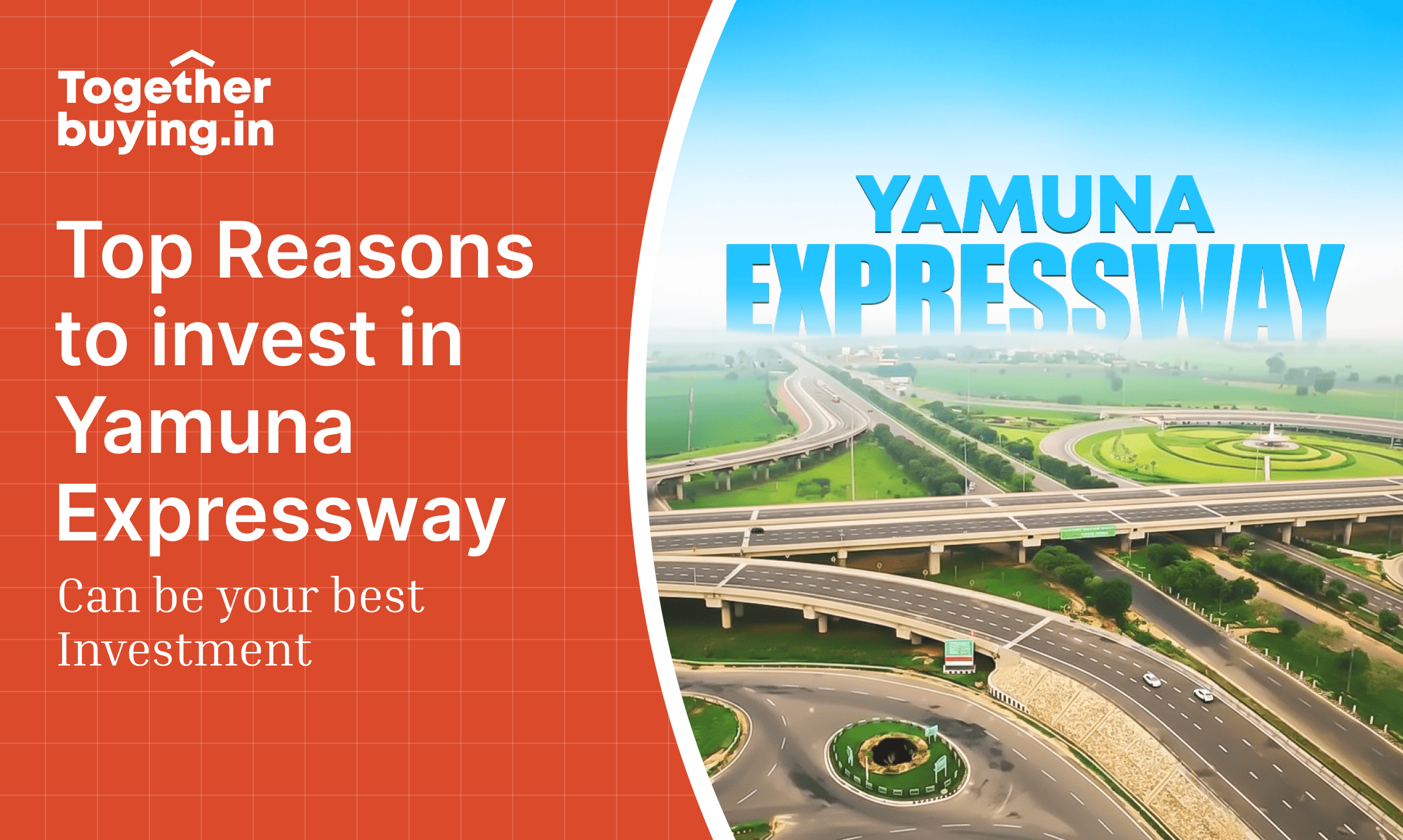
The Yamuna Expressway has transformed from a six-lane highway into one of North India’s most promising real estate corridors. It connects Greater Noida with Agra across 165 kilometers and passes through regions now managed by the Yamuna Expressway Industrial Development Authority (YEIDA).
Backed by government planning, infrastructure projects, and industrial investments, this corridor has become an attractive destination for homebuyers and investors looking for long-term value within the National Capital Region.

Here are the key reasons why investing in the Yamuna Expressway makes strategic sense today.
Connectivity is the foundation of every successful real estate market. The Yamuna Expressway provides seamless access between Delhi NCR and major cities in Uttar Pradesh. The journey from Greater Noida to Agra now takes less than two and a half hours.
The expressway links directly with the Noida–Greater Noida Expressway, the Eastern Peripheral Expressway, and National Highway 2. This has created a continuous high-speed transport network that connects Delhi, Noida, Jewar, Aligarh, Mathura, and Agra.
The Ministry of Road Transport and Highways has also approved new link roads to enhance connectivity. A 15-kilometer connector between the expressway and the Delhi–Agra Highway will further reduce travel time and open new residential pockets.
This level of road infrastructure ensures easy movement for residents, tourists, and logistics operators, making the corridor a natural choice for both housing and commercial projects.
The upcoming Noida International Airport is the biggest driver of growth in the region. It is being developed by Zurich Airport International in partnership with the Government of Uttar Pradesh.
Phase one of the airport, spread over 1334 hectares, is scheduled to be operational by 2025. It will handle 12 million passengers annually and directly employ around 35,000 people. Later phases are planned to increase capacity to 70 million passengers per year, making it one of the largest airports in Asia.
The airport’s presence guarantees large-scale development in housing, retail, logistics, and hospitality. As seen around other major airports in India, such as Bengaluru and Hyderabad, the surrounding zones tend to experience strong capital appreciation once operations begin.
Sectors close to the airport, such as YEIDA’s Sector 20 and 22D, have already become active investment zones with residential and commercial projects gaining early interest.
Unlike unplanned urban sprawl, the Yamuna Expressway area is being developed in a regulated manner under YEIDA’s Master Plan 2041. The authority governs all zoning, infrastructure, and development permissions.
The plan covers about 25,000 hectares, divided into clearly designated sectors for residential, commercial, institutional, and industrial purposes. Key residential sectors include 18, 20, 22D, 25, 28, 32, and 33.
YEIDA also provides basic infrastructure such as internal roads, drainage, street lighting, and power networks before allotting plots. Land titles come directly from the authority, giving investors confidence about legality and ownership. This systematic approach ensures the corridor grows in an organized way, similar to planned cities like Chandigarh or Navi Mumbai, making it attractive for both end-users and long-term investors.
Industrial growth drives long-term real estate demand, and this is where the Yamuna Expressway scores highly. The Government of Uttar Pradesh has identified this corridor as a major industrial hub under its Industrial Investment and Employment Promotion Policy.
YEIDA has already allotted over 1,300 industrial plots to MSMEs and large corporations. Some of the flagship projects include:
These developments are expected to create over five lakh direct and indirect jobs by 2030. With increasing employment, demand for residential property and rentals will grow steadily, providing consistent returns for investors.
Real estate along the Yamuna Expressway remains among the most affordable in the NCR region.
| Location | Average Apartment Price (₹/sq.ft) | Source |
|---|---|---|
| Gurugram | 11,500 – 15,000 | Knight Frank India |
| Central Noida | 9,500 – 11,000 | NHB RESIDEX 2024 |
| Greater Noida West | 9,000 | NHB RESIDEX 2024 |
| Yamuna Expressway | 7,900 | NHB RESIDEX 2024 |
This affordability, combined with growing infrastructure, offers room for significant price appreciation. Property analysts from Knight Frank and Anarock expect annual growth between 8–10 percent in the coming years as airport operations begin and industrial projects mature.
Early investors can capture both appreciation and better availability of prime locations before full development takes place.
Well-known developers are now establishing a presence along the Yamuna Expressway. Companies such as Godrej Properties, Tata Housing, ACE Group, and ATS Infrastructure have already started residential or mixed-use projects. Large corporations like Adani and DLF have shown interest in logistics and warehousing facilities near the airport and industrial zones.
This institutional participation signals strong confidence in the region’s future and ensures better construction quality, project delivery, and maintenance standards. It also attracts banks and housing finance companies, making property transactions easier and safer.
Education and healthcare infrastructure are important factors in sustaining long-term housing demand. The Yamuna Expressway region already hosts several established institutions such as Gautam Buddha University, Galgotias University, and Noida International Institute of Medical Sciences.
New technical and medical colleges are planned under YEIDA’s institutional zones. The presence of universities and hospitals enhances the area’s livability and supports continuous rental demand from students, faculty, and healthcare professionals.
This combination of connectivity, affordability, and access to quality social infrastructure is rare in developing corridors.

The Yamuna Expressway is strategically positioned near major tourist destinations including Agra, Mathura, Vrindavan, and the upcoming Jewar Airport. This has led to rising demand for hotels, resorts, and short-stay accommodations.
The Uttar Pradesh Tourism Department has launched several initiatives to promote heritage and eco-tourism along the route. Improved roads and better visitor facilities have already increased weekend travel from Delhi NCR.
As airport operations begin, tourism will expand further, boosting hospitality investment and local business activity. This in turn will increase demand for commercial and residential real estate in the surrounding areas.
With the upcoming airport, expressway access, and proximity to the Dedicated Freight Corridor, the region is naturally evolving into a logistics hub.
YEIDA’s master plan allocates large land parcels for logistics parks and warehouses. The UP Logistics and Warehousing Policy 2022 provides fiscal incentives for investors in storage and distribution facilities.
Leading logistics players are already exploring sites along the expressway to serve the NCR and western Uttar Pradesh markets. This development will create continuous employment and rental opportunities for industrial and service sector employees.
For investors, this steady inflow of working professionals ensures sustained residential demand and property value growth.
YEIDA’s Master Plan 2041 places strong emphasis on sustainability. About one-third of the total area has been reserved for green zones, parks, and open spaces.
All new projects are required to include rainwater harvesting, waste management systems, and solar energy installations as per the UP Solar Policy 2022. Drainage and water management are integrated into each sector’s layout.
This focus on balanced development differentiates the Yamuna Expressway from older unplanned NCR zones. It offers cleaner air, better road design, and organized social amenities essential for long-term residential value.
The state government has provided consistent policy backing to this region for over a decade. Initiatives like the UP Investment Promotion Scheme 2023, Digital UP 2023, and EV Policy 2023 promote industrial and residential growth around Jewar.
The NCR Planning Board’s Regional Plan 2041 identifies the Yamuna Expressway as a future economic corridor connecting industrial and logistics clusters. The state is also ensuring inter-agency coordination between YEIDA, NHAI, NMRC, and UP Jal Nigam for smooth infrastructure execution.
Such administrative alignment builds long-term investor confidence and attracts domestic as well as global capital.
Livability is often a deciding factor for sustained real estate growth. The Yamuna Expressway region is gradually developing into a self-contained township area.
Wide roads, low pollution levels, and planned civic amenities are creating an organized living environment. Basic utilities like water, power, and internet are being laid out before large-scale occupancy begins.
As schools, hospitals, retail centers, and recreation areas open, the corridor is turning into a practical housing choice, not just an investment zone. This transition ensures that future buyers will include both end-users and investors, strengthening overall market depth.
Based on data from the UP Infrastructure and Industrial Development Department, total investment in this region is projected to exceed ₹1.5 lakh crore by 2030. The population within YEIDA’s jurisdiction is expected to grow from two lakh in 2023 to fifteen lakh by 2035.
Key development milestones include:
Operational airport by 2025
Metro connectivity approval by 2026
Industrial parks and Film City completion between 2027 and 2029
Full integration with NCR’s transport grid by 2030
These timelines point to a decade of continuous infrastructure delivery, job creation, and urban expansion, factors that directly drive property appreciation.
With rising employment in industrial and airport-linked sectors, rental demand will increase rapidly. Current rental yields average 3.8 percent, according to Anarock Property Research, and are expected to improve once the airport and metro become operational.
The combination of working professionals, students, and service employees creates a broad tenant base. Investors can benefit from both capital appreciation and recurring rental income.
Additionally, as the corridor gains maturity, resale liquidity will strengthen, giving early investors flexibility in exiting or upgrading their holdings.
The best investment opportunities usually exist before full infrastructure completion. Property prices are still relatively low compared to Noida or Gurugram, while major projects like the airport, metro, and Film City are nearing completion.
Early investors entering between 2024 and 2026 can benefit from price corrections, early possession options, and priority inventory from reputed developers. By the time these projects are operational, property values are expected to rise steadily.
This period represents the right balance between affordability and upcoming demand, a rare window in NCR’s mature real estate market.
For those planning to invest, platforms like TogetherBuying.in offer a structured way to enter such high-potential markets. The platform connects three to seven buyers interested in the same project and negotiates collective discounts directly with developers. It ensures transparent pricing, verified approvals, and zero brokerage.
In regions like the Yamuna Expressway, where multiple projects are emerging simultaneously, collective buying helps new buyers access better pricing and risk management while keeping ownership fully individual.
The Yamuna Expressway represents a rare combination of affordability, connectivity, government planning, and long-term growth. With the airport nearing completion, industrial parks expanding, and the metro project moving forward, the region is on its way to becoming a major urban center within NCR.
Investing here means participating in a corridor that is not speculative but planned, structured, and economically active. For buyers looking at a ten-year horizon, the Yamuna Expressway offers one of the strongest value propositions in Indian real estate today.
Plots along the Yamuna Expressway have historically shown higher capital appreciation because of limited supply and flexibility of use. They allow buyers to build at their own pace and customize construction.
However, branded flats in approved townships offer faster liquidity, better rental yield, and easier resale. If your goal is long-term appreciation, a plot could work better. If you want steady rental income and low maintenance, a flat is safer.
Your decision should depend on your investment horizon and the developer’s credibility.
Yes, it is considered a safe investment if the project is RERA-registered and developed by a reputed builder.
The upcoming Noida International Airport at Jewar, which is expected to begin operations by October 2025, is a strong economic driver. Studio apartments are now popular among working professionals, airline staff, and students due to their affordability and compact living setup. These units are likely to see high rental demand and decent resale value once the airport and nearby industrial parks become operational.
The primary risk is liquidity. Reselling plots or flats may take time until the area becomes more densely populated and commercial activity grows. The region is still in a developmental stage, and full livability will come gradually as schools, hospitals, and retail centers expand. Investors should be ready to hold the asset for at least 4–6 years for optimal returns.
Yes, for long-term investors it is a sound choice. The region has well-planned townships, expressway connectivity, upcoming metro links, and proximity to the international airport. Industrial and institutional projects announced by the government make it a self-sustaining ecosystem.
As infrastructure continues to grow, the corridor is expected to become a new urban hub in the National Capital Region.
The future looks promising. YEIDA has major projects lined up, including the Film City, Medical Device Park, Toy Park, and Data Centre Hub.
These developments are increasing demand for both residential and industrial plots. YEIDA plots are considered one of the most secure investment options because the land is allotted directly by the authority, which minimizes title-related risks.
Applications for YEIDA residential plots are announced under official schemes that are published on the YEIDA website (www.yamunaexpresswayauthority.com).
Interested applicants can apply online by filling the form, uploading documents, and making the application fee payment. Physical forms are also available at YEIDA regional offices. Allotments are done through transparent computerized draws.
Yes, non-resident Indians are eligible to invest in YEIDA plots. They must provide valid NRI status documents, passport copies, and Indian bank account details. All payments must be made through authorized banking channels under FEMA guidelines. NRIs often prefer YEIDA because of clear land titles, government oversight, and long-term appreciation potential.
Plot prices depend on the sector, size, and category — residential, commercial, or industrial.
As per YEIDA’s 2024 plot scheme, residential plots are priced between ₹33,000 and ₹37,000 per square meter. Industrial plots are costlier due to larger sizes and commercial utility, often ranging from ₹42,000 to ₹55,000 per square meter. Prices are updated with every new allotment cycle.
Yes, but it must follow YEIDA’s transfer policy. You can sell your plot once full payment is made and possession formalities are complete. Some schemes include a lock-in period, typically between two and five years, during which resale is restricted. The transfer must be registered through YEIDA to ensure legal compliance.
Real impact usually starts once airport construction reaches 80–90 percent completion. As per Noida International Airport Limited’s 2025 project timeline, civil work and the runway are nearing completion. Analysts expect visible price appreciation between late 2025 and 2027 as operations begin and related businesses move in.
YEIDA sectors 18, 20, 22D, and 25 are currently the most preferred for residential buyers. They are closer to the airport site and have better connectivity to the expressway and upcoming metro routes. These sectors also have authority-constructed roads and power infrastructure, making them ideal for early construction.
Industrial Sectors 32 and 33 are attracting strong interest from logistics, electronics, and manufacturing firms. They benefit from their proximity to the expressway and the Dedicated Freight Corridor. Investors seeking long-term rental or lease income from industrial property can focus on these zones.
Currently, rental yield in the region averages around 3.5 to 4 percent, according to Anarock Property Data 2025. Once the airport and Film City projects become operational, rental returns are expected to improve to 5 percent or more, especially in completed township apartments and studio units.
Yes. Institutions like Galgotias University, Gautam Buddha University, and Noida International Institute of Medical Sciences already operate in the region. YEIDA’s upcoming sectors include land allocations for schools, hospitals, police stations, and shopping complexes. The focus on public utilities and planned social services ensures balanced development.
Yes. Most nationalized and private banks such as SBI, HDFC, ICICI, and LIC Housing Finance provide loans for YEIDA-approved plots and projects. Since land titles come directly from the authority, banks find them low-risk. Interest rates and eligibility vary depending on the applicant’s profile and property category.
Both options have merits. Buying directly from YEIDA ensures government allocation and clear titles but may take time for development and possession.
Buying from a reputed private developer offers ready-to-move or under-construction options with community amenities, but pricing is usually higher. Your choice should depend on whether you want to build independently or prefer a finished apartment.
Based on Knight Frank India and NHB data, property prices along the Yamuna Expressway are projected to grow at 8 to 10 percent annually for the next five years. This estimate is tied to infrastructure delivery timelines and completion of the Noida International Airport and Metro corridor.
YEIDA’s official roadmap targets complete residential livability by 2030.
By that time, the airport, metro, industrial parks, and civic amenities are expected to be operational. Townships like Jaypee Sports City and Gaur Yamuna City are already partially occupied, indicating that the transition to full habitation has begun.
Yes. It offers a mix of affordable pricing, planned infrastructure, government-led growth, and large-scale employment generation. Investors entering now can benefit from steady capital appreciation, rental opportunities, and the gradual transformation of the area into a major NCR sub-city.
Contact Us
Fill out this form
& we'll get back
to you
Recommended for you