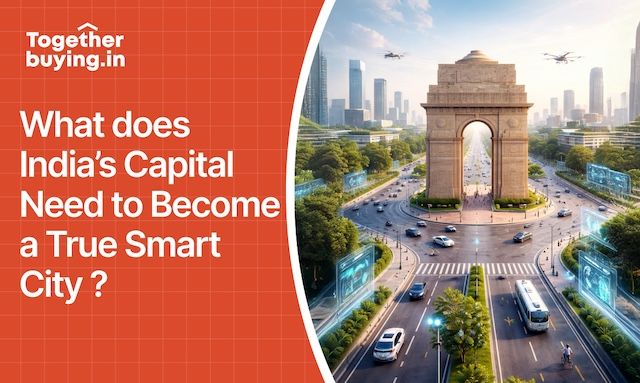
New Delhi, the heart of India and home to over 32 million people in the National Capital Region, stands at a critical juncture. While the city has made significant strides under the Smart Cities Mission, it continues to grapple with severe pollution, traffic congestion, water scarcity, and infrastructure challenges that prevent it from achieving true smart city status. As the mission deadline of March 31, 2025 has passed, the question becomes increasingly urgent: What does Delhi really need to transform into a world-class smart city?
This comprehensive analysis examines Delhi's current smart city initiatives, identifies critical gaps, explores successful global models, and outlines the roadmap for Delhi's transformation into a genuinely intelligent, sustainable, and livable metropolis.
Understanding Smart Cities: Beyond the Buzzword:-
A smart city isn't merely about installing sensors and cameras—it's about creating an integrated urban ecosystem that leverages technology, data, and citizen participation to improve quality of life, enhance sustainability, and drive economic growth. True smart cities combine:
- Digital infrastructure enabling real-time data collection and analysis
- Intelligent transportation reducing congestion and emissions
- Sustainable energy systems minimizing environmental impact
- Smart governance delivering efficient, transparent public services
- Citizen engagement empowering residents in decision-making
- Economic innovation fostering entrepreneurship and job creation
- Delhi's journey toward this vision has been marked by both achievements and persistent challenges that demand urgent attention.
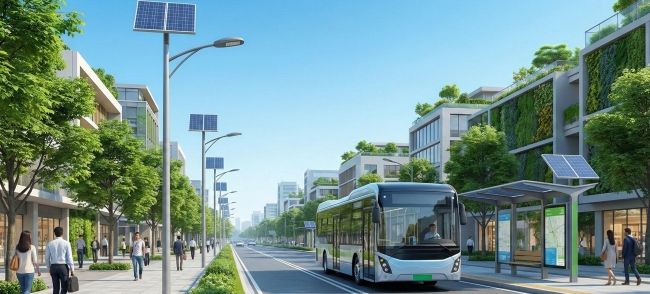
Delhi's Smart City Progress: The Current State:-
Smart NDMC 2025: The Vision
Delhi's smart city development, branded as Smart NDMC 2025, is structured around four key pillars:
- Physical Infrastructure: Urban mobility, smart parking, energy management, water systems, waste management
- Social Infrastructure: Healthcare, education, public safety
- Value Infrastructure: Economic development, innovation hubs
- SMART Governance: Sustainable, Moral/inclusive, Accountable, Responsive, Transparent administration
Financial Investment and Progress:-
India's Smart Cities Mission has invested ₹1,64,545 crore across 100 cities, with the central government contributing ₹48,000 crore matched by state governments. As of March 2025, the mission has completed approximately 93% of its projects—over 7,500 out of 8,063 total projects.
Delhi's 2025-26 budget demonstrates continued commitment with:
- Total budget: ₹1 lakh crore
- Capital expenditure: ₹28,000 crore (doubled from previous year)
- Smart infrastructure allocation: ₹3,843 crore for roads and bridges
- NCR connectivity: ₹1,000 crore for regional integration
- Security infrastructure: 50,000 new cameras (total 3,30,000 citywide)
- Central grants: ₹12,096 crore, including ₹6,000 crore for capital projects
Notable Achievements:-
Delhi Metro: A Global Smart Transportation Leader
The Delhi Metro Rail Corporation (DMRC) represents Delhi's most successful smart city initiative:
- 97 kilometers of driverless network—fourth-largest globally
- Communication-Based Train Control (CBTC) on Magenta and Pink Lines
- Passenger Information Display System (PIDS) with real-time updates
- Sarthi-Momentum 2.0 app offering door-to-door journey planning
- AI chatbot CHETNA for customer support
- Integrated ticketing via smart cards, NCMC, QR codes, WhatsApp, PayTM, Amazon Pay
- Predictive maintenance using TRINETRA platform
- Digital twin technology saving ₹8 million and improving efficiency by 20%
- Carbon credits from the United Nations—first transport system globally
- Solar installations including vertical bi-facial plants and 1 MW rooftop systems
- Regenerative braking converting braking energy to electricity
- Waste Management Improvements
Delhi has improved residential door-to-door municipal solid waste collection from 60% in 2012 to 100% in 2015, with collection efficiency reaching 93%. The city aims for 100% MSW processing through waste-to-energy plants and decentralized facilities.
Renewable Energy Compliance:
Delhi has become the only DISCOM in India to achieve full compliance with Renewable Purchase Obligations, demonstrating leadership in clean energy adoption.
The Critical Challenges: What's Holding Delhi Back?:-
Despite progress, Delhi faces severe challenges that prevent it from achieving true smart city status.
1. Air Pollution Crisis: A Public Health Emergency
Delhi's air quality represents perhaps its most pressing challenge.
2025 Statistics:
- 2nd most polluted city in India during H1 2025
- PM2.5 levels: 87 µg/m³—twice the National Ambient Air Quality Standard
- WHO compliance: 0% of days within safe limits across 336 measured days
- Risk level: Extreme—causing respiratory problems, heart disease, skin issues
- NAAQS violation: Exceeded on June 5, 2025, meaning year-long non-compliance
Air Quality Distribution (H1 2025):
- Moderate (61-90 µg/m³): 63 days
- Satisfactory (51-60 µg/m³): 52 days
- Poor (91-120 µg/m³): 31 days
- Very Poor (121-250 µg/m³): 29 days
- Severe: 3 days
Pollution Sources:
- Industrial activities and power plants: 22-30%
- Residential combustion: 8-10%
- Agricultural burning: 4-7%
- Vehicular emissions: Significant contributor
- Construction dust: Major seasonal factor
What Delhi Needs:
- Comprehensive air quality monitoring network with real-time sensors across all neighborhoods
- AI-powered pollution forecasting predicting hazardous days 48-72 hours in advance
- Strict enforcement of industrial emission standards with automated monitoring
- Green belt expansion with 10 million new trees by 2030
- Electric vehicle infrastructure with 50,000 charging stations citywide
- Construction dust control using IoT sensors and automated water sprinklers
- Stubble burning alternatives providing farmers with affordable crop residue management
- Clean fuel transition for residential cooking and heating
- Vehicle emission testing using AI-powered remote sensing technology
2. Traffic Congestion: The Mobility Nightmare
Delhi's roads are among the most congested in the world, with average speeds dropping below 15 km/h during peak hours in many areas.
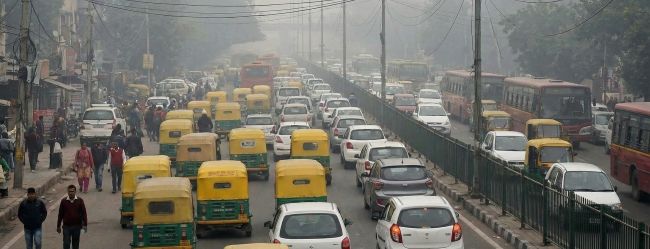
Current Problems:
- Inadequate public transport coverage in peripheral areas
- Poor last-mile connectivity from metro stations
- Chaotic traffic management at major intersections
- Insufficient parking infrastructure leading to on-street parking
- Mixed traffic with cars, buses, auto-rickshaws, cycles, and pedestrians sharing space
- Encroachment on roads and footpaths
- Lack of dedicated cycling infrastructure
What Delhi Needs:
- Intelligent Traffic Management System (ITMS) with AI-powered adaptive signals across 5,000+ intersections
- Integrated mobility platform combining metro, buses, auto-rickshaws, bike-sharing, and ride-hailing
- Dedicated bus rapid transit (BRT) corridors on all major routes
- Smart parking solutions with sensor-based systems and mobile app integration
- Congestion pricing similar to Singapore's Electronic Road Pricing
- Elevated corridors and flyovers at critical bottlenecks
- Pedestrian-first infrastructure with wide, accessible footpaths
- Cycling superhighways connecting residential areas to metro stations
- Real-time traffic information via mobile apps and digital signage
- Automated enforcement of traffic violations using AI cameras
3. Water Crisis: Scarcity and Wastage
Delhi faces chronic water shortages despite being located on the Yamuna River.
Current Problems:
- 40% water loss through leakages in aging distribution networks
- Groundwater depletion with water table dropping 2-3 meters annually
- Unequal distribution with some areas receiving excess while others face shortages
- Contamination of water sources including the Yamuna
- Lack of real-time monitoring of water quality and supply
- Insufficient rainwater harvesting despite mandatory regulations
What Delhi Needs:
- Smart water grid with IoT sensors detecting leaks in real-time
- AI-powered demand forecasting optimizing distribution
- Automated water quality monitoring at 1,000+ points citywide
- Mandatory rainwater harvesting with strict enforcement and incentives
- Wastewater recycling for non-potable uses (irrigation, industrial)
- Groundwater recharge through artificial recharge wells
- Yamuna rejuvenation with sewage treatment capacity expansion
- Consumer water meters with mobile app integration for usage tracking
- Leak detection drones surveying distribution networks
- Water pricing reform incentivizing conservation
4. Waste Management: From Collection to Processing
While collection has improved, processing and disposal remain problematic.
Current Problems:
- Landfill overflow at Ghazipur, Bhalswa, and Okhla
- Insufficient waste segregation at source
- Limited waste-to-energy capacity relative to generation
- Plastic pollution in drains and water bodies
- Informal waste sector operating without regulation
- Lack of circular economy infrastructure
What Delhi Needs:
- 100% source segregation with penalties for non-compliance
- Smart waste bins with fill-level sensors optimizing collection routes
- Waste-to-energy plants processing 10,000 tons daily
- Decentralized composting in all residential complexes
- Plastic waste management with extended producer responsibility
- E-waste collection centers in every ward
- Construction waste recycling facilities
- Biogas plants converting organic waste to energy
- Circular economy hubs promoting reuse and recycling
- Real-time waste tracking from generation to disposal
- Energy Infrastructure: Reliability and Sustainability
Delhi's power infrastructure requires modernization for reliability and sustainability.
Current Problems:
- Power theft causing revenue losses
- Transmission losses in aging infrastructure
- Peak demand challenges during summer
- Limited renewable energy integration
- Lack of distributed generation infrastructure
- Insufficient EV charging network
What Delhi Needs:
- Smart grid infrastructure with automated fault detection and isolation
- Advanced Metering Infrastructure (AMI) eliminating theft and enabling dynamic pricing
- Rooftop solar mandate for all buildings over 500 sq meters
- Battery energy storage systems for grid stability
- Microgrids in critical facilities (hospitals, data centers)
- EV charging network with 50,000 public charging points
- Demand response programs incentivizing off-peak consumption
- Grid-scale solar and wind projects in NCR region
- Energy efficiency standards for buildings and appliances
- Real-time energy monitoring dashboards for consumers
6. Digital Infrastructure: The Foundation
Smart cities require robust digital infrastructure that Delhi currently lacks comprehensively.
Current Gaps:
- Incomplete fiber optic coverage in peripheral areas
- Digital divide with limited internet access in low-income neighborhoods
- Insufficient public Wi-Fi coverage
- Fragmented data systems across government departments
- Cybersecurity vulnerabilities in critical infrastructure
- Limited IoT sensor deployment for environmental monitoring
What Delhi Needs:
- Citywide fiber optic network with 1 Gbps connectivity
- Free public Wi-Fi at 10,000+ locations (parks, bus stops, government offices)
- 5G infrastructure enabling IoT and smart applications
- Unified data platform integrating all government departments
- Open data portal providing citizens access to city data
- IoT sensor network monitoring air quality, noise, traffic, water quality
- Cybersecurity operations center protecting critical infrastructure
- Digital literacy programs ensuring inclusive access
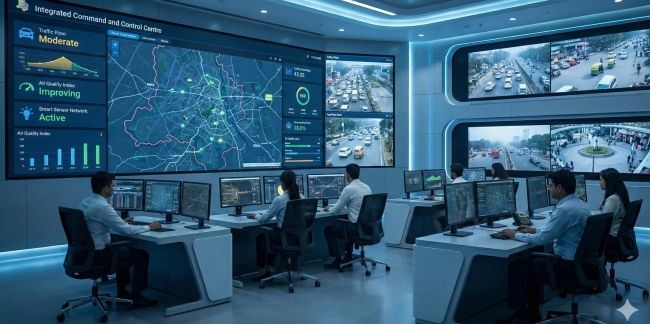
- Smart city command center with real-time monitoring and response
- Blockchain-based land records and citizen services
7. Governance and Citizen Engagement: The Human Element
Technology alone cannot create smart cities—effective governance and citizen participation are essential.
Current Challenges:
- Fragmented governance with multiple authorities (MCD, NDMC, DDA, Delhi Government)
- Bureaucratic delays in project approvals and implementation
- Limited citizen participation in planning decisions
- Corruption in service delivery
- Lack of accountability mechanisms
- Poor grievance redressal systems
What Delhi Needs:
- Unified metropolitan authority coordinating all smart city initiatives
- Single-window clearance for project approvals
- Participatory budgeting allowing citizens to allocate funds for local projects
- Digital governance platform for all citizen services
- AI-powered grievance redressal with guaranteed response times
- Transparency portal tracking all government projects in real-time
- Citizen feedback mechanisms integrated into service delivery
- Performance dashboards for all government departments
- Anti-corruption technology using AI to detect irregularities
- Community engagement programs involving residents in neighborhood planning
- Learning from Global Leaders: Best Practices
- Singapore: The Gold Standard
- Singapore's transformation into the world's leading smart city offers valuable lessons for Delhi.
Key Strategies:-
Virtual Singapore—Digital Twin Technology: Singapore created a dynamic 3D city model integrating real-time data from 10,000+ sensors monitoring sewage levels, pedestrian movements, traffic, and environmental conditions. AI algorithms transform this data into predictive insights, forecasting congestion hotspots hours before they occur.
Practical Results:
- Flash flood simulations saved $15 million in damages
- Noise pollution modeling added $200/sq ft to property values near airports
- AI co-pilot "Project Gemini" optimizes urban planning decisions
- Electronic Road Pricing (ERP): Smart toll system adjusting charges based on real-time traffic flow, reducing congestion by 25% during peak hours.
Healthcare Innovation: AI-optimized mobile health pods deployed in "care deserts" cut emergency response times by 40%. Telemedicine platforms and wearable health trackers connect to digital medical records.
Energy Efficiency: Smart grids optimize electricity distribution, widespread solar adoption, and automated waste management systems.
Success Factors:
- Strong political will with SGD $2.4 billion government investment
- Start with pain points rather than technology for its own sake
- Democratize data with unified platform across all agencies
- Phase implementation following crawl-walk-run approach
- Equity focus deploying mobile data vans to fill gaps in low-income areas
- Barcelona: Citizen-Centric Innovation
- Barcelona's approach emphasizes citizen participation and data justice.
Key Initiatives:
- Democratized air quality monitoring with citizens contributing data via low-cost sensors
- Open data policies making city information accessible to all
- Participatory budgeting allowing residents to decide local spending priorities
- Smart lighting reducing energy consumption by 30%
- Sensor-based waste collection optimizing routes and reducing costs
Transferable Lessons for Delhi:-
- Involve citizens in data collection and decision-making
- Prioritize equity ensuring technology benefits all neighborhoods
- Start with small, visible projects building public trust
- Create open data ecosystems fostering innovation
- The Roadmap: Delhi's Smart City Transformation by 2030
Phase 1: Foundation (2025-2026)
Digital Infrastructure:
- Deploy citywide fiber optic network
- Install 50,000 IoT sensors for environmental monitoring
- Launch unified data platform integrating all departments
- Establish smart city command center
Quick Wins:
- Implement intelligent traffic signals at 1,000 intersections
- Launch integrated mobility app
- Deploy smart waste bins in 100 neighborhoods
- Install 10,000 public Wi-Fi hotspots
Governance Reform:
- Create unified metropolitan authority
- Launch digital governance platform
- Implement single-window clearance system
Phase 2: Expansion (2027-2028)
Transportation:
- Complete 200 km of new metro lines
- Deploy 25,000 EV charging stations
- Implement congestion pricing in central Delhi
- Create 500 km of dedicated cycling lanes
Environment:
- Install comprehensive air quality monitoring network
- Launch AI-powered pollution forecasting
- Plant 5 million trees
- Implement strict industrial emission controls
Water and Energy:
- Deploy smart water grid with leak detection
- Install AMI for all electricity consumers
- Mandate rooftop solar for large buildings
- Expand wastewater recycling capacity
Phase 3: Maturity (2029-2030)
Advanced Systems:
- Launch digital twin of entire NCR
- Implement AI-powered urban planning
- Deploy autonomous public transport
- Create fully integrated smart grid
Sustainability:
- Achieve 50% renewable energy
- Reduce PM2.5 to WHO standards
- Recycle 80% of waste
- Become water-positive city
Citizen Empowerment:
- Full participatory budgeting implementation
- AI-powered personalized city services
- Blockchain-based transparent governance
- Universal digital literacy
- Estimated Investment and Funding
- Total Investment Required (2025-2030): ₹2.5 lakh crore
Funding Sources:
- Central government grants: ₹75,000 crore
- State government budget: ₹75,000 crore
- Municipal bonds: ₹50,000 crore
- Public-private partnerships: ₹75,000 crore
- International development banks: ₹25,000 crore
Expected Returns:
- Economic growth: ₹5 lakh crore additional GDP by 2030
- Job creation: 2 million new jobs
- Healthcare savings: ₹50,000 crore from reduced pollution-related illnesses
- Productivity gains: ₹1 lakh crore from reduced congestion
- Energy savings: ₹25,000 crore from efficiency improvements
Conclusion: The Path Forward:-
Delhi stands at a crossroads. The Smart Cities Mission has laid important groundwork, particularly in transportation through the world-class Delhi Metro. However, severe challenges in air quality, traffic congestion, water management, and governance prevent Delhi from achieving true smart city status.
The path forward requires:
- Holistic Vision: Moving beyond isolated projects to integrated urban transformation
- Adequate Investment: Committing ₹2.5 lakh crore over 2025-2030
- Governance Reform: Creating unified metropolitan authority with accountability
- Technology Deployment: Building comprehensive digital infrastructure and IoT networks
- Citizen Engagement: Involving residents in planning and implementation
- Sustainability Focus: Prioritizing environmental solutions alongside technology
- Equity Commitment: Ensuring benefits reach all neighborhoods and income groups
- Political Will: Maintaining commitment beyond electoral cycles
- Regional Coordination: Collaborating across NCR for pollution and transportation
- Learning from Leaders: Adapting best practices from Singapore, Barcelona, and others
Delhi has the economic resources, technical talent, and institutional capacity to become a world-class smart city. What's needed is coordinated action, sustained commitment, and recognition that smart cities are built not just with sensors and software, but with vision, governance, and citizen participation.
The question isn't whether Delhi can become a smart city—it's whether Delhi's leaders and citizens will make the choices necessary to realize that vision. The technology exists. The funding is achievable. The roadmap is clear.
Now comes the hard part: execution.
The future of Delhi as a smart city isn't predetermined—it will be built by the decisions made today.
For homebuyers seeking smart, sustainable properties in Delhi NCR's emerging corridors, platforms like TogetherBuying.in offer group buying opportunities to access premium developments at up to 20% discount—making smart living more affordable for everyone.
Frequently Asked Questions (FAQs)
1. What is the Smart Cities Mission and how does Delhi fit into it?
The Smart Cities Mission, launched in June 2015, is a central government initiative to develop 100 cities across India with smart infrastructure and technology. Delhi (specifically NDMC area) is one of the selected cities. The mission has invested ₹1,64,545 crore nationally, with 93% of projects completed as of March 2025. Delhi's smart city development focuses on transportation, energy, waste management, and digital governance.
2. Why is Delhi's air pollution so severe despite smart city initiatives?
Delhi's pollution stems from multiple sources: industrial emissions (22-30%), residential combustion (8-10%), agricultural burning (4-7%), vehicular emissions, and construction dust. While smart city projects have improved monitoring, they haven't addressed root causes. Delhi needs comprehensive solutions including strict emission controls, electric vehicle adoption, green belt expansion, and regional coordination to tackle stubble burning. Technology alone cannot solve pollution without policy enforcement and behavioral change.
3. How much will it cost to make Delhi a true smart city?
Estimates suggest ₹2.5 lakh crore investment over 2025-2030 for comprehensive transformation covering digital infrastructure, transportation, environment, energy, water, and governance. This would be funded through central grants (₹75,000 crore), state budget (₹75,000 crore), municipal bonds (₹50,000 crore), PPP (₹75,000 crore), and international loans (₹25,000 crore). Expected economic returns exceed ₹5 lakh crore through growth, productivity, and healthcare savings.
4. What happens to Smart Cities Mission projects after March 31, 2025?
The Smart Cities Mission officially ends March 31, 2025, with 559 projects (₹14,239 crore) still ongoing. Post-mission, development will continue through other government schemes, but there's uncertainty about operational continuity of Integrated Command and Control Centers (ICCCs) and funding for maintenance. Cities need sustainable funding models and institutional frameworks to maintain smart infrastructure beyond the mission period.
5. How does Delhi Metro compare to the world's best metro systems?
Delhi Metro ranks among the world's top systems with 97 km of driverless network (4th largest globally), advanced CBTC technology, real-time passenger information, integrated ticketing, predictive maintenance, and carbon credits from the UN. It matches Tokyo's information systems and Singapore's automation. However, last-mile connectivity, coverage in peripheral areas, and integration with other transport modes need improvement to match cities like Hong Kong or Seoul.
6. Can Delhi achieve WHO air quality standards by 2030?
Achieving WHO standards (PM2.5 below 15 µg/m³) from current 87 µg/m³ requires 83% reduction—extremely challenging but not impossible. It demands: complete transition to electric public transport, strict industrial emission controls, elimination of stubble burning, massive green belt expansion, clean fuel adoption, and regional coordination. Cities like Beijing reduced PM2.5 by 55% in 5 years through aggressive measures. Delhi needs similar political will and enforcement.
7. What role can citizens play in Delhi's smart city transformation?
Citizens are crucial for success through: participating in air quality monitoring via low-cost sensors, using public transport and cycling, segregating waste at source, conserving water and energy, providing feedback on city services, participating in community planning, reporting violations via apps, adopting sustainable practices, and holding government accountable. Barcelona and Singapore demonstrate that citizen engagement multiplies smart city effectiveness.
8. How will smart city initiatives benefit common citizens?
Direct benefits include: reduced commute times (saving 2-3 hours daily), cleaner air (reducing respiratory diseases), reliable water supply, efficient waste collection, lower electricity bills through smart grids, better healthcare access, transparent government services, safer neighborhoods through surveillance, improved public spaces, and economic opportunities through new jobs. Smart cities prioritize quality of life improvements, not just technology deployment.
9. What are the biggest obstacles to Delhi becoming a smart city?
Key obstacles include: fragmented governance with multiple authorities, bureaucratic delays, funding constraints, political conflicts between state and central governments, lack of coordination across departments, resistance to change, digital divide excluding poor neighborhoods, corruption in implementation, inadequate enforcement of regulations, and citizen apathy. Overcoming these requires political will, governance reform, and sustained commitment beyond electoral cycles.
10. How can Delhi learn from Singapore's smart city success?
Delhi can adopt Singapore's strategies: create digital twin for predictive planning, implement congestion pricing to reduce traffic, deploy 10,000+ IoT sensors for real-time monitoring, establish unified data platform across departments, start with solving specific pain points (flooding, pollution), ensure equity by covering all neighborhoods, phase implementation systematically, involve citizens in data collection, and maintain strong political commitment with adequate funding. However, Delhi must adapt solutions to its larger scale, diversity, and democratic governance structure.