Market Trends
What is Carpet Area Meaning Inclusions Exclusions Legal Definition
21 Apr 2026
Market Trends
21 Apr 2026
Content
No Blogs content found
It looks like there haven’t been any blogs yet!
Carpet area meaning in real estate refers to the net usable floor space within an apartment, measured from the inner walls. This measurement has become central to property transactions in India following the implementation of the Real Estate Regulation and Development Act 2016. Times of India reports that before RERA, there was no unified legal definition of carpet area and builders used different calculation methods.
The carpet area definition under RERA has brought transparency to property transactions by establishing a standardized measurement system. This legal framework ensures buyers understand exactly what usable space they are purchasing, eliminating confusion that previously existed in the real estate market.
Understanding carpet area meaning is essential for property buyers as it directly impacts pricing, space utilization, and investment decisions in residential real estate transactions across India.
Carpet area under RERA represents the actual usable floor space within an apartment where residents can place furniture and conduct daily activities. MCO Legals explains that Section 2(k) of the Real Estate Regulation and Development Act 2016 provides the official definition of carpet area.
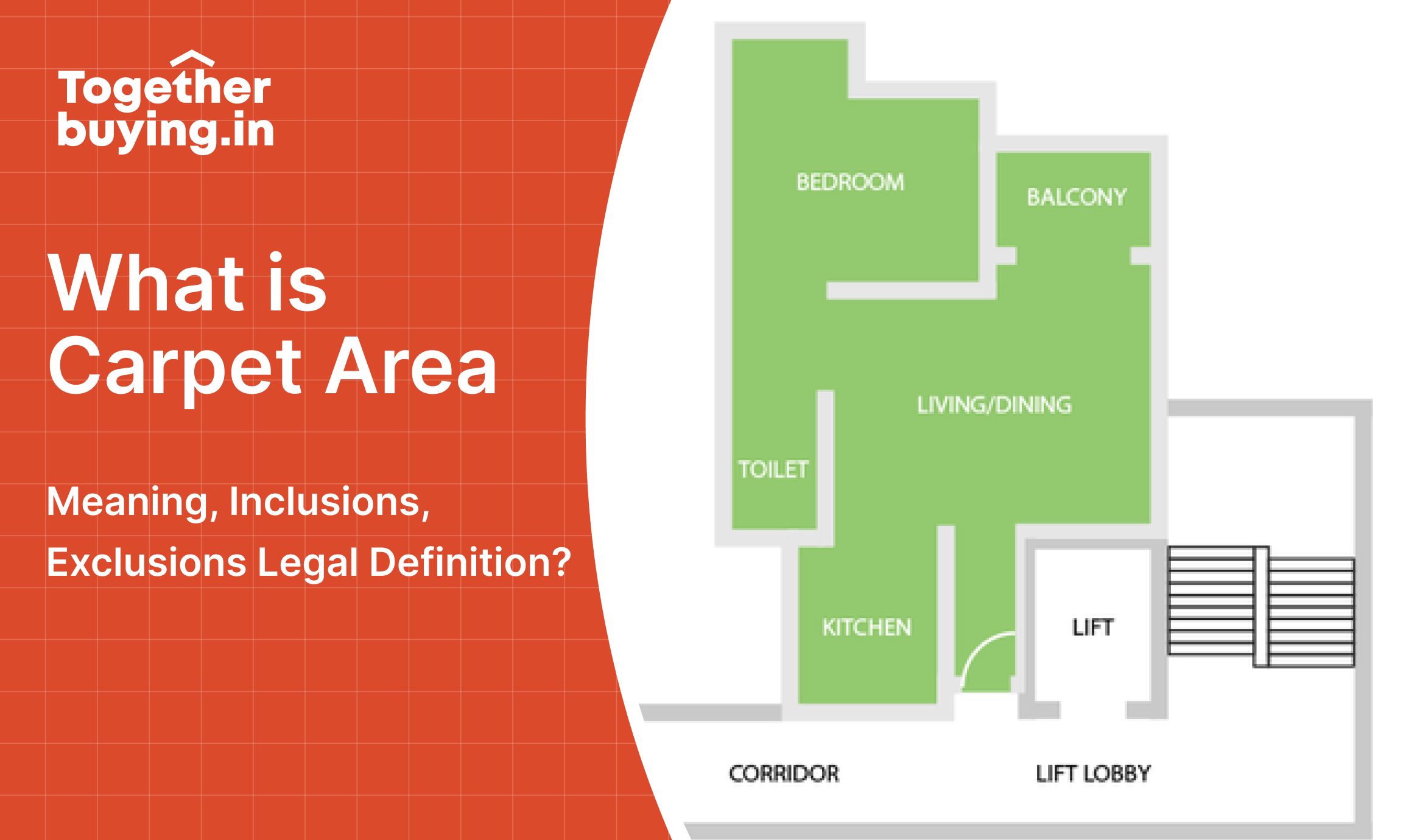
The carpet area encompasses all enclosed spaces within the internal walls of a residential unit. This includes bedrooms, living rooms, kitchens, bathrooms, and internal corridors. The measurement excludes external walls, balconies, terraces, and common areas shared with other residents.
Law Bhoomi clarifies that RERA carpet area includes internal partition wall thickness, adding approximately 5% additional space compared to general carpet area calculations used before the Act.
The standardized carpet area definition ensures buyers receive transparent information about the actual living space they are purchasing, eliminating discrepancies that existed when developers used varying measurement methods.
The Real Estate Regulation and Development Act 2016 provides a comprehensive legal framework for carpet area definition. Latest Laws contains the complete text of the Real Estate Regulation and Development Act 2016, which establishes the legal foundation for carpet area measurements.
"The net usable floor area of an apartment, excluding external walls, service shafts, exclusive balconies/verandahs, and open terraces, but including the area covered by internal partition walls" — MCO Legals
The legal definition framework mandates that all property advertisements, sale agreements, and marketing materials must specify carpet area as the primary measurement. Developers must comply with this requirement to ensure transparency in property transactions.
Bajaj Finserv Markets explains that RERA came into existence as part of the Real Estate Regulation and Development Act 2016, with the intention of protecting the interests of home buyers and facilitating investment in the real estate sector.
All habitable rooms within the apartment are included in carpet area calculations. This encompasses bedrooms, living rooms, dining rooms, and study rooms. The measurement covers the floor space from wall to wall within these enclosed areas.
The kitchen area, including cooking space, storage areas, and utility zones within the kitchen boundaries, forms part of the carpet area. Both open and closed kitchen designs are measured from their internal wall boundaries.
All bathroom and toilet spaces within the apartment are included in carpet area measurements. This covers master bathrooms, common bathrooms, powder rooms, and any additional toilet facilities within the unit.
Times of India explains that under RERA definition, the thickness of internal partition walls between rooms is included in carpet area calculations. This represents the key difference between RERA carpet area and traditional carpet area measurements.
The inclusion of internal partition walls adds approximately 5% to the total carpet area compared to older calculation methods. These walls separate different rooms within the apartment, such as walls between bedrooms and living areas.
The thickness of external walls that form the outer boundary of the apartment is excluded from carpet area calculations. These load bearing walls provide structural support and weather protection but do not contribute to usable living space.
Balconies are explicitly excluded from carpet area under RERA regulations. This applies to all types of balconies, including covered balconies, open balconies, and service balconies, as they are not considered part of the core living area.
Verandah spaces, whether covered or open, are not included in carpet area measurements. These semi outdoor spaces provide additional utility but are not considered part of the core living area.
Open terraces, roof terraces, and any uncovered outdoor spaces attached to the apartment are excluded from carpet area calculations. These areas may provide recreational space but do not constitute enclosed living areas.
Shared spaces such as lobbies, staircases, elevators, corridors, parking areas, clubhouses, gardens, and recreational facilities are excluded from individual apartment carpet area calculations. These areas are typically included in super built up area measurements.
Carpet area represents the net usable floor space within the apartment boundaries, measured from internal walls and including internal partition wall thickness.
Built up area includes carpet area plus the area occupied by external walls, balconies, and other covered areas attached to the apartment. Built up area typically ranges from 10% to 15% more than carpet area.
Super built up area encompasses built up area plus a proportionate share of common areas such as lobbies, staircases, elevators, and recreational facilities. This represents the total area for which buyers pay in most residential projects.
| Area Type | Includes | Typical Size Ratio |
|---|---|---|
| Carpet Area | Usable floor space, internal walls | Base measurement |
| Built Up Area | Carpet area + external walls + balconies | 110–115% of carpet area |
| Super Built Up Area | Built up area + common area share | 120–140% of carpet area |
Understanding these differences helps buyers assess the actual value they receive for their investment and compare properties accurately.
Carpet area directly affects the price buyers pay, as RERA mandates that property prices must be quoted per square foot of carpet area. This ensures transparent pricing and eliminates the confusion that existed when developers used different area measurements for pricing.
Carpet area provides buyers with accurate information about the actual living space available for furniture placement, daily activities, and functional use. This measurement helps buyers assess whether the property meets their space requirements.
Property valuation and resale value calculations increasingly rely on carpet area measurements. Banks and financial institutions use carpet area for loan calculations, making it a critical factor in property investment decisions.
Business Standard reports that the Ministry of Housing and Urban Affairs launched a unified RERA portal, bringing together data from across states and union territories to make property transactions more transparent and improve accountability.
The Week reports that Union Housing and Urban Affairs Minister Manohar Lal Khattar stated that RERA has empowered homebuyers, ensured timely delivery of projects, and infused discipline in the sector.
Outlook Money reports that homebuyers only receive 60% of the total area they pay for as usable carpet area, while the remaining 40% comprises common spaces according to ANAROCK Research data from 2025.
"Only 60 per cent of the space buyers pay for is usable carpet area, while the rest of 40 per cent is accounted for by elevators, stairwells, lobbies and more"
Business Standard reports that the average loading percentage increased from 31% in 2019 to 40% in the January March quarter of 2025, meaning flat owners are receiving less livable space.
ANAROCK Research data shows that among the top seven cities, Bengaluru has seen the highest percentile jump in average loading over the last seven years, from 30% in 2019 to 41% in Q1 2025.
Many buyers assume that a super built up area represents their actual living space. This confusion can lead to significant disappointment when buyers realize they are paying for common areas and amenities that constitute 40% of the total quoted area.
Buyers often fail to verify whether property measurements comply with RERA definitions. This oversight can lead to disputes and unexpected space shortfalls after possession.
Buyers should verify that agreements specify carpet area as per RERA definitions and include clear breakdowns of all area calculations and charges.
Buyers should also check the RERA registration status of projects and developers before making investment decisions.
Carpet area meaning under RERA represents the net usable floor space within an apartment, providing buyers with transparent information about actual living space. The legal definition framework established by the Real Estate Regulation and Development Act 2016 has brought standardization and clarity to property measurements across India.
Understanding carpet area inclusions such as rooms, kitchens, bathrooms, and internal partition walls, along with exclusions like external walls, balconies, and common areas, enables buyers to make informed property decisions. The distinction between carpet area, built up area, and super built up area directly impacts pricing and space utilization.
Market data shows that RERA implementation has improved transparency through unified portals and standardized definitions, though buyers must remain vigilant about loading factors that have increased to 40% in major cities. With proper understanding of carpet area legal definitions and market dynamics, buyers can navigate property transactions with greater confidence and avoid common pitfalls in real estate investments.
RERA carpet area includes the thickness of internal partition walls within the apartment, while traditional carpet area excluded these walls. This inclusion adds approximately 5% more space to the RERA carpet area calculation. The RERA definition provides a standardized measurement that all developers must follow, eliminating the confusion that existed when builders used different calculation methods.
No, balconies are explicitly excluded from carpet area under RERA regulations. This applies to all types of balconies including covered balconies, open balconies, and service balconies. Balconies are considered additional amenities and are typically included in the built-up area or super built-up area calculations, but not in the usable carpet area.
According to ANAROCK Research, homebuyers only receive 60% of the total area they pay for as usable carpet area. The remaining 40% comprises common areas like elevators, lobbies, staircases, clubhouses, and amenities. This loading factor has increased from 31% in 2019 to 40% in 2025.
Under RERA regulations, developers must quote property prices based on carpet area, not super built-up area. However, the final sale agreement may include charges for common areas and amenities. Buyers should carefully review agreements to understand the complete pricing structure and ensure transparency in area calculations and associated charges.
If the delivered carpet area is less than what was promised in the agreement, buyers have legal recourse under RERA. Developers must compensate buyers for the shortfall by refunding the proportionate amount with interest. Buyers can file complaints with the respective state RERA authority through the unified RERA portal or state-specific RERA websites to seek redressal for such discrepancies.
Contact Us
Fill out this form
& we'll get back
to you
Recommended for you