Market Trends
Why are people shifting to high-end housing?

29 Dec 2025
Market Trends
29 Dec 2025
Content
No Blogs content found
It looks like there haven’t been any blogs yet!
The Indian real estate landscape is witnessing an unprecedented transformation. Luxury homes, once considered the exclusive domain of ultra-wealthy industrialists and celebrities, are now becoming the preferred choice for a growing segment of homebuyers. In 2025, apartments priced at ₹1 crore and above account for a staggering 62% of total residential sales a dramatic shift from just a few years ago when affordable housing dominated the market.
But what's driving this seismic shift toward high-end housing? Is it merely about status symbols, or are there deeper economic, lifestyle, and investment factors at play? This comprehensive analysis explores the multifaceted reasons behind India's luxury housing boom and what it means for the future of real estate.
The statistics are nothing short of remarkable. Luxury properties priced above ₹1.5 crore have appreciated by 40% between 2022 and 2025 across India's top seven cities—significantly outpacing the 26% rise in affordable housing during the same period. This exceptional price performance has created a self-reinforcing cycle of demand and investment confidence.
Even more striking, luxury units priced above ₹1.5 crore have surged 450% since 2021, growing from approximately 21,000 units to substantially higher volumes. The ultra-luxury segment (₹5 crore and above) experienced a phenomenal 80% year-on-year increase in sales, while homes in the ₹3-5 crore range saw robust 14% annual growth.
In the USD 1.2-2.3 million (₹10-20 crore) segment, sales more than doubled in 2024, reaching 360 units. Mumbai's branded luxury home sales in the USD 2.3-5.78 million bracket shot up by an astounding 143% in 2024, reflecting heightened demand for prestigious branded residences.
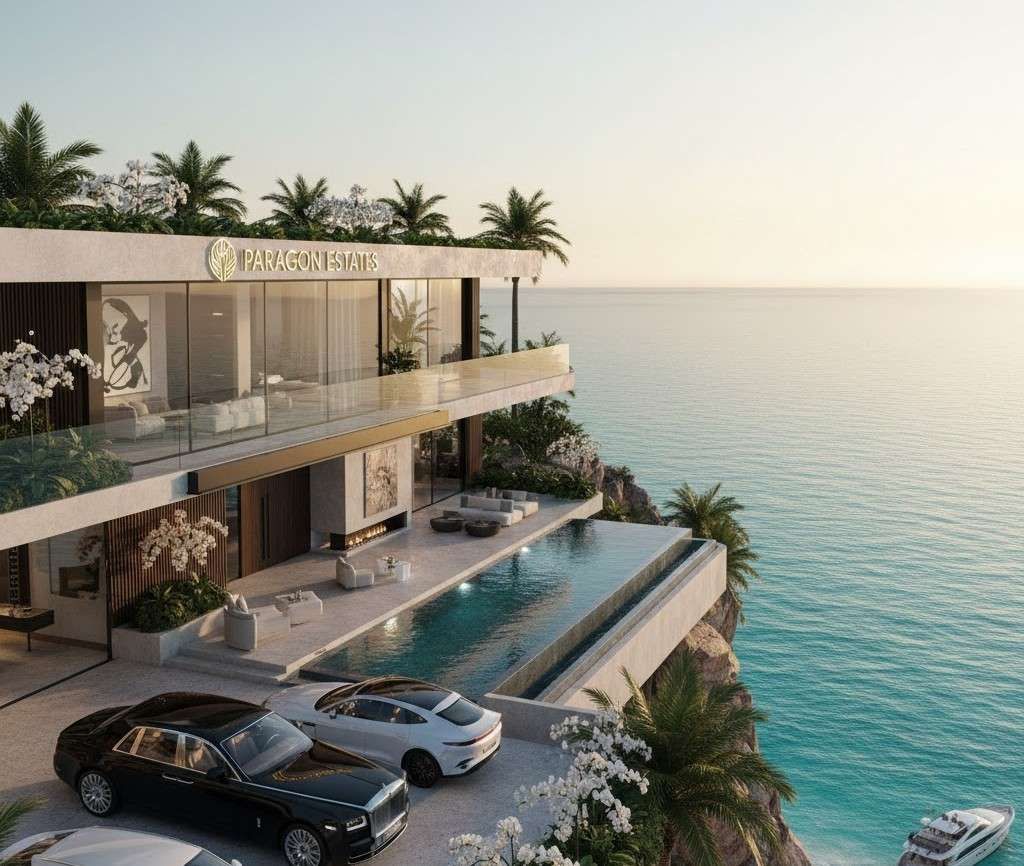
The luxury segment now represents approximately 30% of all residential sales in India's top seven cities during January-September 2025. Despite overall housing sales dropping 12% year-on-year, luxury homes recorded a 4% year-on-year increase, demonstrating remarkable resilience in a challenging market environment.
India's economic growth story provides the fundamental backdrop for luxury housing demand. The country's GDP grew at 7.8% in the April-June 2025 quarter—the highest growth in five quarters. Chief Economic Advisor V. Anantha Nageswaran confirmed that Indian households' disposable income will be "significantly higher" in 2025 compared to 2024, driven by:
India's total disposable personal income is projected to reach 319.8 trillion INR by the end of 2025, with forecasts suggesting growth to approximately 340.6 trillion INR in 2026 and 359.3 trillion INR in 2027.
Private Final Consumption Expenditure (PFCE)- a key indicator of household spending—is expected to grow to 7.6% in FY 2024-25, rising from 5.6% in the previous year. This surge in consumption capacity directly translates into increased demand for premium housing.
The number of High Net Worth Individuals (HNIs) in India has exploded. As of 2024, the country had over 850,000 HNIs with investable assets of USD 1 million and above. Ultra-High Net Worth Individuals (UHNIs) increased by 11% during 2024 alone, with projections suggesting a 39% rise by 2025.
This wealth creation isn't limited to traditional business families. The technology sector, startup ecosystem, professional services, and global corporate roles have created a new generation of affluent buyers in their 30s and 40s who prioritize quality of life and are willing to invest in premium housing.
Approximately 25 million households are expected to be lifted out of poverty, with only about 6% of households remaining in poverty categories - representing substantial wealth creation across India's population pyramid.
Perhaps the most profound change is philosophical. Luxury is no longer defined primarily by size or price alone, but by quality of life, wellness, and emotional value. Today's affluent buyers have moved away from grandeur toward meaning, prioritizing:
This represents a transition from conspicuous consumption to conscious living, where premium homes are viewed as sanctuaries that enhance daily life rather than mere status symbols.
The COVID-19 pandemic fundamentally altered how people perceive their homes. No longer just a place to sleep, homes became:
These expanded functional requirements naturally pushed buyers toward larger, better-equipped premium properties that could accommodate multifaceted lifestyles.
Luxury real estate has emerged as one of India's best-performing asset classes. The data is compelling:
These appreciation rates significantly outperform traditional investment vehicles like fixed deposits, bonds, and even many equity investments, while providing the tangible benefit of a physical asset that can be used or rented.
Global economic uncertainty, currency fluctuations, and geopolitical tensions have made tangible assets increasingly attractive. HNIs and UHNIs view luxury properties as:
The All-India House Price Index rose by 3.13% year-on-year according to Reserve Bank of India data, indicating stable market fundamentals supporting investor confidence.
Delhi NCR continues to lead with 57% of total luxury sales and the strongest price appreciation. The region's appeal stems from:
Emerging corridors like Dwarka Expressway have seen property prices nearly double from ₹9,434 per sq ft in 2020 to ₹18,668 per sq ft in 2024, with experts predicting an additional 40-60% appreciation by 2030.
Mumbai remains the flagship luxury market, particularly in South Mumbai and Bandra. The city's appeal includes:
Tier-2 cities led by Coimbatore, Lucknow, and the Tri-city area (Chandigarh, Mohali, Panchkula) witnessed sales value surges of 20% in 2024. Kolkata posted an impressive 168% year-on-year surge in new luxury project launches, demonstrating that luxury demand is no longer confined to traditional metros.
Non-Resident Indians (NRIs) have been instrumental in sustaining luxury demand. Their preferences include:
NRIs leverage India-linked income, favorable currency exchange rates, and emotional connections to their homeland, making luxury Indian real estate an attractive investment compared to expensive markets in the US, UK, or Middle East.
Post-pandemic, many Indian professionals are returning from overseas assignments, bringing:
This reverse migration has created sustained demand for luxury properties that match international living standards.
Today's luxury buyers expect far more than traditional clubhouses and swimming pools. The new standard includes:
Branded residences represent partnerships between developers and globally recognized luxury brands. The 143% surge in branded luxury sales in Mumbai demonstrates their appeal:
Deliberate Market Positioning Developers have strategically shifted focus toward high-margin premium developments. Premium housing launches rose 5% during 2025, even as overall housing sales declined 12%.
Leading developers like Sobha, DLF, Godrej Properties, and Lodha are expanding luxury portfolios while maintaining quality standards that justify premium pricing.
Union Budget 2025 Initiatives
The Real Estate (Regulation and Development) Act has transformed buyer confidence by:
This regulatory framework has particularly benefited the luxury segment, where buyers demand transparency and accountability for their significant investments.
Market Projections
The Indian luxury residential real estate sector is projected to reach $1 trillion by 2030, growing from approximately USD 45 billion in 2024. This represents a compound annual growth rate of 15-21.81%—among the highest globally.
Fractional Ownership: New SM-REIT rules allow retail HNIs to co-own premium assets starting from USD 120,500, offering rental yields of 8-12% with enhanced liquidity. This democratization of luxury real estate investment presents attractive opportunities for portfolio diversification.
While Mumbai, Pune, and Bengaluru currently account for over 90% of luxury housing unit sales, significant decentralization is emerging. Cities like Hyderabad, Chennai, Ahmedabad, and Tier-2 centers are rapidly maturing as luxury destinations with:
While luxury housing offers compelling benefits, the high price points can be prohibitive for many aspiring buyers. This is where innovative platforms like Together Buying are revolutionizing access to premium properties.
By forming small groups of 3-7 buyers interested in the same luxury project, TogetherBuying.in negotiates bulk deals with developers, enabling members to:
For just ₹1,450 one-time subscription, homebuyers can leverage the power of group buying to make luxury housing more accessible—transforming the dream of premium living into achievable reality.
The shift toward high-end housing in India represents far more than a real estate trend—it's a fundamental transformation in how affluent Indians perceive home ownership. Driven by economic prosperity, lifestyle evolution, investment performance, and changing values, luxury housing has emerged as the dominant force in India's residential market.
With 62% of sales now in the ₹1 crore+ segment, 40% appreciation in just three years, and projections of a $1 trillion market by 2030, luxury real estate offers compelling opportunities for both end-users and investors.
The convergence of rising incomes, wealth creation, government support, technological innovation, and sustainability consciousness has created perfect conditions for sustained luxury housing growth. Whether you're a first-time luxury buyer, an investor seeking portfolio diversification, or an NRI looking to invest in India, the luxury segment offers an unparalleled value proposition.
And with innovative platforms like TogetherBuying.in democratizing access through group buying power, the dream of luxury living is no longer confined to the ultra-wealthy—it's becoming an achievable aspiration for India's growing affluent middle class.
The question is no longer "Why are people shifting to high-end housing?" but rather "How can I be part of this luxury revolution?"
Ready to explore luxury housing opportunities with exclusive group discounts? Visit TogetherBuying.in and join 10,000+ smart homebuyers saving up to 20% on their dream homes.
No. While ultra-luxury properties (₹5 crore+) cater to UHNIs, the broader luxury segment (₹1-3 crore) is increasingly accessible to upper-middle-class professionals, dual-income families, and young entrepreneurs. With rising incomes, home loans, and platforms like TogetherBuying.in offering group discounts, luxury housing is becoming democratized.
Luxury properties have appreciated 40% from 2022-2025 in top cities, outperforming many equity investments while providing tangible assets. They offer portfolio diversification, inflation hedging, rental income potential, and tax benefits. However, real estate requires larger capital, has lower liquidity, and involves maintenance costs. A balanced portfolio typically includes both asset classes.
This varies by city:
Luxury is defined more by amenities, location, and quality than absolute price.
Check the following:
Platforms like TogetherBuying.in partner only with trusted, RERA-compliant developers, adding an extra verification layer.
Key tax benefits include:
Consult a tax advisor for personalized guidance.
Under-construction advantages:
Ready-to-move advantages:
NRIs and risk-averse buyers prefer ready-to-move, while investors seeking maximum appreciation often choose under-construction.
Extremely important. Over 40% of new luxury projects in 2024 incorporated eco-conscious features. Benefits include:
IGBC Platinum and LEED certifications are becoming standard expectations in luxury segment.
Yes, but with stricter criteria:
Many luxury buyers use combination financing—home loans plus personal savings, liquidating investments, or family support.
Rental yields vary by location:
While yields are lower than commercial properties, luxury residential offers capital appreciation, personal use flexibility, and lower vacancy risks.
Several strategies can reduce costs:
The TogetherBuying.in model specifically addresses this by leveraging collective bargaining power to secure institutional-level discounts for individual buyers.
Contact Us
Fill out this form
& we'll get back
to you
Recommended for you