Investments
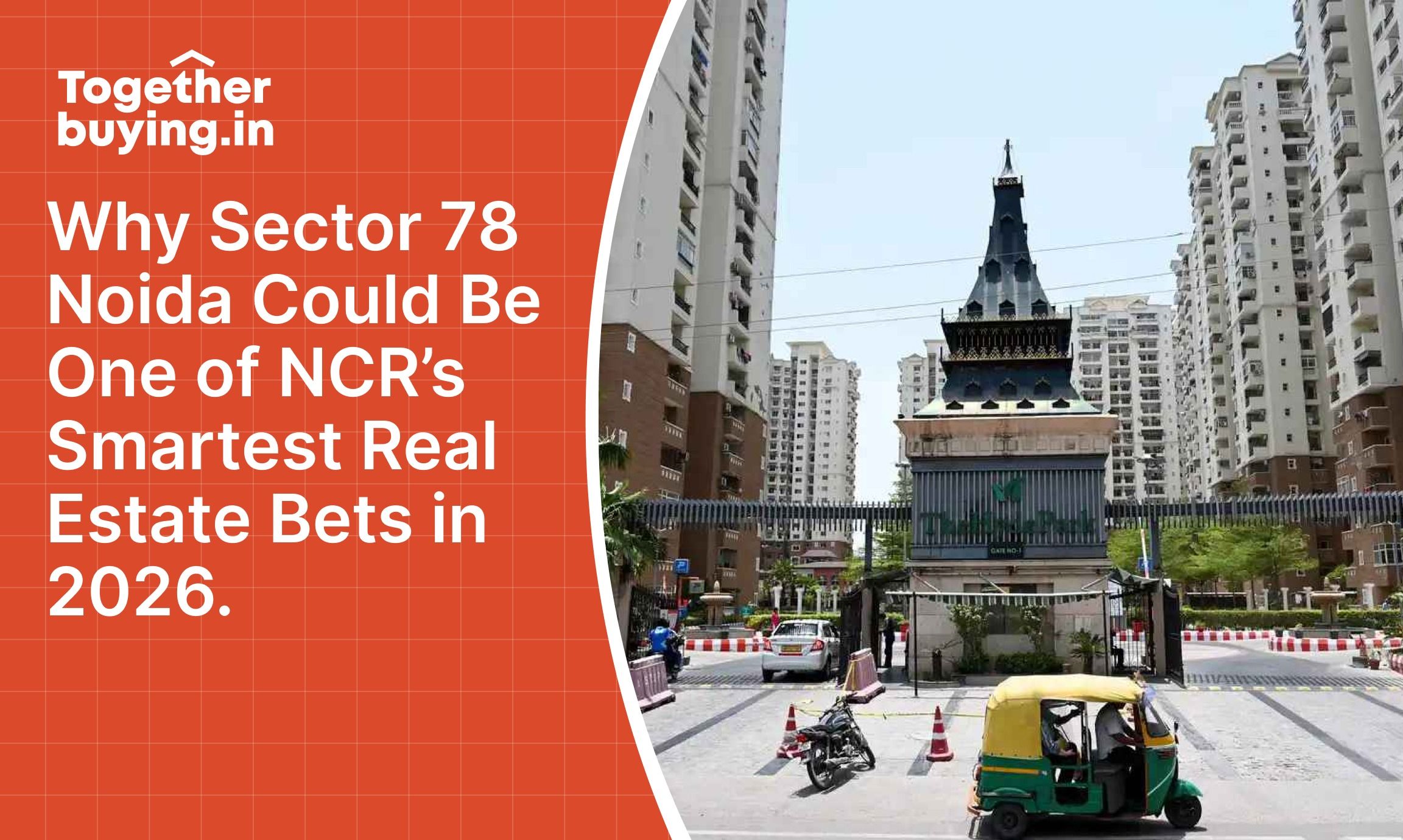
Why Sector 78 Noida Could Be One of NCR’s Smartest Real Estate Bets in 2026
12 May 2026
Investments
12 May 2026
Content
No Blogs content found
It looks like there haven’t been any blogs yet!
Sector 78 has become one of Noida's most talked-about investment destinations, but for the right reasons this time. Unlike the usual real estate hype, the fundamentals here actually point toward sustained growth. The coming metro connectivity, proximity to major employment hubs, and current pricing create a window of opportunity that's worth examining seriously.
This article looks at what's actually happening on the ground and separates the real investment potential from the noise.
PIN Code: 201301
Area: Sector 78 spans approximately 420-450 acres in central Noida, between Sector 76 and Sector 80. The sector is well-demarcated with main roads on all sides and is considered part of the premium residential belt in Noida.
Main Roads: Vishwakarma Road runs through the sector, providing direct connectivity to the Noida-Greater Noida Expressway. The sector is also well-connected via the Yamuna Expressway, DND Flyway, and the upcoming FNG Expressway.
Sector 78 sits in the central corridor of Noida. Adjacent and nearby sectors include:
This positioning makes Sector 78 strategically located between established residential areas and employment hubs, without being too congested.
Sector 78 generally receives positive feedback from residents. Common observations include:
Overall satisfaction rating among current residents is moderately high, particularly among families and working professionals.
Several established residential projects dominate the sector:
Primary & Middle Schools:
Coaching Institutes:
Several IIT-JEE and NEET coaching centers in Sectors 76-78 corridor
Competition-focused centers for board exams
Most schools are within 1-3 km of Sector 78, making them easily accessible.
Colleges & Higher Education
Amity University Noida (Sector 125) - 15-18 km away, premier private university
Jaypee Institute of Information Technology (Sector 62A) - 8-10 km away, engineering college
Gautam Buddha University (Noida-Greater Noida Expressway) - 12-15 km away, multi-discipline university
Dr. B.R. Ambedkar University (Ghaziapur) - 18-20 km away, state university
For higher studies, most students commute to Delhi (Jawaharlal Nehru University, Delhi University colleges, etc.) or use nearby private institutions.
Local Markets:
Shopping Malls:
Restaurants & Dining:
The Aqua Line extension from Sector 51 to Knowledge Park V is moving forward. Construction is progressing, and the project is expected to be operational by 2027-28. While Indian infrastructure projects often run behind schedule, this one has actual government funding committed, which is unusual.
The impact of this connectivity cannot be overstated. Currently, Sector 78 is 2-3 km from the nearest metro stations (Sector 101 and 76). Getting to these stations requires an auto-rickshaw ride, which adds time and cost to any commute. Once the extension opens with a station in the Sector 76-78 corridor, commute times will drop significantly.
To understand the real impact, look at what happened to Sector 62 when it got metro connectivity. Before the Aqua Line opened in 2017, property prices in Sector 62 ranged from Rs 5,500-6,000 per square foot. By 2019, prices had reached Rs 10,000+. That's a roughly 75% appreciation in 2 years, driven largely by infrastructure improvement.
Sector 78 isn't starting from as low a base as Sector 62 did, but the mechanics are similar. Better connectivity means faster commutes, which means more people willing to live there, which means higher demand and higher prices.
Sector 62 is adjacent to Sector 78 and functions as Noida's primary IT hub. The sector hosts major offices for HCL, Google, TCS, and Infosys, employing somewhere in the range of 25,000-30,000 people. Most of these professionals don't live in Sector 62 itself, the rental prices there are too high because everyone wants to be near work.
Sector 78, being close enough for a reasonable commute, becomes an attractive alternative. A working professional from HCL can live in Sector 78 and reach work in 15-20 minutes, which is acceptable. The rental prices reflect this demand reality.
Additionally, other employment centers like NSEZ in Sector 81, commercial hubs in Sectors 16, 18, and 15, and the growing tech corridor in Greater Noida are all within reasonable commuting distance. This creates a stable base of potential renters and buyers.
Properties in Sector 78 are currently priced between Rs 7,900 and Rs 12,300 per square foot, with most properties falling in the Rs 10,000-11,500 range. This pricing is significantly lower than comparable sectors.
A 2 BHK apartment in Sector 62 costs roughly Rs 13,500-15,000 per square foot. The same configuration in Sector 78 costs Rs 9,500-11,000. The difference isn't due to quality, many new projects in Sector 78 match or exceed the quality of older buildings in Sector 62. The difference is connectivity and established brand value. Sector 62 has the metro now; Sector 78 will have it in 2-3 years.
This creates a rational investment opportunity. You're buying something that will likely have comparable connectivity within the same timeframe, at a 25-30% discount to where prices already are in adjacent sectors. Whether you believe appreciation will be 30%, 40%, or 50% over the next 3-5 years, the math suggests prices have meaningful upside.
For investors focused on rental yields, here's what actually pencils out. A 2 BHK apartment in Sector 78 currently rents for about Rs 23,000-28,000 per month. At Rs 85 lakh purchase price, that's Rs 3 lakh in annual rent, which appears to be 3.5% yield. But the real number is lower once expenses are accounted for.
Monthly society charges run Rs 4,000-5,000. Annual maintenance, repairs, and painting costs another Rs 15,000-20,000. Property tax adds Rs 8,000-10,000 yearly. Accounting for 1-2 months of vacancy each year and occasional turnover costs, net rental income drops to roughly Rs 1.2-1.5 lakh annually. That's a 1.4-1.8% actual yield.
The yield improves when you factor in appreciation. If the property appreciates 6-8% annually (a reasonable assumption given the metro timeline), your total return approaches 8-10% per year. That's competitive with most fixed-income options currently available.
For investors willing to hold for the medium term, this combination of modest rental income plus appreciation is attractive. The rental income covers most costs and provides cash flow, while you wait for the appreciation to compound.
Several established developers have projects in Sector 78. The main ones are worth knowing about. Mahagun Moderne represents the premium segment. Mahagun has been building in Noida since the 1990s and has a track record of on-time delivery in roughly 90% of projects. The 2-5 BHK apartments in Moderne range from Rs 1.58 crore to Rs 3.22 crore. The quality is high, finishes are detailed, and amenities are comprehensive. For buyers who want minimal risk and are willing to pay for quality, this is the standard.
Sikka Karmic Greens offer more value. Sikka has experienced some delays in the past, but no catastrophic ones. The 1-3 BHK apartments range from Rs 44 lakh to Rs 1.89 crore. The value proposition here is better for budget-conscious buyers, particularly for 2 BHK configurations that rent well.
Assotech Windsor Court sits between Mahagun and Sikka in terms of price and quality. 2-4 BHK units range from Rs 62 lakh to Rs 1.65 crore. The developer has been reliable, though not as consistently on-time as Mahagun. The distinction matters. Buying from established developers reduces delivery risk significantly. Construction delays hurt investors, they delay rental income and force extended holding periods. Mahagun's track record suggests lower delay probability, which has value.
Current data shows property price appreciation of 57.7% over the past year. This number is worth examining critically. Most of this appreciation is recovery from suppressed pandemic-era prices, combined with pent-up demand finally releasing into the market.
The question is what happens next. For the next 1-2 years (through 2027-28), expect gradual appreciation of 4-6% annually as the market prices in the coming metro connectivity. Once the metro actually opens, there may be a more significant spike, possibly 8-12% in that year as the reality of improved connectivity fully sinks in. By 2028-29, after the metro has been operational for a few months, appreciation will likely moderate back to 5-6% annually as the market replicates to the new normal.
In practical terms: A property bought today at Rs 10,250 per square foot could reasonably reach Rs 12,500-13,000 by 2028-29, and Rs 13,500-14,500 by 2030. That's 30-40% total appreciation over 5 years. This isn't spectacular, but it's solid, particularly when combined with rental income.
No investment is risk-free. Sector 78 has some genuine risks worth acknowledging.
These aren't reasons to avoid investing, but they're factors that affect expected timelines and returns.
If you decide to invest, follow a systematic approach.
First, verify the developer. Check their past projects, visit completed buildings, talk to actual residents who've bought from them. Look for evidence of on-time delivery and quality finishes. This matters more than the marketing tells you.
Second, hire a lawyer to verify the property. Budget Rs 30,000-50,000 for this. They should check the land title, ownership chain, approvals, and any legal disputes. This is non-negotiable.
Third, negotiate. Most developers expect negotiation on price, particularly for early bookings. Targeting 3-5% off the asking price is reasonable. Many buyers accept the quoted price without discussion, which leaves money on the table.
Fourth, lock in your financing early. Get loan approval and rate-lock before prices move further. Interest rates are likely to rise, not fall.
Fifth, budget accurately. Registration, stamp duty, property tax, and society charges will add 7-8% to your purchase price. Plan for this upfront.
Finally, avoid buying off-plan properties too far from completion. The closer to possession, the lower your risk. Buying something three years away from handover exposes you to construction delays and market uncertainties.
Sector 78 works well for specific investor profiles.
Sector 78 isn't being aggressively promoted because developers have run out of inventory elsewhere, it's being promoted because it represents real value at this moment. Metro connectivity is coming, employment nearby is confirmed, and pricing is still reasonable relative to what's about to happen.
The window for buying at current prices is probably 12-18 months. After that, once the metro project gains more public attention and visibility, prices will have already moved up. You don't need to rush irrationally, but sitting on the sidelines waiting for better timing likely means missing the real opportunity.
The investment will work if you: have a 3-5 year timeline, buy from established developers, conduct proper due diligence, and understand that returns will be moderate (8-10% annually), not spectacular. It will not work if you expect quick gains, buy from unknown builders, or can't afford holding for the medium term.
Based on current fundamentals, Sector 78 deserves serious consideration from investors looking for solid, medium-term real estate opportunities in the NCR region.
Contact Us
Fill out this form
& we'll get back
to you
Recommended for you