India's real estate sector undergoes a fundamental transformation. Infrastructure investment drives this change, moving the market from speculation to sustainable, demand-driven growth. The 2026-27 Union Budget allocated Rs 12.2 lakh crore for capital expenditure-3.1% of GDP, signaling structural investment rather than incremental spending.
Infrastructure as the Foundation Layer
Infrastructure investment creates the backbone for real estate development. When metro lines, expressways, airports, and digital networks become operational, they reshape urban economics and expand market catchment areas.
The Delhi Metro Success Story
Delhi's metro expansion over two decades demonstrates infrastructure's transformative power. Areas like Dwarka, Noida, and Ghaziabad evolved from peripheral locations to mainstream residential hubs. Reliable commuter connectivity shifted buyer preferences and elevated these markets from fringe to prime real estate destinations.
Key Transformation Metrics:
- Dwarka: Transformed from agricultural land to integrated township
- Noida: Evolved into major commercial and residential hub
- Ghaziabad: Gained prominence as affordable housing destination with metro connectivity
Also Read this:- Delhi Metro Phase 4: New Lines, Stations & Latest Updates 2026
Mumbai's Infrastructure-Led Growth
Mumbai's metro extensions and arterial road improvements created similar market shifts. Projects aligned with infrastructure milestones recorded stronger absorption rates compared to developments launched ahead of connectivity improvements.
Market Response Patterns:
- Projects near metro stations: 25-30% faster sales velocity
- Arterial road improvements: 15-20% price appreciation
- Integrated transport hubs: Premium pricing sustainability
Access Creation Drives Demand Generation
Infrastructure alone doesn't guarantee real estate growth—it creates options. Consumer demand determines whether these options translate into market success.
Changing Buyer Demographics
Residential sales across India's seven largest cities reached 3.96 million units in 2025. The buyer profile shifted significantly:
Current Market Drivers:
- End-users: 60-65% of total purchases
- Long-term investors: 25-30% of market
- Upgraders: 10-15% seeking better connectivity
Market Confidence Factors:
- Income formalization through digital payments
- Enhanced regulatory oversight via RERA
- Improved developer credibility and project delivery
Financing Sensitivity Impact
Interest rate fluctuations significantly affect market dynamics. A one percentage point increase in home loan rates can raise 20-year mortgage EMIs by 7-9%. In high affordability threshold environments, these changes substantially impact transaction volumes.
Financing Impact Analysis:
- 1% rate increase: 15-20% reduction in transaction volume
- Credit availability: Direct correlation with absorption rates
- EMI affordability: Primary purchase decision factor
Commercial Real Estate Infrastructure Correlation
Office leasing reached 8 million square feet in 2025, led by Bengaluru, Hyderabad, and Pune. Infrastructure improvements drove this growth across all three markets.
Infrastructure-Driven Leasing Patterns
Bengaluru Growth Factors:
- Metro connectivity to IT corridors
- Outer Ring Road development
- Airport expressway completion
Hyderabad Expansion Elements:
- HITEC City metro connectivity
- Financial District infrastructure
- Integrated transport systems
Pune Development Drivers:
- Metro line operational phases
- Mumbai-Pune expressway improvements
- IT park connectivity enhancement
Corporate Location Decision Factors
Companies evaluate multiple infrastructure elements before long-term commitments:
Primary Considerations:
- Employee commute times and reliability
- Proximity to residential clusters
- Social infrastructure availability
- Digital connectivity quality
- Airport and highway access
Supply-Infrastructure Synchronization Challenges
Market risks emerge when supply outpaces infrastructure development or when developers misread demand depth.
Common Market Distortions
Warning Indicators:
- Inventory buildup in poorly connected areas
- Pricing pressure due to accessibility gaps
- Project delays from infrastructure dependencies
- Absorption rate decline in peripheral markets
Mitigation Strategies
Disciplined Development Approaches:
- Transit-Oriented Development: Projects within 500 meters of metro stations
- Mixed-Use Clusters: Integrated commercial and residential developments
- Phased Launches: Supply release aligned with infrastructure milestones
- Urban Planning Coordination: Developer-government collaboration
Demographic Transformation and Urban Growth
India's urban population will exceed 600 million by 2036. This demographic shift ensures structural housing demand, but buyer expectations evolve beyond basic location considerations.
Modern Buyer Expectations
Infrastructure Requirements:
- Connectivity: Multi-modal transport access
- Walkability: Pedestrian-friendly environments
- Public Spaces: Parks, community areas, recreational facilities
- Digital Infrastructure: High-speed internet, smart city features
- Environmental Performance: Green buildings, sustainable utilities
Market Evolution Patterns
Regulatory Improvements (2014-2024):
- RERA implementation increased transparency
- GST streamlined taxation structure
- Benami Property Act reduced black money
- Insolvency and Bankruptcy Code improved project delivery
Developer Discipline Enhancement:
- Top developers improved execution standards
- Transparency reduced speculative distortions
- Data-driven decision making increased
- Consumer-focused development approaches
Regional Infrastructure Impact Analysis
National Capital Region (NCR)
Major Infrastructure Projects:
- Delhi-Meerut Expressway: Reduced travel time by 60%
- Dwarka Expressway: Connected Gurgaon to IGI Airport
- Eastern Peripheral Expressway: Decongested Delhi traffic
- Metro Phase 4: Added 112 km of new connectivity
Real Estate Impact:
- Gurgaon: 40% price appreciation along expressway corridor
- Noida: 25% increase in residential absorption
- Faridabad: Emerged as affordable housing hub
- Greater Noida: Industrial and residential development acceleration
Mumbai Metropolitan Region (MMR)
Infrastructure Developments:
- Mumbai Trans Harbour Link: Connected mainland to Navi Mumbai
- Metro Line 2A and 7: Improved western suburb connectivity
- Coastal Road Project: Reduced south Mumbai travel times
- Navi Mumbai Airport: Created new growth corridor
Market Transformation:
- Navi Mumbai: 35% price appreciation post-connectivity
- Thane: Became major residential destination
- Kalyan-Dombivli: Affordable housing market expansion
- Panvel: Emerged as investment hotspot
Bengaluru Urban Agglomeration
Key Infrastructure:
- Namma Metro expansion: Connected IT corridors
- Peripheral Ring Road: Improved inter-city connectivity
- Electronic City flyover: Reduced commute times
- Kempegowda International Airport expansion
Development Outcomes:
- Whitefield: Premium residential market establishment
- Electronic City: Integrated township development
- Sarjapur Road: Rapid residential growth
- Outer Ring Road: Commercial corridor development
Investment Coordination Framework
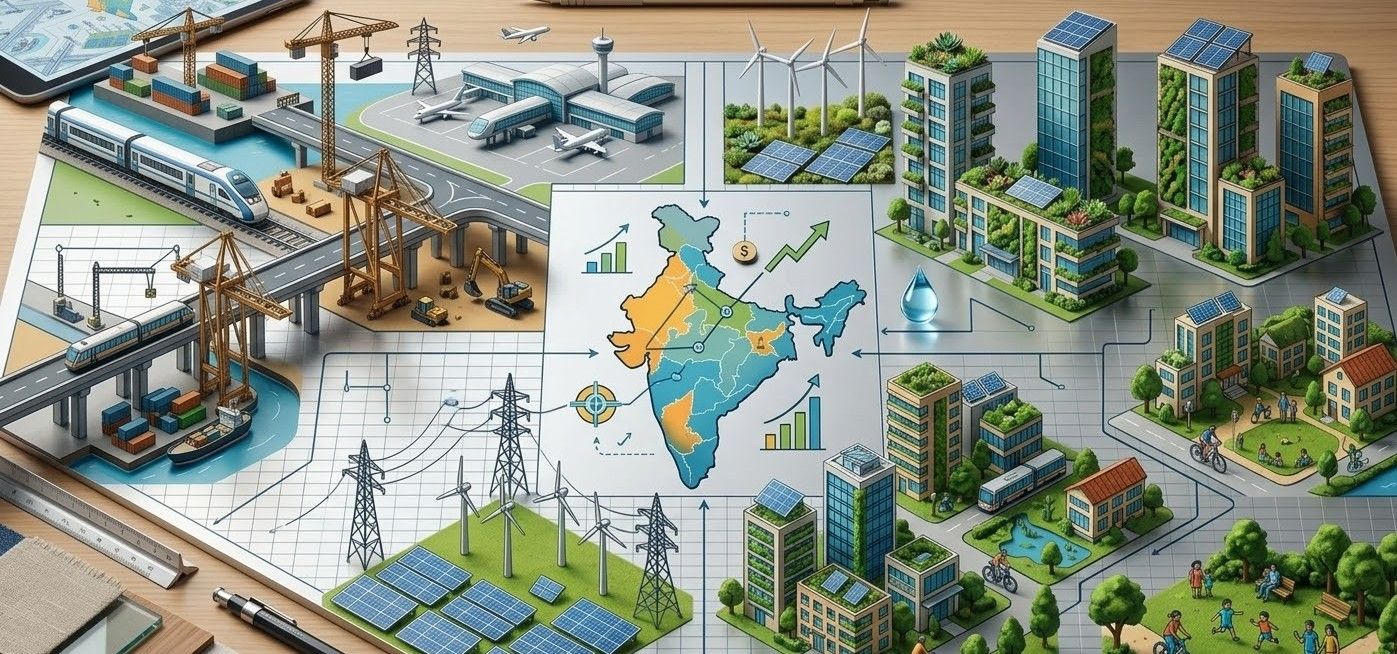
Sustainable real estate growth requires coordination between public infrastructure investment and private supply pipelines.
Government Infrastructure Strategy
Priority Investment Areas:
- Transport Networks: Metro, bus rapid transit, expressways
- Digital Infrastructure: Fiber optic networks, 5G deployment
- Utilities: Water supply, sewage treatment, power distribution
- Social Infrastructure: Schools, hospitals, recreational facilities
Funding Mechanisms:
- Central government capital expenditure
- State infrastructure bonds
- Public-private partnerships
- Foreign direct investment in infrastructure
Developer Alignment Requirements
Strategic Considerations:
- Launch Timing: Coordinate with infrastructure milestones
- Pricing Strategy: Reflect connectivity improvements
- Product Mix: Match infrastructure-enabled demand
- Phasing Plans: Align with transport corridor development
Market Sustainability Factors
Long-term Growth Elements:
- Demand Predictability: Infrastructure creates stable catchment areas
- Price Stability: Reduced speculation through improved connectivity
- Absorption Consistency: Infrastructure reduces market volatility
- Investment Security: Improved project viability and returns
Technology Integration and Smart Infrastructure
Modern infrastructure investment incorporates technology for enhanced efficiency and user experience.
Smart City Components
Digital Infrastructure Elements:
- IoT-enabled traffic management
- Smart parking systems
- Digital payment integration
- Real-time public transport information
- Energy-efficient building systems
Real Estate Integration:
- Smart home features as standard
- Building management system integration
- High-speed connectivity infrastructure
- Sustainable energy solutions
- Waste management automation
Future Infrastructure Trends
Emerging Technologies:
- Electric vehicle charging infrastructure
- Autonomous vehicle-ready road systems
- Renewable energy integration
- Water recycling and management
- Air quality monitoring networks
Environmental Sustainability and Green Infrastructure
Infrastructure investment increasingly focuses on environmental sustainability, influencing real estate development patterns.
Green Infrastructure Components
Sustainable Transport:
- Electric bus networks
- Bicycle sharing systems
- Pedestrian-friendly pathways
- Metro systems with renewable energy
- Electric vehicle charging stations
Environmental Systems:
- Rainwater harvesting infrastructure
- Sewage treatment plants
- Solid waste management systems
- Green building certification requirements
- Air quality improvement measures
Market Response to Green Infrastructure
Buyer Preferences:
- 30% premium willingness for green-certified buildings
- Preference for developments with environmental infrastructure
- Demand for sustainable utility systems
- Interest in renewable energy integration
- Focus on air and water quality improvements
Financial Market Integration
Infrastructure investment attracts institutional funding, creating stable capital flows for real estate development.
Institutional Investment Patterns
Infrastructure Funding Sources:
- Pension funds seeking long-term returns
- Insurance companies with liability matching needs
- Sovereign wealth funds for strategic investments
- Infrastructure investment trusts (InvITs)
- Foreign institutional investors
Real Estate Capital Flow:
- REITs for commercial property investment
- Fractional ownership platforms
- Institutional residential rental platforms
- Development finance institutions
- Alternative investment funds
Market Stability Benefits
Risk Reduction Factors:
- Diversified funding sources
- Professional management standards
- Transparent governance structures
- Regulatory compliance requirements
- Performance monitoring systems
Regional Development and Tier-2 City Growth
Infrastructure investment drives growth beyond metropolitan areas, creating opportunities in Tier-2 and Tier-3 cities.
Emerging Market Opportunities
High-Growth Tier-2 Cities:
- Ahmedabad: Metro and GIFT City development
- Kochi: Metro and IT infrastructure
- Jaipur: Metro and heritage tourism infrastructure
- Lucknow: Metro and administrative center development
- Bhubaneswar: Smart city and IT infrastructure
Development Catalysts:
- Central government infrastructure schemes
- State-specific industrial promotion policies
- Educational institution establishment
- Healthcare infrastructure development
- Tourism and cultural infrastructure
Investment Migration Patterns
Capital Flow Trends:
- Metropolitan area saturation driving Tier-2 investment
- Infrastructure-led affordability in smaller cities
- Corporate expansion to Tier-2 locations
- Government job creation in state capitals
- Educational and healthcare hub development
Future Growth Trajectory and Market Outlook
India's infrastructure investment creates a foundation for sustained real estate growth over the next decade.
Growth Projections and Trends
Market Size Expansion:
- Real estate market expected to reach $1 trillion by 2030
- Infrastructure investment to continue at 3%+ of GDP
- Urban population growth driving housing demand
- Commercial space requirements from economic growth
- Industrial real estate expansion from manufacturing growth
Technology Integration Acceleration:
- Smart city infrastructure in 100+ cities
- Digital connectivity as basic infrastructure
- Sustainable building standards becoming mandatory
- Integrated transport systems in major cities
- Data-driven urban planning implementation
Investment Strategy Implications
For Developers:
- Align project launches with infrastructure timelines
- Invest in technology-enabled building systems
- Focus on sustainable development practices
- Develop expertise in transit-oriented projects
- Build partnerships with infrastructure providers
For Investors:
- Prioritize locations with confirmed infrastructure investment
- Consider long-term infrastructure development plans
- Evaluate connectivity improvements and timeline
- Assess government commitment to infrastructure projects
- Monitor regulatory changes affecting infrastructure development
For End-Users:
- Research planned infrastructure improvements
- Consider future connectivity when making purchase decisions
- Evaluate total cost of ownership including commute costs
- Assess quality of life improvements from infrastructure
- Plan for long-term value appreciation from connectivity
This shift driven by infrastructure also supports the idea behind TogetherBuying. As new areas open up with metro lines and expressways, it becomes hard for individual buyers to judge the right time to enter and the right price to pay. TogetherBuying brings multiple buyers together in such locations and helps them negotiate better deals directly with developers. In a market where connectivity and timing matter, this approach gives buyers more clarity, better pricing, and access to projects at the right stage.
Conclusion: Building Sustainable Real Estate Growth
Infrastructure investment transforms India's real estate market from cyclical speculation to sustainable, demand-driven growth. The Rs 12.2 lakh crore capital expenditure commitment creates structural change rather than temporary stimulus.
Key Success Factors:
- Coordination: Align public infrastructure with private development
- Timing: Synchronize supply with connectivity milestones
- Quality: Focus on sustainable, technology-enabled development
- Demand: Understand evolving buyer expectations and requirements
- Integration: Create multi-modal, mixed-use development patterns
Market Transformation Outcomes:
- Reduced speculation through improved fundamentals
- Enhanced affordability through better connectivity
- Increased market stability through infrastructure reliability
- Expanded growth opportunities in Tier-2 and Tier-3 cities
- Sustainable development practices becoming market standard
The foundation exists for sustained real estate growth. Success depends on effectively converting infrastructure investment into stable, consumer-driven demand while maintaining coordination between public investment and private development. This approach creates a real estate market that grows with India's economic development rather than despite it.
When infrastructure investment, regulatory framework, and market demand align, real estate becomes a driver of economic growth rather than a source of volatility. India's infrastructure-led real estate transformation provides a model for sustainable urban development in emerging economies worldwide.