Vastu Shastra

What is the right mandir direction in your home?
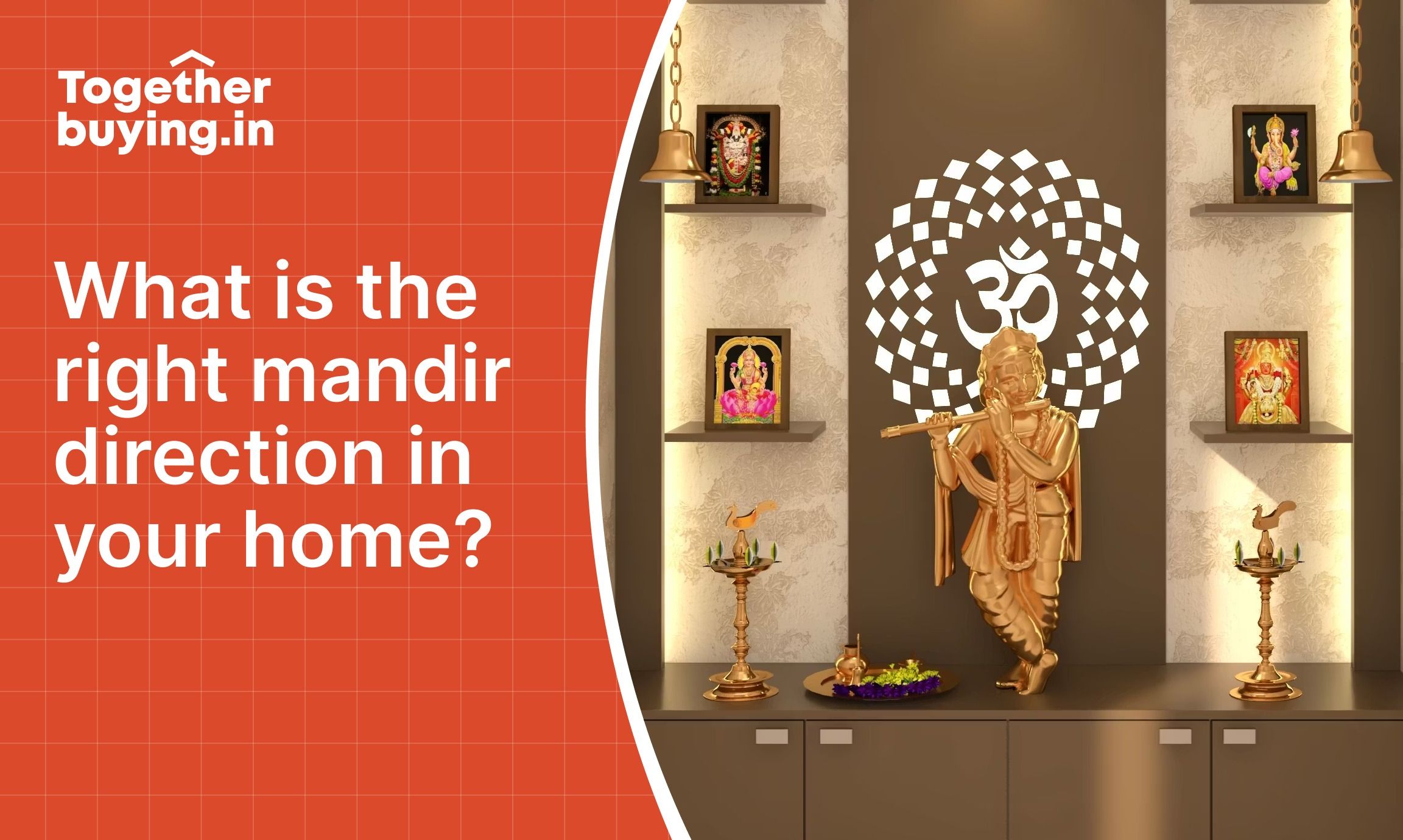
What is the right mandir direction in your home?

27 Mar 2026

Content

No Blogs content found

It looks like there haven’t been any blogs yet!

Get answer to all your queries

We're here to help

Talk to Expert

In Indian culture, a pooja room or mandir holds great significance as it is the area where idols of deities and religious texts are kept, and the entire family prays and worships together. The mandir is a sacred place and a source of positive energy.

Vastu Shastra lays down rules related to the construction of a house and placement of the rooms, including the best direction for a temple in home. Each direction has some significance and cosmic energy associated with it. Mandir placement in a Vastu-compliant way ensures alignment with the cosmic energies and promotes spiritual growth.

Mandir direction in home: Vastu tips for temple

Northeast as the most auspicious direction

Live Hindustan:- According to Vastu Shastra, placing the temple in the northeast direction known as Ishan Kona is considered most auspicious. This direction is ruled by Planet Jupiter and placing the mandir in this direction promotes a positive and harmonious environment.

As per Vastu, the northeast direction is associated with Lord Shiva and symbolises purity and spirituality. Moreover, this corner denotes water – one of the five elements of nature – and symbolises harmony.

Scientifically, the northeast corner receives the first rays of the sun and gets energised. Hence, it is a perfect location for prayers and meditation.

pooja room.jpg

Centre of the house, the sacred space

The centre of the house is known as the Brahmasthan. It is an area with the strongest energies. According to Vastu, placing the mandir in this direction brings prosperity and good health to the occupants. Alternatively, one can design a small puja area or a space for performing rituals.

East is an alternative direction for mandir placement

Ruled by the Sun and Lord Indra, the east is another favourable direction for placing the mandir at home. Mandir placement in the east brings prosperity and wealth.

North, the wealth corner

The placement of the mandir at home in the north direction, ruled by the god of wealth Kuber, is believed to bring wealth.

West as a practical consideration

The west direction, ruled by Varuna, can be considered for placing a mandir in case other directions are not available.

Mandir direction to avoid

South

According to Vastu Shastra, one should avoid constructing or placing a mandir in the south direction as it is not considered auspicious as per Vastu. One should also avoid placing idols or photos of deities in the south direction and it would make the person worshipping face south, which is not recommended in Vastu.

Southeast

The southeast direction is related to the fire element, ruled by the lord of fire or Agni. The direction is also associated with the planet Venus. Hence, it is best suited for designing a kitchen. One should avoid placing a home temple in the southeast direction. According to Vastu, designing a pooja room in the southeast direction can lead to financial difficulties. However, some experts suggest the southeast is an ideal place for worshipping some deities, such as the goddess Durga. This direction is also suitable for placing diyas, lamps and Agni Kund (fire pit).

Southwest

Southwest direction, also known as Nairutya corner, is associated with the earth element and planet Rahu. While this direction represents stability, it is not considered favourable for a pooja room or spiritual activities as it will disrupt the energy flow.

Also Read this:- Vastu Tips for Choosing the Right Property in India

Which direction should gods face in a home pooja room?

Idols of gods should face east or west in the pooja room so that the person worshipping faces east or west. However, east is considered as the ideal direction for gods to face in a pooja room.

Can God face the north direction?

No. While idols of gods can be placed in the northeast direction, they should not face the north direction, as this way the person worshipping will face the south direction, which is considered inauspicious.

Tips to follow when placing idols or photos in pooja room

Central focus with principal idol

Typically, any mandir or home temple has a primary idol or murti of the main deity one worship. This denotes the central focus of worship in the mandir, signifying the divine presence and ensuring harmonious energy flow. According to Vastu, one should place the primary idol at the centre or back of the temple, facing east or north.

Multiple idols

Avoid multiple idols of the same god or goddess, either in a seated or standing position in the temple. For example, keeping more than one Shivling at home is not recommended in Vastu. The idols should not face each other to prevent any clash of energies between the deities and maintain their individuality.

Visibility

Do not cover the face of gods idols with garlands and flowers. Avoid placing the idols in a cramped manner.

Puja-related items

One should keep puja-related items in the designated area. For example, holy books must be stored in the west or south wall. Oil lamps or diyas should be kept in the east or north corner, which helps attract health and wealth.

Mandir design

While constructing and designing a home temple, it is recommended to use auspicious materials such as wood or natural stones like marble and granite. Make sure the doors and windows open clockwise and placed in the north or east direction. It is ideal to design the mandir roof in the shape of a dome instead of a flat roof.

Height and placement of idols

  • The temple must be placed high, such that the feet of the idols placed should be at the level of the devotee's chest.
  • One should avoid large idols in the home temple. Vastu recommends idols of only nine fingers as they are considered auspicious.
  • Keep small idols as per pooja room Vastu for home. Ideally, the idols can be seven inches in size.
  • The idol of Lord Ganesh should be placed on the left side of Goddess Lakshmi.
  • The idols should be in sitting position and should be kept on a 'chowki'.

pooja room 2.webp

Things to avoid in mandir

  • Idols or photos of some deities such as Natraj, Shani, Rahu and Ketu
  • Statues or images of ancestors or deities depicted in angry form
  • Items such as animal skin, leather items, money, broken idols, torn books, stale flowers. Avoid placing oil lamps in the south direction or facing south direction.

Direction you should face in mandir while worshipping

DirectionBenefits
EastGood fortune and wealth
WestAttracts wealth
NorthAttract opportunities and positivity

When building a home temple, you must align the structure in a way that the gods face the recommended Vastu direction such as east or west, so that the person worshipping faces west or east while praying. When worshipping idols in mandir or devghar, avoid facing south direction because as per Vastu, it is not considered auspicious.

Sitting in the north or east direction for worship is favourable as it brings peace of mind and concentration, as per Vastu Shastra. Many believe facing auspicious directions for praying and worshiping fulfills wishes.

Also Check this:- Griha Pravesh Muhurat 2026: Complete Guide to Auspicious Dates and Rituals

Significance of mandir direction and location as per Vastu

According to Vastu Shastra, the cardinal directions (north, south, east, and west) have a vital role to play. Besides the direction, the five elements of nature – earth, wind, fire, etc. are also significant. Each direction is associated with specific characteristics. Thus, considering the right direction is important as it would generate auspicious energies and vibrations in the house.

If one does not have an entire room for the mandir, install a small altar on the east wall, towards the northeast corner of the house.

Construction of any structure in accordance with Vastu requires a thorough understanding of favourable directions. In ancient times, people used to follow the sun's shadow for directions, but in modern times, a magnetic compass is useful for verifying navigational directions. There are ten directions. However, according to Vastu Shastra, only eight directions are shown in a magnetic compass.

Which is the right mandir location as per Vastu?

  • Living room: You can choose any space in the northeast corner of the living room.
  • Dedicated pooja room: In a spacious house, one can convert a spare room into a dedicated pooja room.
  • Altar: Place idols of gods on a raised platform or pedestal.
  • Wall: In most small apartments, people prefer keeping a wall-mounted mandir to save floor space. It should be placed in the Vastu-approved direction.
  • Kitchen: When placing a temple in the kitchen, reserve the north-east corner for it. Care must be taken to keep the mandir away from the stove and sink.
  • Dining room: A pooja space can be created in an empty corner of a dining room. To segregate the mandir from the rest of the room, partitions or curtains can be used.

Ground floor is the best location for mandir in home

If you have a duplex house, it is advisable to place the temple on the ground floor. Some people keep the temple in the bedroom or kitchen. In such cases, hang a curtain in front of the temple, when you are not using the temple. A small temple can be designed in the upper floors like the bedroom or kitchen. However, if there is a separate pooja room in the house, it should be on the ground floor.

The mandir can also be designed in the hallway or foyer area of a house. In earlier days, mandirs were constructed in the 'aangan' or front verandah of houses. Make sure to keep this area clean and avoid items such as shoe racks.

Pooja room in bedroom

If there is no space available in the living and you wish to design a pooja mandir in your bedroom, make sure to follow the Vastu guidelines. Install the mandir in the northeast corner of the room. While sleeping, make sure your feet do not point towards the mandir.

In case of a multistorey or duplex house, place the main mandir unit on the ground floor. You can install mini puja units in the bedroom.

Creating pooja room in balcony

Generally, Vastu does not recommend placing a mandir on the balcony. However, if one has to create a pooja space in the balcony, make sure it is covered with a roof. Installing a mandir in an east-facing balcony is considered favourable.

Mandir location to avoid

  • Basement
  • Under a staircase
  • In front of the main door
  • Next to a toilet or any wall behind it
  • Below a toilet on the upper floor

What is the best mandir size for a home?

The ideal pooja room must be minimum 5×7 feet in size. This will enable at least two to three people to sit and pray. The door must open towards the outside so that the opening or closing of the door does not affect any person sitting near the door inside the small pooja room. The pooja room steps must be in odd numbers, not ending in zero, that is, 3, 9, 11, 15, 21, etc.

The temple must be built at a height, a few feet above the ground so that the idols placed should be at the level of the devotee's chest. Place the deities at a height where one can comfortably pray in both ways sitting or standing. The height between the floor and the base of the mandir should range approximately between 32-36 inches.

Pooja room and their effects in different zones

DirectionSuitable forVastu Impact
NortheastConsidered Lord Shiva's zone; ideal for worshipping most deitiesBrings positive energy, mental clarity, and prosperity
West-north-westIdeal for Yakshini pujaOther pujas may lead to adverse effects
East-north-eastIdeal for worshipping Radha KrishnaHelps in dealing with stress
EastIdeal for Ram Darbar placementBrings success
East-south-eastSuitable for stockbrokersMay cause anxiety and restlessness
SoutheastWorship is considered inauspiciousMay cause financial or health issues
South-south-eastSuitable for Hanuman worshipGives energy, strength, and confidence
SouthRecommended for meditation and Goddess Kali worshipOther worship not recommended
SouthwestPitra zone; suitable for ancestral ritesMay cause financial or family issues
West-south-westIdeal for Goddess Saraswati; good for students and consultantsBrings knowledge and wisdom
WestDomain of Gurus and mother earthBrings abundance and financial gains
North-westRelated to deceased ancestorsNot recommended for deity worship
NorthIdeal for Lord Ganesha and Goddess LakshmiBrings financial prosperity
South-south-westNot recommended for worshipMay lead to losses

Check this:- House Facing Direction in Vastu Shastra: Meaning, Methods & Room-Wise Guidelines

When should you build a mandir in your house?

A mandir or temple space in the house should be created before or on the day of Griha Pravesh – the first entry into your new home. According to Vastu, one should move into a new house only after performing the Griha Pravesh puja. Monday, Thursday and Friday are considered auspicious days to set up a mandir in the house. Choose a suitable time in the morning hours to place the mandir in the northeast direction.

Before setting up the mandir, make sure the house is cleaned and prepared for the Griha Pravesh ceremony. If it is not possible to set up a proper mandir, you can place idols of deities such as Lord Ganesha and Goddess Lakshmi on an altar and perform the Griha Pravesh puja. The complete mandir can be established on a later day.

Can we have more than one mandir in the house?

According to Vastu, the house should have one main mandir, which should be built in the northeast or other suitable direction. This will help create a sacred space where the entire family can come together and worship. However, small mandir spaces can be created in other rooms by following the Vastu principles. It is better to consult a Vastu expert to create multiple mandirs in the house.

Simple remedies for Vastu dosh

Vastu remedies for incorrectly designed pooja room

If the pooja room is not built in a Vastu-complaint way, such as a southwest pooja room or the presence of a toilet near it, can cause major problems. Keeping deities in a southwest mandir, except Lord Vishwakarma, can lead to financial losses or challenges in business.

  • To rectify this defect, one should keep a Rahu yantra in the house.
  • Place a glass of water with salt inside in the southwest corner.
  • Vastu pyramids must be kept in this corner
  • A red cloth should be placed in the southwest direction.
  • Lighting candles and lamps in the southeast corner in front of idols will remove the negative energies.
  • Allow a small space behind the idols the mandir to ensure free flow of positive energies
  • Another effective Vastu remedy is by placing a partition between the mandir and the south direction. This will help prevent the negative energies from flowing to the mandir area.
  • If not a partition, you can also place yellow or white coloured curtains to segregate the pooja area and enhance its spiritual energies.
  • If the pooja room is not in the ideal northeast direction, then place a crystal pyramid in the northeast corner to remove the negative Vastu dosha.
  • Keep a brass Vastu plate under the mandir to rectify the Vastu dosha of incorrect mandir design.

Vastu remedies for south mandir

  • Use a mirror to rectify Vastu defects. Place the mirror on the south wall, which will help reflect the positive energies in the room.
  • Place a yellow-coloured carpet in the room or a yellow mat in front of the mandir. This will help remove the negative effects of a south mandir placement.
  • Brass or copper accessories such as lamps, pooja thali, etc. can also be placed.

Vastu remedies for southeast mandir

  • Place a copper yantra to remove the Vastu defect of a mandir in the southeast direction.
  • Keep silver accessories in the mandir to nullify the negative effects.
  • Make offerings to the fire while facing east.
  • Keep the mandir area illuminated by installing suitable lighting

Pooja room Vastu tips to promote positive energy

Design and construction tips

  • If you are using a wooden temple, ensure a dome structure on its top and ensure that the entry towards the puja room has a threshold. If an idol is damaged, replace it and never keep broken idols in the temple.
  • A two-shutter door is ideal, as per pooja room vastu. In such cases, the idol should not be facing the door directly.
  • When designing a pooja unit, make sure its doors and windows open in the north or east direction. Place the pooja unit in an open and well-ventilated area that enables the doors to open completely. Thus, Jaali designs are an ideal option.
  • Storage cabinets in the pooja room should always face the southeast direction.
  • The roof of the puja room in your house should be in the shape of a triangle to ensure a constant flow of positive energy.
  • Design the pooja space with auspicious symbols such as Swastik and Om and rangoli designs.
  • Keep the temple bell on the left side and agni kund in the southeast direction.
  • Fire offerings must be made facing east direction while the lamp should be in the southeast corner.

Choose auspicious materials

  • Wood is an excellent material you can choose when designing a mandir at home.
  • You can also combine these with materials such as glass to give your home temple a bright and appealing look.
  • Pick natural materials like stone – marble and granite are good choices.
  • Do not use animal skin in the temple premises.
  • You can choose ornamented POP ceiling designs with pendant lights and backlit panels for lighting.
  • Avoid home mandir made from glass or acrylic.

Daily maintenance tips

  • Avoid clutter: Keep the mandir area clean and clutter-free. Do not overcrowd the mandir with too many idols of gods or religious items.
  • Create storage spaces: Organise things using proper storage cabinets. Do not store superfluous objects beneath the temple area and avoid keeping anything on top of the idols.
  • Place idols with devotion: When placing idols of deities in the mandir, make sure to place them with complete devotion and reverence. It signifies that you are welcoming the divine into your house.
  • Incorporate fragrances: Light incense or fragrant oils to remove negative energies. Use fragrances of sandalwood, jasmine or basil to spread positive energies.
  • Keep fresh flowers and fruits: Offer fresh fruits and flowers to the deities while worshipping. This helps make the puja room serene and welcoming.
  • Choose bright lighting: Lighting diyas or candles or modern-style diffused lighting helps eliminate negative energies around the mandir and spreads positivity. The Pooja room should be well-lit even after sunset.
  • Design rangoli: Design rangoli near pooja mandir, especially during festivals, as it is considered auspicious. Rangoli colours boost the calming effect as each colour has a specific frequency.
  • Place bells: The auspicious sound of bells is used to welcome the deity and generate positive vibrations. It helps activate the seven chakras in the human body and creates a perfect atmosphere for healing and meditation.
  • Use red cloth: Red is considered a sacred colour and is said to bring good luck and prosperity. Choose a red cloth in the mandir to cover the idols of gods. Make sure to keep the cloth clean and well-maintained.
  • Creating seating spaces: Choosing furniture with auspicious materials, including wooden or upholstered chairs and cushions.
  • Pyramid-style design: Consider a pyramid-structured ceiling that looks like the gopura of a temple. The pyramid shape is known to attract positive energy.
  • Choose auspicious colours: Colours are significant as they denote the various elements of nature. Some Vastu-complaint colours are White for purity, light blue for calmness and orange for strong positive energies. One should avoid dark colours such as brown, navy blue and black as these increase negative energies.

Alternatives to having a pooja room at home as per Vastu

In case one does not prefer a dedicated mandir area or pooja room in the house, owing to space constraints, here are some alternatives to having a mandir for inviting positivity and spiritual vibes in the house:

  • Wall-mounted shelf: Install a small wooden or marble shelf in the corner of a living room, dining room or kitchen. You can place small images or idols of deities. Light a diya and incense.
  • Dedicated table or shelf with sacred books: Place holy texts or books on the table or shelf. This can provide a serene and sacred space for spiritual practice and meditation.
  • Integrated entrance and pooja space: Instead of a separate room, you can combine a house entrance or foyer with a personal puja sanctuary. Place paintings of gods and auspicious symbols such as diyas, urli, etc.
  • Prayer or meditation spot: Convert a room corner or a balcony into a personal area for prayer and meditation. Place comfortable mats or cushions, soft lighting and auspicious artwork or paintings.
  • Auspicious symbols and items: Placing holy items or symbols such as prayer bells, wind chimes, Om or Swastika signs, etc., can help attract spiritual vibes at home. Keeping crystal pyramids in the northeast corner can concentrate auspicious energies.

Common pooja room mistakes to avoid

  • Positioning the mandir near the bathroom: Areas like bathrooms emanate negative energies. If, due to space constraints, one places the mandir close to a bathroom, it can cause negative effects.
  • Keeping broken idols: Some people ignore cracks or minor damages in murtis or idols in the pooja room. As per Vatsu, broken or damaged idols should be avoided in the mandir.
  • Too many idols or items: Overcrowding the mandir with idols, photos and decorative items can cause congestion of energies.
  • Lack of light and ventilation: The mandir area should be well-lit and well-ventilated. A lack of proper lighting and ventilation can allow negative energies to persist.

Togetherbuying.in News Viewpoint

When designing a pooja room or a small Mandir in your living room, it is essential that the space is designed in a Vastu-compliant manner to invite positive energies and create a peaceful ambience. Besides the right mandir direction in the home, it is also necessary to place the other elements according to the Vastu-recommended direction.

Additional tips: The mandir should be designed as the first step after entering the house and before performing the Griha Pravesh puja. Before placing the mandir, make sure the area is cleaned and decorated with flowers and lights.

FAQs

Can we keep shankh (conch) in the temple?

It is considered auspicious to keep a conch in the temple at home. The sound of a conch shell played, brings positive energy throughout the house.

Which oil should be used to light a diya in the temple?

As per Vastu, cow's ghee is best. One can also use sesame oil or mustard oil, to light diya at home for positive energy.

What should one do with water-filled Kalash kept in the temple?

Change the Kalash water daily kept in the temple. In the morning ideally offer it to Tulsi or any other plant.

Can I keep peacock feathers in the temple room?

One can keep five peacock feathers in the temple or the puja room. This will help to reduce the negative energy and help to also overcome Vastu defects.

Which material must be used to store water in the pooja room?

Copper kalash is considered ideal for keeping water in the pooja room. Make sure to change the water in the vessel daily.

Can mandir be placed in front of the main door?

According to Vastu Shastra, one should avoid placing a mandir in front of the main door of the house. However, if there is no option available but to place a home mandir in front of the entrance, make sure to add a partition or curtain in the mandir when not used.

Can you place idols directly in front of the walls?

Avoid placing idols of deities leaning against the walls in the mandir or pooja room at home, as per Vastu Shastra guidelines. Keep a minimum gap of one inch and half between the idols and the wall. This arrangement allows the energies and the incense to flow smoothly and spread across the room.


Share with

Contact Us

Fill out this form
& we'll get back
to you

Afghanistan
+93
Albania
+355
Algeria
+213
Andorra
+376
Angola
+244
Antigua and Barbuda
+1268
Argentina
+54
Armenia
+374
Aruba
+297
Australia
+61
Austria
+43
Azerbaijan
+994
Bahamas
+1242
Bahrain
+973
Bangladesh
+880
Barbados
+1246
Belarus
+375
Belgium
+32
Belize
+501
Benin
+229
Bhutan
+975
Bolivia
+591
Bosnia and Herzegovina
+387
Botswana
+267
Brazil
+55
British Indian Ocean Territory
+246
Brunei
+673
Bulgaria
+359
Burkina Faso
+226
Burundi
+257
Cambodia
+855
Cameroon
+237
Canada
+1
Cape Verde
+238
Caribbean Netherlands
+599
Cayman Islands
+1
Central African Republic
+236
Chad
+235
Chile
+56
China
+86
Colombia
+57
Comoros
+269
Congo
+243
Congo
+242
Costa Rica
+506
Côte d'Ivoire
+225
Croatia
+385
Cuba
+53
Curaçao
+599
Cyprus
+357
Czech Republic
+420
Denmark
+45
Djibouti
+253
Dominica
+1767
Dominican Republic
+1
Ecuador
+593
Egypt
+20
El Salvador
+503
Equatorial Guinea
+240
Eritrea
+291
Estonia
+372
Ethiopia
+251
Faroe Islands
+298
Fiji
+679
Finland
+358
France
+33
French Guiana
+594
French Polynesia
+689
Gabon
+241
Gambia
+220
Georgia
+995
Germany
+49
Ghana
+233
Greece
+30
Greenland
+299
Grenada
+1473
Guadeloupe
+590
Guam
+1671
Guatemala
+502
Guinea
+224
Guinea-Bissau
+245
Guyana
+592
Haiti
+509
Honduras
+504
Hong Kong
+852
Hungary
+36
Iceland
+354
India
+91
Indonesia
+62
Iran
+98
Iraq
+964
Ireland
+353
Israel
+972
Italy
+39
Jamaica
+1876
Japan
+81
Jordan
+962
Kazakhstan
+7
Kenya
+254
Kiribati
+686
Kosovo
+383
Kuwait
+965
Kyrgyzstan
+996
Laos
+856
Latvia
+371
Lebanon
+961
Lesotho
+266
Liberia
+231
Libya
+218
Liechtenstein
+423
Lithuania
+370
Luxembourg
+352
Macau
+853
Macedonia
+389
Madagascar
+261
Malawi
+265
Malaysia
+60
Maldives
+960
Mali
+223
Malta
+356
Marshall Islands
+692
Martinique
+596
Mauritania
+222
Mauritius
+230
Mayotte
+262
Mexico
+52
Micronesia
+691
Moldova
+373
Monaco
+377
Mongolia
+976
Montenegro
+382
Morocco
+212
Mozambique
+258
Myanmar
+95
Namibia
+264
Nauru
+674
Nepal
+977
Netherlands
+31
New Caledonia
+687
New Zealand
+64
Nicaragua
+505
Niger
+227
Nigeria
+234
North Korea
+850
Norway
+47
Oman
+968
Pakistan
+92
Palau
+680
Palestine
+970
Panama
+507
Papua New Guinea
+675
Paraguay
+595
Peru
+51
Philippines
+63
Poland
+48
Portugal
+351
Puerto Rico
+1
Qatar
+974
Réunion
+262
Romania
+40
Russia
+7
Rwanda
+250
Saint Kitts and Nevis
+1869
Saint Lucia
+1758
Saint Pierre & Miquelon
+508
Saint Vincent and the Grenadines
+1784
Samoa
+685
San Marino
+378
São Tomé and Príncipe
+239
Saudi Arabia
+966
Senegal
+221
Serbia
+381
Seychelles
+248
Sierra Leone
+232
Singapore
+65
Slovakia
+421
Slovenia
+386
Solomon Islands
+677
Somalia
+252
South Africa
+27
South Korea
+82
South Sudan
+211
Spain
+34
Sri Lanka
+94
Sudan
+249
Suriname
+597
Swaziland
+268
Sweden
+46
Switzerland
+41
Syria
+963
Taiwan
+886
Tajikistan
+992
Tanzania
+255
Thailand
+66
Timor-Leste
+670
Togo
+228
Tonga
+676
Trinidad and Tobago
+1868
Tunisia
+216
Turkey
+90
Turkmenistan
+993
Tuvalu
+688
Uganda
+256
Ukraine
+380
United Arab Emirates
+971
United Kingdom
+44
United States
+1
Uruguay
+598
Uzbekistan
+998
Vanuatu
+678
Vatican City
+39
Venezuela
+58
Vietnam
+84
Wallis & Futuna
+681
Yemen
+967
Zambia
+260
Zimbabwe
+263